This article contains affiliate links. If you make a purchase through these links, we may earn a small commission at no extra cost to you. Learn more.
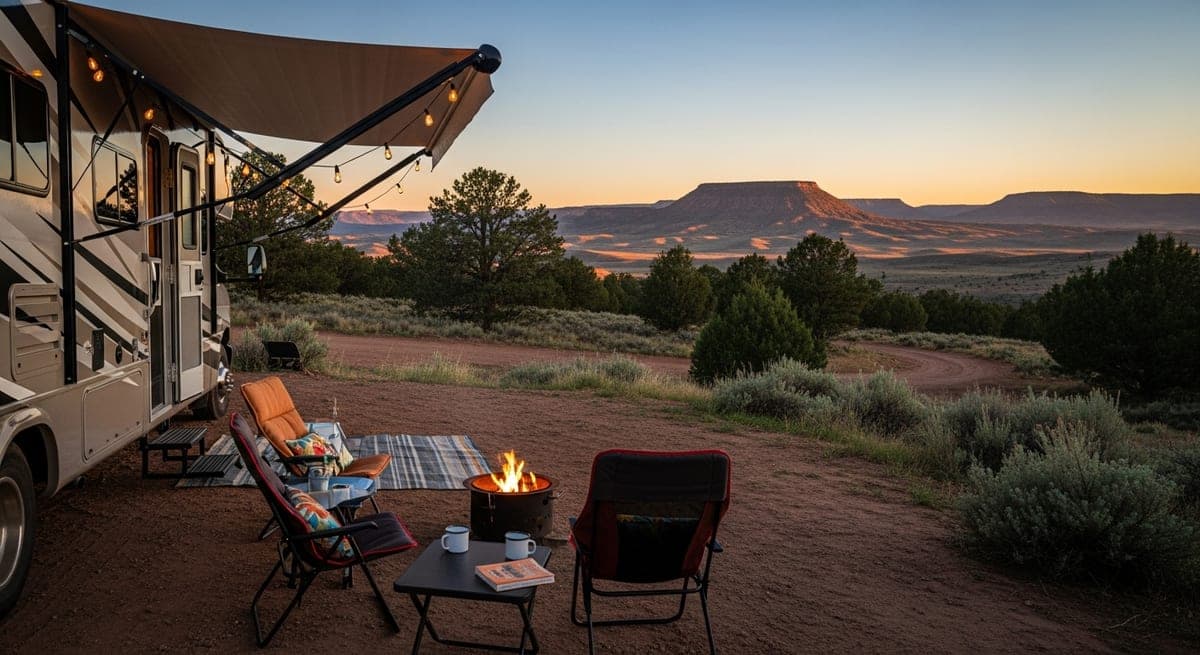
The first night I boondocked solo — somewhere off a dirt track west of Quartzsite, Arizona — I ran the refrigerator all night and woke up with a battery bank that read 18%. The nearest hookup was 28 miles back. That morning I drove into town, plugged into a truck stop lot, and spent three hours reading everything I hadn't bothered to read before I left.
That was three seasons ago. The advice online isn't wrong — it's just incomplete. The gap between what guides tell you and what the desert (or the forest, or the Nevada high plain) actually teaches you is where the real education happens. — RVMapper editorial team, boondocking across the American West since 2020.
Where I Actually Go (And How I Find New Spots)
BLM land is the backbone of any serious boondocking habit, but "BLM land" is a useless unit until you narrow it down. My go-to starting area is the La Posa area outside Quartzsite, Arizona — open desert with free dispersed zones marked directly on the BLM app. The La Posa South LTVA runs a nominal seasonal fee; the free zones surrounding it don't. Go in January and you'll have thousands of fellow rigs for company; by late February the crowds thin and the real experience settles in.
Further north, the BLM corridors along the river road outside Moab have pulled me back three times. The dispersed sites along the first stretch follow the canyon walls and offer views that paid campgrounds can't match — though cell signal drops considerably once you're into the canyon, so download your maps and forecast before you commit.
National Forest dispersed camping is underused compared to BLM. The Kaibab National Forest north of Williams, Arizona has forest roads I've had entirely to myself in April. Look for double-dotted lines on Gaia GPS — those are unmaintained roads where dispersed sites tend to cluster. Call the ranger district before you go; some areas close seasonally or after fire weather, and that information doesn't always reach the apps in time.
For scouting ahead of any trip, I use Campendium, iOverlander, and the BLM's own app (offline maps were added in recent updates — a genuine improvement). Don't commit to a site from satellite imagery alone; I've driven 45 minutes down what looked like a road and found it tapering into a jeep track. Scout the first quarter-mile on foot if anything looks uncertain.
Power and Water — The Variables That Bit Me First
Three nights without hookups and the battery math gets personal fast. Running roof AC off battery overnight isn't realistic without a substantial lithium bank — I learned that expensively. LED lights, a 12V fan, the fridge on eco mode, and phone charging: that load I can sustain comfortably with a decent rooftop solar setup and a solid AGM battery bank. Add a microwave or an Instant Pot, and the whole equation shifts.
Know your actual daily load before you leave — not what the spec sheet says, but what you observe on a normal evening with the meter running.
Solar helps considerably, but how much depends on your battery capacity, your daily consumption, and how much direct sun you actually get. A rooftop panel in Arizona in February is a different animal than the same hardware under Pacific Northwest overcast in October. For extended stretches, I'd rather have more storage than more panels — the buffer matters more than the input rate.
Water is the constraint I underestimated most in my first season. I now run a quick tally every morning: how much do I have, how much do I use per day, and how many days until I need to move? Navy showers — wet, off, soap, rinse — cut my daily shower water from around 5 gallons to well under one. A spray bottle and basin for dishes instead of running the tap buys me another day on the same tank.
Note fill opportunities when you pass them: gas stations with RV water spigots, state park day-use areas, city parks with potable spigots. I keep a portable tank in the truck as emergency backup. For gray water, a portable waste tote — Thetford makes the most widely available ones — lets you dump without breaking camp on stays longer than a few nights.
Before You Drive Out There
Check the BLM field office regulations before you commit to a spot. Stay limits vary by area — some high-use zones have shorter windows or require self-registration at the trailhead, and what's true in one district isn't necessarily true in the next one over. The BLM website and GeoBOB map tend to be accurate. Random blog posts from several years back often aren't.
Weather deserves more than a quick phone check. Desert washes that look bone-dry can flash flood in hours when rain falls 20 or 30 miles uphill. Mountain passes can close with overnight snow in April. I keep weather radio as a backup when I'm in canyon country without cell service. If the ground looks soft and I'm not sure about traction on the way out, I don't drive in.
One thing I do differently than most advice suggests: I drive the route in the afternoon before committing to a site, then come back and set up. It costs an hour. It has saved me from three genuinely bad spots — including one where the track forked onto posted private land with no warning until you were already committed.
Why Free Camping Is Still Free (And How We Keep It That Way)
The dispersed camping that exists on public land exists because enough people treated it right over enough years. Pack out everything, including other people's trash when you find it near your site. Gray water goes at least 200 feet from any water source, vegetation, or drainage. Use existing fire rings when you must have a campfire — don't create new ones or clear new sites — and skip it entirely in dry conditions.
I've watched spots on Campendium slide from 4.5-star reviews to "avoid — trashed" in a single season. It doesn't take many bad actors to get an area closed permanently. Treat it like a site you'll want to return to, because if you're doing this right, you probably will.
The RVMapper team has been camping across the American West since 2019. We share what we actually learn on the road, not what's easiest to compile from a map.
Ready to Plan Your Trip?
Put this knowledge to work. Let our AI build a personalized RV itinerary for your next adventure, or browse community trips for inspiration.