The RV Kitchen Reality Check
Most RV kitchens give you less counter space than a cutting board — in a Class C or standard travel trailer, you're working with 8 to 12 inches of actual prep surface once the sink cover is down.
RV kitchens range from a two-burner propane cooktop and microwave in a smaller rig to a full residential kitchen in a large fifth wheel or Class A. Most fall somewhere in the middle: a 3-burner propane stove with oven, a microwave, a small refrigerator, and limited counter space. You can absolutely cook real meals in here — it just rewards simpler recipes and better prep habits than a home kitchen does.
One-Pan and One-Pot Meals: The Go-To Approach
One-pan and one-pot meals minimize dishes, maximize limited burners, and mean you're not juggling four different things on two burners while the rig sways around a mountain curve. A 12-inch cast iron or stainless steel skillet and a 4-quart pot with a lid handle the vast majority of camp cooking tasks.
Skillet hash (any protein + vegetables + eggs): Dice potatoes and cook in skillet with oil until crispy (15 min). Add whatever protein you have (leftover chicken, sausage, ground beef), cook through. Add diced peppers and onions, cook 5 more minutes. Crack eggs into gaps in the pan, cover, and steam until set. One pan, minimal cleanup, adaptable to whatever's on hand.
One-pot pasta: Add pasta, sauce, vegetables, and protein to a pot with just enough water to cover. Boil together until the pasta absorbs the liquid and sauce thickens — typically 12–15 minutes, though time varies by pasta shape and how much water you used. Sturdy shapes like penne or rigatoni hold up better than thin pasta here. The real win over cooking at home: there's no separate pot to drain, which matters a lot when your sink is the size of a salad bowl.
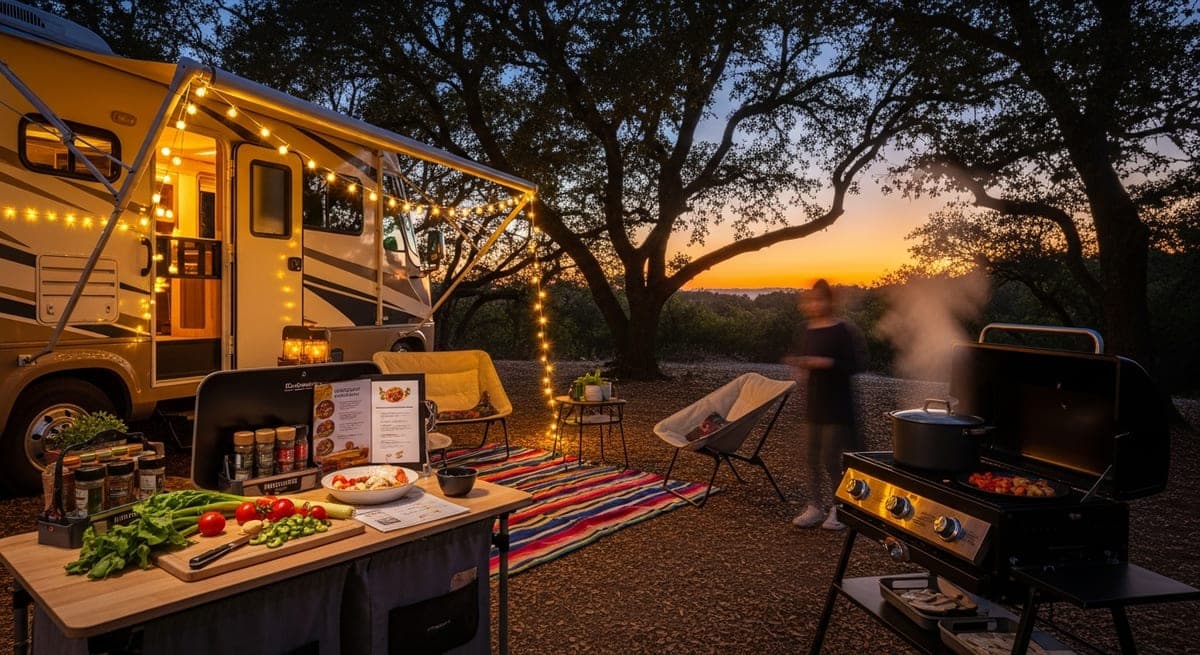
Foil packet meals: Wrap protein (chicken thighs, salmon, sausage), vegetables, and seasonings in aluminum foil and cook on a grill grate or campfire grate. Minimal cleanup and totally hands-off cooking — 20–30 minutes depending on protein. This one shines especially at campgrounds with communal fire rings, like those at Assateague Island National Seashore (MD/VA) or Picacho Peak State Park in Arizona, where you're cooking outside anyway.
Breakfast Prep Strategy
Breakfast that requires minimal morning effort makes the start of each travel day smoother — especially when you're breaking camp early to beat summer heat or heavy highway traffic.
Pre-made overnight oats: Combine oats, milk (or non-dairy milk), a sweetener, and fruit in a mason jar the night before. In the morning: no burner, no pan, no cleanup — you eat straight from the jar. This matters more on the road than at home because you often want to be rolling by 7am, and there's no dishwasher waiting to clean up after a hot breakfast. Prep 3–4 jars at once when you have a free moment at camp and you've got breakfast handled for several days. Works whether you're parked at a full-hookup site in Moab or boondocking on BLM land with zero services.
Egg bites: Beat eggs with cheese, vegetables, and meat, pour into a muffin tin, and bake in the RV oven at around 350°F for approximately 18–22 minutes — start checking at 15 minutes, since RV oven temperatures often run hot or uneven. Store in the refrigerator and reheat in the microwave for 45 seconds each morning. Batch cooking once saves breakfast effort for several days running.
Grocery Strategy on the Road
Planning 3–4 days of meals between grocery stops is more practical than trying to plan an entire week. Focus on proteins and staples when resupplying, and shop for fresh produce every 3–4 days when you're near a town.
Fresh produce doesn't last as long as you'd expect in a compact RV refrigerator — buy smaller quantities more frequently rather than loading up at one big-box store and hoping it survives five days of road vibration and temperature swings. In remote areas like the canyon country near Moab or campgrounds deep in the North Cascades, your nearest full-service grocery can be 40–60 miles out. Knowing your resupply options before you pull in is worth five minutes of planning. Apps like Campendium and iOverlander often include store and town info in campground comments.
Pantry staples worth keeping stocked: canned tomatoes, dried pasta, rice, olive oil, canned beans, tuna and canned salmon, jarred pasta sauce, soy sauce and sriracha for flavor-building. These form the base for dozens of easy meals and mean you can put something solid on the table even when the grocery run didn't happen on schedule. After a long travel day pulling into camp after dark, a well-stocked pantry is the difference between dinner and driving another 10 miles to a fast food lot.
From the RVmapper team
Fishing along your route?
Hooked Fisherman publishes fishing reports for all 50 states, species guides, and honest gear reviews. Know what's biting before you park the rig.
Keep Reading
12 Best Free Camping Apps and Websites Every RVer Needs in 2026
12 min read
Camping TipsHow to Get the Campsite You Want: RV Reservation Strategy for Popular Parks and Busy Season
10 min read
Camping TipsRV Camping with Pets: Complete Guide to Pet-Friendly Campgrounds, Safety, and Road Trips
9 min read