
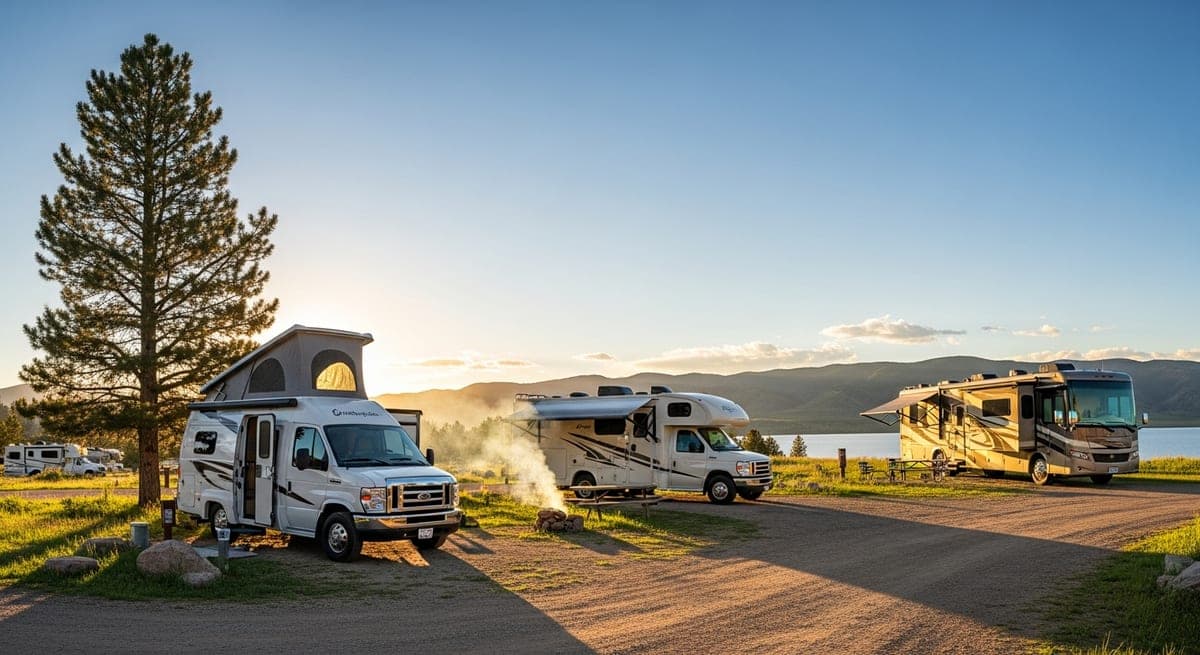
Choosing an RV is one of the biggest decisions you'll make as a traveler. The right choice depends on how you travel, where you want to go, your budget, and your comfort requirements. Here's an honest breakdown of each motorhome class to help you decide.
Class A Motorhomes
Class A rigs are the largest motorhomes on the road, typically 25-45 feet long. They're built on a commercial bus or truck chassis and offer the most living space, storage, and amenities. A high-end Class A diesel pusher is essentially a luxury apartment on wheels — full-size refrigerator, residential queen or king bed, washer/dryer, and multiple slide-outs that expand the living space dramatically.
Pros: Maximum comfort and space, best for full-timing or extended trips, excellent resale value on diesel pushers, and smooth highway ride. Cons: Hardest to drive and park, worst fuel economy (6-10 MPG), most expensive to buy and maintain, and many campground sites can't accommodate the largest models. Prices range from $70,000 for a used gas model to $500,000+ for a new diesel pusher.
Class B Motorhomes (Camper Vans)
Class B rigs are built on a standard van chassis (Mercedes Sprinter, Ram ProMaster, or Ford Transit). They're the most nimble and fuel-efficient motorhomes, typically 17-23 feet long. The #vanlife movement has made them hugely popular, especially among younger travelers and couples.
Pros: Easy to drive anywhere (fits in regular parking spots), best fuel economy (15-25 MPG), can double as a daily driver, go anywhere a large van can go. Cons: Very limited living space, tiny bathrooms (if any), minimal storage, and surprisingly expensive for their size. New Class B rigs from Winnebago, Airstream, or Pleasure-Way start around $120,000-200,000.
Class C Motorhomes
Class C rigs are the "Goldilocks" choice — built on a truck or van cutaway chassis (typically Ford E-450 or Chevy 4500), usually 23-35 feet long. The distinctive cab-over sleeping area gives them extra sleeping capacity. They're the most popular choice for families and RV renters.
Pros: Good balance of space and driveability, more affordable than Class A, easier to drive than large Class A rigs, and the cab-over bunk is great for kids. Cons: Cab-over area can be hot in summer and hard to access, truck chassis ride quality is rougher than a bus chassis, and they're not as roomy as a comparable-length Class A due to the cab design. Prices range from $50,000 used to $180,000+ new.
Fifth Wheels and Travel Trailers
If you want maximum space for the money, towable RVs are hard to beat. Fifth wheels (towed by a pickup truck with a special hitch) offer the most living space of any RV type, often with residential furniture and multiple bedrooms. Travel trailers range from tiny teardrops to 40-foot palaces and can be towed by a wide range of vehicles.
The big advantage: when you arrive at camp, you unhitch and have a regular vehicle for exploring. The disadvantage: you need a capable tow vehicle, backing a trailer requires practice, and you can't access the living space while driving.
How to Decide
Rent before you buy. Most RV rental companies offer Class A, B, and C options. Spend a week in each type you're considering. Pay attention to what bothers you — is it the driving, the space, the parking? Your irritations in a rental week will become major frustrations in ownership. Consider your typical trip: weekend getaways favor smaller rigs; cross-country adventures favor larger ones. And always buy the smallest RV that meets your needs — you can upgrade later, but oversized rigs limit where you can go.
Ready to Plan Your Trip?
Put this knowledge to work. Let our AI build a personalized RV itinerary for your next adventure, or browse community trips for inspiration.