
The Core Difference
Class A and Class C are both self-propelled motorhomes — you drive them rather than tow them. The differences in size, cost, driving experience, and livability are significant enough that they often appeal to different camping styles.
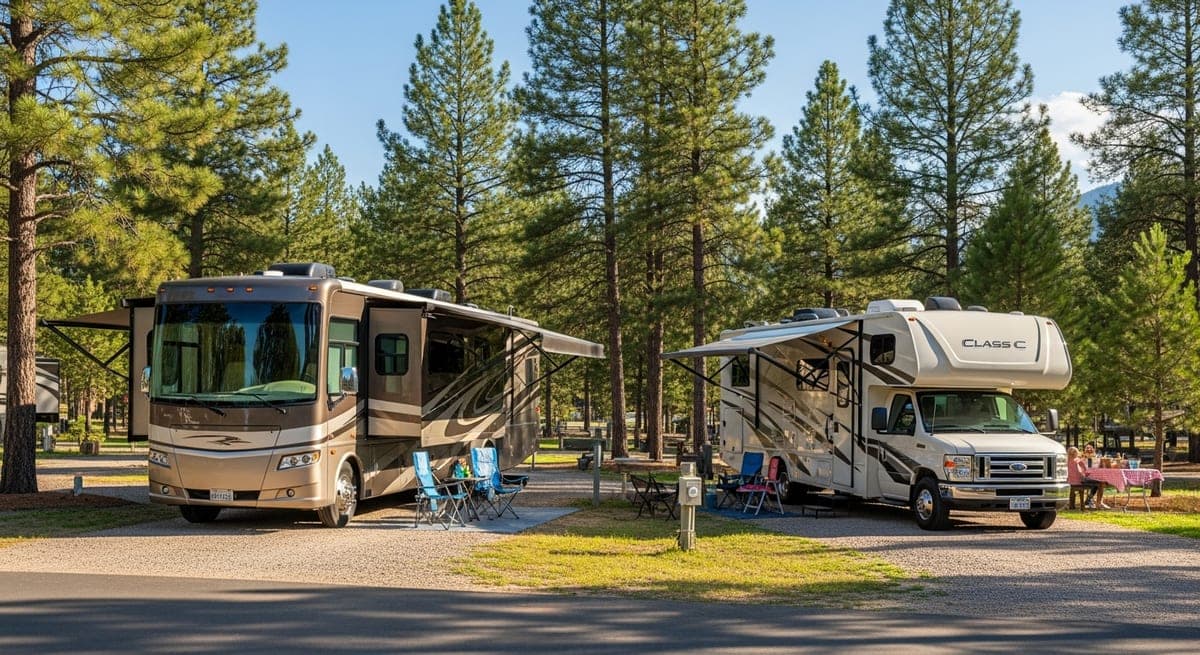
Class A: Built on a dedicated bus or coach chassis. The front is flat (no hood). The driver sits over the engine in a cab that blends into the living space. The largest motorhomes on the road. Ranges from 25 to 45 feet. Entry-level Class A starts around $80,000-$100,000; premium diesel pushers reach $500,000-$1.5M.
Class C: Built on a cutaway van or truck chassis (Ford E-450, Ram ProMaster, or Mercedes Sprinter). The distinctive over-cab sleeping area extends over the driver's cab — this is the visual identifier. More compact than most Class A units. Ranges from 20 to 33 feet. Entry-level Class C starts around $70,000-$85,000; mid-range units average $100,000-$150,000.
Driving Experience
Class A: Larger, wider, and harder to maneuver than a Class C — particularly in tight campgrounds, gas stations, and urban areas. The flat front (no hood) eliminates the normal visual reference for judging vehicle width and distance. Takes time to adjust. Highway driving is typically stable and comfortable with a good suspension system.
Class C: The familiar truck/van driving position makes it more approachable for new RVers. The hood gives a normal visual reference for width and distance. Significantly easier to maneuver in tight spaces — a 28-foot Class C handles more like a large truck than a bus. For first-time motorhome buyers, the Class C learning curve is much shorter.
Living Space and Features
Class A advantages: More square footage in the living area, wider body width (up to 102 inches vs. 96 for Class C), typically more slideouts (2-4 slides vs. 1-2 for Class C), larger bathroom and shower, full-size residential-style kitchen in higher-end units. If you're planning extended full-timing or long trips, the extra living space matters.
Class C advantages: The over-cab bunk creates sleeping space that doesn't exist in Class A — effectively a bedroom-equivalent storage area or bunk that works well for families with kids. Class C units often have better overall functional density for their size. A 28-foot Class C sleeps 6-8 people comfortably; a 28-foot Class A sleeps fewer in the same footprint because the cab area is less efficient.
Fuel Economy and Running Costs
Both Class A and Class C gas units achieve similar fuel economy — typically 8-12 MPG depending on size and speed. Diesel Class A pushers achieve 10-14 MPG and offer better low-end torque for mountain driving, but diesel fuel costs more and diesel engine maintenance is expensive.
Class C units on the Ford E-450 chassis benefit from widely available Ford service networks — a breakdown on the road is more likely to be fixable at a local Ford dealer than a custom Class A chassis. This "serviceability" factor is a real practical advantage for the Class C.
Which Is Right for You?
Choose Class C if: You're new to motorhomes and want a shorter learning curve; you camp with kids and want the over-cab sleeping space; you visit campgrounds with tight spots or low overhangs; budget is a significant factor; or you primarily do weekend and short-trip camping.
Choose Class A if: You want maximum living space for extended trips or full-timing; you value a coach-style driving experience; you plan to camp in full-hookup RV parks where maneuverability is less of an issue; or you want the widest range of floorplan options.
The most honest advice: if you've never driven a motorhome, rent a Class C for a week before buying anything. The driving experience will immediately tell you whether the learning curve feels manageable or overwhelming — and save you from buying a $150,000 rig before knowing what you're comfortable with.
Is that campground membership actually worth it?
Plug in your camping nights and typical nightly rate. Our free calculator does the break-even math for Good Sam, Passport America, Thousand Trails, and KOA Rewards.