
The Four Questions That Determine Your RV Type
Before looking at specific RV models, answer these four questions honestly: How often will you actually use it? Where will you store it? Do you want to drive a self-contained unit or prefer to keep your tow vehicle separate? And what's your realistic budget for purchase AND ongoing costs?
Frequency of use affects whether you should buy new, buy used, or rent first. Storage constraints (many HOAs prohibit RV storage on driveways; storage yards add $50–$150/month) affect which size is practical. The drive-vs-tow preference is a genuine lifestyle question — many families prefer keeping a tow vehicle available for day trips while the trailer stays at the site. Budget should factor in not just purchase price but insurance ($1,200–$4,000/year depending on type and coverage), annual maintenance ($500–$1,500), and campground fees.
The Main RV Types: What They're Good For
Class B (van conversion): The most maneuverable and fuel-efficient RV. Built on a standard or extended van chassis. Fits in normal parking spaces, gets 20–25 mpg, and can go places larger RVs can't. The trade-off is limited living space — typically a sleeping area, a small kitchen, and a bathroom that doubles as a shower. Best for: couples or solo travelers who prioritize mobility over space.
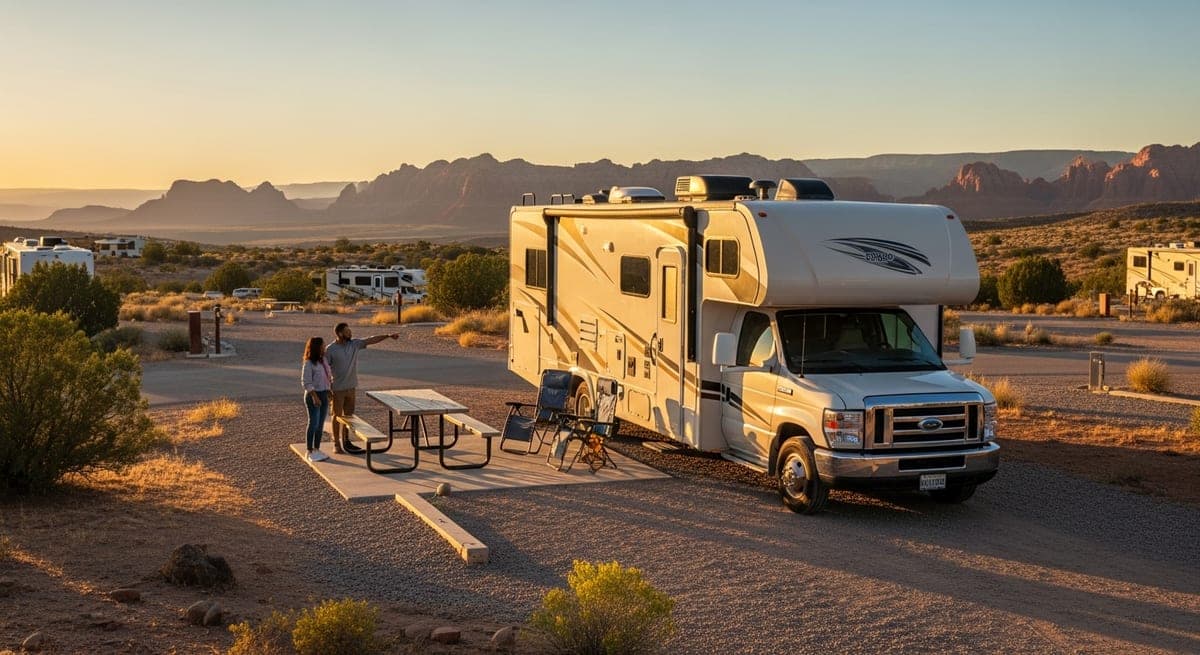
Class C (medium motorhome): Built on a truck chassis with an overcab sleeping area. 22–32 feet long, more interior space than a Class B, more manageable than a Class A. The sweet spot for families who want a self-contained unit without the size and fuel cost of a Class A. Better resale value than Class A in most markets.
Class A (full-size motorhome): The largest and most expensive self-contained option. 30–45 feet, slide-outs expand the interior. Excellent amenities, difficult to drive and park. Diesel pushers are smoother and more powerful than gas Class As. Best for: extended trips, full-timers, couples who spend weeks at a campsite rather than moving daily.
Travel trailer: Towed behind a vehicle. No motor to maintain separately from the living space. Most popular RV type in the US. Wide variety of sizes (16–35+ feet). Requires a capable tow vehicle. The separate vehicle means you can unhitch at a campsite and drive the tow vehicle for day trips.
Fifth wheel: Towed via a hitch in the truck bed (fifth wheel coupling). More stable than a travel trailer; more living space at equivalent length due to front overhang over the truck bed. Requires a full-size truck. Popular for serious long-trip travelers.
What to Inspect Before Buying Used
Water damage is the primary concern in any used RV purchase. Water intrusion causes mold, structural damage, and delamination of walls — and it's often concealed by sellers until it's too late. Inspect every roof seam, every window corner, every slide-out edge, and every wall-floor junction. Soft spots in floor or walls indicate water damage underneath. Use a moisture meter (about $30) to test wall panels — readings above 20% indicate moisture presence.
Hire an independent RV inspector for any purchase over $15,000. The National RV Inspectors Association (NRVIA) maintains a directory of certified inspectors. A $300–$500 inspection can reveal $5,000+ in needed repairs before you sign.
Is that campground membership actually worth it?
Plug in your camping nights and typical nightly rate. Our free calculator does the break-even math for Good Sam, Passport America, Thousand Trails, and KOA Rewards.