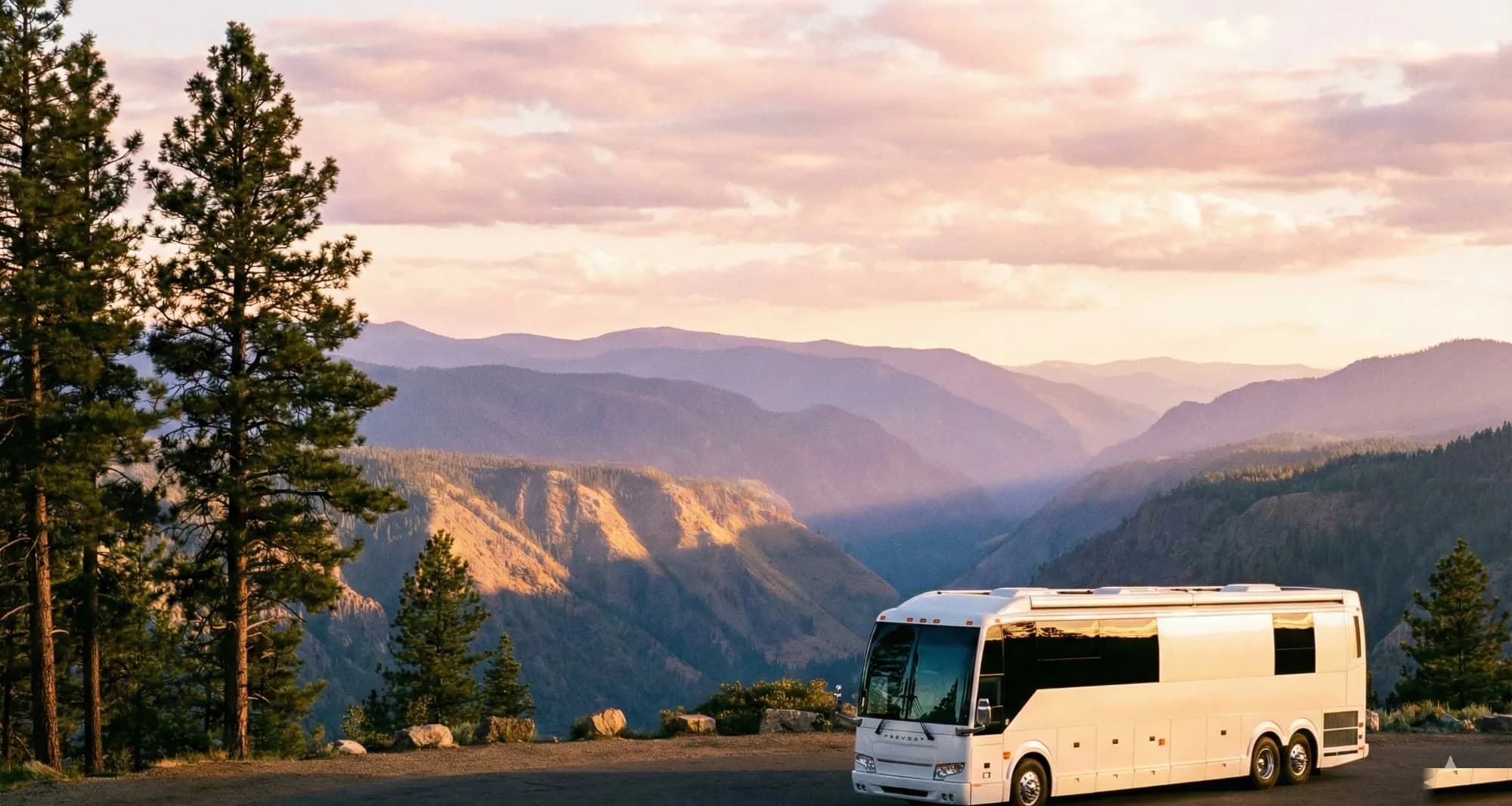
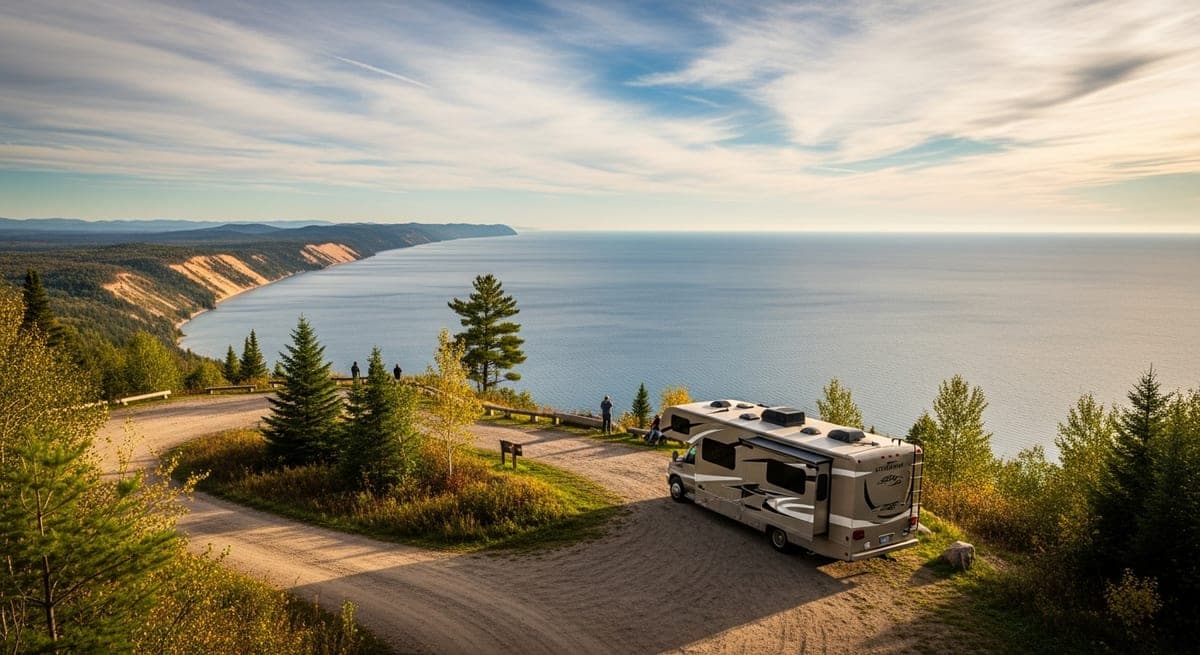
When people think of great American RV road trips, they think of the Southwest desert or the Pacific Northwest coast. The Great Lakes barely registers in the conversation — and that's exactly why it's one of the best regions to RV in America. The crowds that pack Glacier or Yosemite in July have not figured out that the Pictured Rocks cliffs on Lake Superior are equally stunning and half as crowded. The sand dunes at Sleeping Bear drop 450 feet straight into turquoise Great Lake water that looks Caribbean. The Upper Peninsula of Michigan is one of the last genuinely wild places in the eastern US.
This route covers the Great Lakes' greatest hits in 12 days: the Lower Michigan peninsula, Sleeping Bear Dunes National Lakeshore, the Mackinac Bridge crossing, and the Upper Peninsula from the Straits to the Pictured Rocks. It's approximately 1,400 miles and one of the most scenically varied routes in the country.
The Route at a Glance
Start/end: Detroit or Grand Rapids, Michigan (both have RV rental options). The route runs counterclockwise: Grand Rapids → Lake Michigan shoreline north → Sleeping Bear Dunes → Traverse City → Mackinac Bridge → Upper Peninsula → Pictured Rocks → Tahquamenon Falls → Sault Ste. Marie → return south. Campgrounds and state forest roads in Michigan are generally excellent for RVs up to 40 feet — the UP has some tight state forest campgrounds with 30-foot limits, but the main parks accommodate most rigs.
Days 1–3: Lake Michigan's Gold Coast
Michigan's western shoreline along Lake Michigan is one of the most beautiful coastlines in the country — not ocean coast, but something different and in some ways more surprising. The water is clear and warmer than Lake Superior, the dunes are massive, and the beach towns (Saugatuck, South Haven, Muskegon, Ludington) have excellent food and genuinely charming commercial districts.
Saugatuck/Douglas is the first major stop north of Grand Rapids: a Victorian resort town that's part art colony, part beach destination, with the best galleries between Chicago and Detroit. Oval Beach is consistently ranked one of the best freshwater beaches in America. P.J. Hoffmaster State Park near Muskegon is an excellent campground — forested dune landscape, sites close enough to the shore that you can hear the lake. Sites accept up to 40 feet.
Ludington State Park is the best campground on the Lake Michigan shoreline — one of the most popular campgrounds in the Michigan state park system for good reason. It sits at the junction of Hamlin Lake, the Big Sable River, and Lake Michigan, with miles of hiking through dune forest. Sites fill 6 months in advance for summer weekends. The town of Ludington has good restaurants and the SS Badger car ferry crossing to Wisconsin (a unique option for extending the route west).
Day 4: Sleeping Bear Dunes National Lakeshore
Sleeping Bear Dunes is the centerpiece of any Lake Michigan RV trip. Named by Good Morning America as "the most beautiful place in America" in a 2011 viewer poll, and while that's the kind of title that doesn't survive scrutiny — this one holds up.
The signature experience is the Dune Climb: a massive sand dune 200+ feet high where you hike to the crest and see Lake Michigan spread out below you. Most people stop at the crest. The ones who continue (2.5 miles to the actual water, all sand, no shade) get one of the more surreal walks in the national park system — desert-like dune landscape, then the lake appearing over the final rise.
D.H. Day Campground is the only national park campground in the lakeshore and is excellent — forested, quiet, with sites to 50 feet. Reservations through recreation.gov go fast. Platte River Campground (south end of the park) is a good backup. The Sleeping Bear Heritage Trail (22 miles of paved multi-use trail through the park) is exceptional for bikes.
Days 5–6: Traverse City and the Leelanau Peninsula
Traverse City is the gateway to Michigan's wine country. The Old Mission and Leelanau peninsulas produce some of the best Riesling in America (the latitude matches Germany's Mosel Valley) and have a combined 40+ wineries within 30 miles of the city. Michigan Craft Beer is equally well-developed: Right Brain Brewery, Brewery Ferment, and Rare Bird Brewpub are all walkable in Traverse City's walkable downtown.
Camp at Leelanau State Park at the northern tip of the Leelanau Peninsula — the Grand Traverse Lighthouse is excellent, and the views from the park's beach across Grand Traverse Bay are outstanding. It's a rustic campground with no hookups (vault toilets, hand-pump water), so come self-contained; the sites suit smaller rigs best. This is also your last night before the big transition to the UP.
Day 7: Mackinac Bridge and the Straits
The Mackinac Bridge — five miles of suspension bridge spanning the Straits of Mackinac between Lake Michigan and Lake Huron — is one of the most dramatic RV crossings in the country. The toll is modest ($4-5 for a passenger vehicle; slightly more for larger rigs). Cross slowly and take in the view: you're crossing between two Great Lakes, with Lake Michigan to the west and Lake Huron to the east.
Stop in Mackinaw City on the Lower Peninsula side or St. Ignace on the UP side. The Fort Michilimackinac State Historic Park in Mackinaw City is a reconstructed 18th-century fur trading post worth an hour. Mackinac Island (no cars allowed — accessible only by ferry) is a unique side trip if you're interested in Victorian resort history; leave the rig in St. Ignace or Mackinaw City at a campground and take the ferry over.
Straits State Park near St. Ignace has excellent views of the bridge from the campground — the nightly view of the illuminated Mackinac Bridge from camp is genuinely memorable. Sites accept up to 50 feet.
Days 8–10: The Upper Peninsula — Pictured Rocks
The Upper Peninsula is the hidden gem of the entire Great Lakes region. After crossing the Mackinac Bridge, follow US-2 along the Lake Michigan shoreline west (excellent drive, easy in any size rig) or cut north on M-28 toward Lake Superior.
Pictured Rocks National Lakeshore is the destination. Over 40 miles of Lake Superior shoreline, the Pictured Rocks cliffs rise 50-200 feet directly from the lake — multicolored sandstone striped by mineral staining in blues, greens, purples, and oranges. From a boat (kayak tours available from Munising) or from the overlooks at Miners Beach and Chapel Falls, they're one of the most dramatic landscapes in the national park system.
Miners Beach Campground inside the park accepts RVs to 40 feet and has excellent access to the main overlooks and the Chapel Loop trail (10 miles, waterfalls, shoreline, and old-growth cedar forest). Hurricane River Campground at the eastern end of the park is quieter and equally scenic. Both fill 6 months in advance for summer — book the day the recreation.gov window opens.
Tahquamenon Falls (40 miles southeast of Pictured Rocks) is worth the detour: one of the largest waterfalls east of the Mississippi, running amber-brown from the tannins of the cedar swamps it drains through. The Upper Falls pours 50,000 gallons per second over a 200-foot wide ledge. The state park campground here is excellent and accepts large rigs.
Days 11–12: Sault Ste. Marie and the Return
Sault Ste. Marie ("the Soo") sits at the locks connecting Lake Superior to Lake Huron — a 20-foot elevation difference that ships navigate via the Soo Locks, one of the busiest lock systems in the world. The free observation platform lets you watch 1,000-foot ocean freighters pass at eye level. It's unexpectedly compelling.
From the Soo, I-75 south returns you to lower Michigan. A stop at Hartwick Pines State Park near Gaylord is worth the detour — one of the last stands of old-growth white pine in Michigan, massive trees that survived the logging era. The campground here is excellent and serves as a final night before returning to Detroit or Grand Rapids.
Best Time to Go
Late June through August is peak season — warmest Lake Michigan water temperatures (70°F+), longest days, all facilities open. The trade-off: campgrounds fill and beach towns are busy. July 4th weekend at Sleeping Bear or Traverse City means campground reservations 6 months in advance or you're staying outside the park.
Late August through mid-September is the sweet spot: near-peak temperatures, lighter crowds, and the beginning of fall color in the Upper Peninsula by mid-September. The UP sees fall foliage 2-3 weeks earlier than southern Michigan. A late September UP trip with the full leaf-turn is extraordinary.
Quick Campground Summary
P.J. Hoffmaster SP (Lower Michigan): $35-45/night, hookups available, 40 ft max. Ludington SP: $45-55/night, hookups available, book 6 months out. D.H. Day (Sleeping Bear NL): $25/night, no hookups, 50 ft, recreation.gov. Leelanau SP: $17-25/night, rustic (no hookups), best for smaller rigs. Straits SP (St. Ignace): $35-45/night, hookups, 50 ft. Miners Beach (Pictured Rocks): $25/night, no hookups, 40 ft. Tahquamenon Falls SP: $25-35/night, hookups, large rigs OK.
Ready to Plan Your Trip?
Put this knowledge to work. Let our AI build a personalized RV itinerary for your next adventure, or browse community trips for inspiration.