
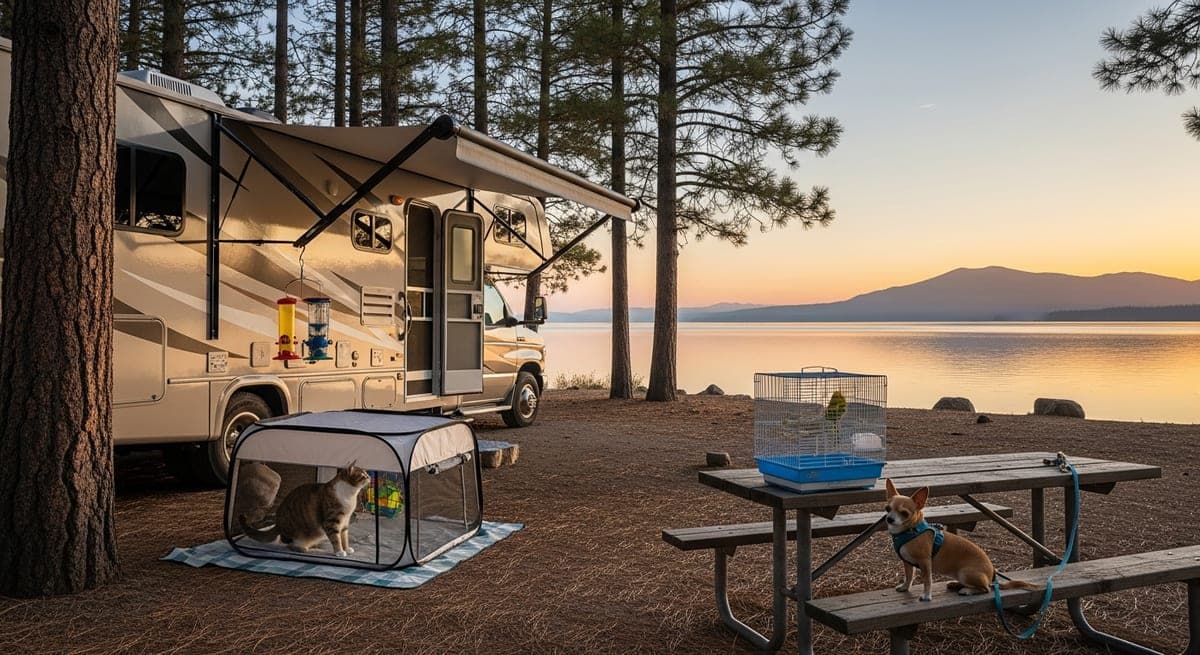
The RV pet travel universe is dominated by dogs. Dog-friendly campgrounds, dog parks at RV resorts, dogs in photos on every RV Instagram account. But a significant minority of RVers travel with cats, birds, rabbits, guinea pigs, and other companions — and the guidance for non-dog pet travel is sparse. Here's the honest, practical version.
Cats in RVs
Cats are actually well-suited to RV life once they acclimate — they're territorial and the RV becomes their territory surprisingly quickly. The challenges are real but manageable:
Escape prevention: This is the #1 concern. Every time a door opens, a cat can bolt into an unfamiliar environment. Strategies:
- Train your cat to come to a specific sound (a treat shaker, a clicker) before the trip — it won't prevent every escape but helps recovery
- Install a second interior door or barrier at the main entrance — a simple tension-mounted baby gate or a magnetic screen works for cats that don't jump
- Keep your cat's carrier in the RV and leave it open with a familiar blanket inside — it becomes a bolt-hole and security anchor
- Microchip and ensure the chip is registered. Consider a GPS collar tracker (Tile, Apple AirTag, or dedicated pet tracker like Fi) for outdoor-access cats
Litter box: The under-the-bed storage in most RVs can accommodate a standard litter box with good ventilation. Some RVers convert a cabinet with a small entrance hole. Clumping litter is easiest for RV use — less tracking. Scoop daily; a dirty box in an enclosed RV is miserable for everyone.
Temperature management: Cats are vulnerable to heat. Never leave a cat in an RV without running AC if temperatures exceed 80°F. This means either shore power or a running generator when you leave. Many RVers install a remote temperature monitor (Waggle, SensorPush) to check on the RV interior remotely.
Outdoor access: Some cats accept a harness and leash; most don't. A portable cat enclosure (Catio) or a large pop-up playpen gives outdoor time safely. The Jackson Galaxy line of cat enclosures is popular in the RV community.
Birds in RVs
Birds present unique challenges that dogs and cats don't. The biggest: air quality. RV propane stoves, cleaning products with strong VOCs, and cooking fumes are genuinely dangerous to birds, whose respiratory systems are extremely sensitive.
- Propane cooking: Use the exterior grill rather than the indoor propane stove as much as possible when birds are present in the RV. If cooking inside, maximize ventilation.
- Cleaning products: Avoid Teflon-coated cookware (produces PTFE fumes when overheated that are fatal to birds), scented candles, aerosol sprays, and any product with strong volatile compounds near birds.
- Temperature: Most pet birds (parrots, cockatiels, budgies) need temperatures between 65–85°F. Temperature management in the RV is essential — birds are less heat-tolerant than cats or dogs.
- Noise and stress: Generator noise and road vibration can be stressful for birds. Covering the cage partially helps. Some birds travel without issue once they're used to it; others never fully habituate.
- Campground rules: Some campgrounds restrict certain types of pets. Check pet policies specifically when traveling with birds — it's less commonly addressed than dogs.
Rabbits, Guinea Pigs, and Other Small Mammals
Small mammals are among the most vulnerable RV travelers due to heat sensitivity. Rabbits, guinea pigs, chinchillas, and hamsters can die in temperatures above 85°F, which any RV can reach quickly in sun.
- Temperature is critical: Never leave small mammals in an unventilated, unair-conditioned RV when temperatures exceed 75°F outdoors. This is more restrictive than cats or dogs.
- Cage security during travel: Cages must be secured against movement. Use bungee cords, cargo straps, or a dedicated cage carrier to prevent sliding and tipping while driving.
- Veterinary access: Exotic veterinarians (who handle rabbits and non-dog/cat mammals) are less common than general vets. Locate exotic vets along your route in advance, not in an emergency.
Campground Rules and Courtesy
Most campground pet policies specify "dogs and cats" when they say pets are welcome. If you have a bird, rabbit, or other animal, call ahead and confirm. Some campgrounds explicitly welcome all pets; others restrict to dogs and cats only.
Keep all animals in your rig or contained to your immediate campsite. A free-roaming cat that visits neighboring sites isn't charming to people with bird feeders or phobias. Respect campground-wide rules about animals on leash/contained.
Related: RV camping with cats guide · RV travel with dogs · Dog-friendly national parks
Ready to Plan Your Trip?
Put this knowledge to work. Let our AI build a personalized RV itinerary for your next adventure, or browse community trips for inspiration.
Keep Reading
Best Dog-Friendly National Parks for RVers: Where Your Pet Is Actually Welcome
12 min read
Pet TravelRV Camping With Cats: What Every Cat Owner Needs to Know Before the First Trip
8 min read
Pet TravelThe Complete Guide to RV Travel with Dogs: Tips, Safety & Dog-Friendly Campgrounds
11 min read