Among the most-cited observations in r/fulltimervliving and r/vandwellers cat-travel threads is this: the cats that struggle most on a first RV trip aren't necessarily the anxious ones. The consistent culprit, according to full-timers who have traveled with cats for years, is skipping the parked-introduction phase. Two to four weeks of driveway access before any movement is the factor they most reliably credit for a calm first drive over a stressed one.
The Parked Introduction Phase
Park the RV in the driveway and leave access open for at least a week, ideally two. Let the cat explore, nap, and eat meals inside without any pressure. The goal is scent familiarity: cats signal safety through their own scent, and an RV that already smells like home is far less threatening when it starts moving.
First-time cat RVers on the iRV2.com forums consistently recommend starting with a single overnight trip within 30–60 miles of home. This tests how a specific cat responds without the stakes of a week-long journey. Some cats settle quickly after arrival; others need several trips before they stop hiding on entry. Knowing which type of cat you have before committing to a longer itinerary is the point of that first short run.
Litter Box Placement
Space constraints make placement a real puzzle. Covered boxes contain odor better and fit into under-bed slide-outs, bathroom cabinet bases, and lower storage compartments. In class B and smaller class C rigs, the litter box often ends up in the living space. Experienced cat RVers report that a covered box with a carbon filter insert manages odor well enough that campground neighbors rarely notice.
One practical detail that first-timers frequently miss: keep the box accessible during drives, not locked in a compartment. Cats can experience stress-related urgency on longer hauls, and blocking access during a three-hour drive can result in accidents in the carrier or a storage compartment — a cleanup problem that is genuinely difficult to address safely while the rig is moving.
Escape Prevention: The Highest-Stakes Issue
Cat escapes at campgrounds are one of the most consistently reported crises in RV pet-owner communities. Unlike dogs, a spooked cat that bolts at an unfamiliar rest stop or campground rarely returns on its own, and recovery in an unknown area is exceptionally difficult. The recurring pattern described in full-timer communities is an unscreened door or window left open while the cat was loose inside.
Practices that experienced cat RVers treat as standard:
- Harness and leash training before the first trip. Start at home. Many cats resist harnesses initially and need several weeks of desensitization before they move comfortably wearing one. Harness-trained cats can be walked at campgrounds under control rather than loose.
- Screen door or cat-safe barrier. An RV screen door or magnetic mesh screen allows ventilation without creating an escape route. Full-timers in the iRV2 cat-travel discussion boards describe adding custom screen inserts to slideout openings as well.
- Microchip registration and ID tags. Ensure the microchip is registered to a current phone number, not a home address left behind. A breakaway collar with a tag showing a cell number is standard. Some full-timers add a QR code tag linked to an online contact form to handle the moving-address problem.
- No open doors or windows while the cat is loose. Even a briefly opened entry door is a risk. Many full-timers use a secondary barrier (a tension gate at the doorway) as a backup when people are moving in and out of the rig.
Heat Safety and Temperature Monitoring
Cats are vulnerable to heat stress, and RV interiors can reach dangerous temperatures quickly. Full-timers in cat-travel communities consistently report that a closed rig parked in direct sun grows substantially hotter than the exterior reading within an hour, particularly in dark-colored coaches with limited cross-ventilation. Veterinary guidance broadly advises against leaving pets in enclosed vehicles on warm days, with risk escalating as interior temperatures climb regardless of what the thermometer outside reads.
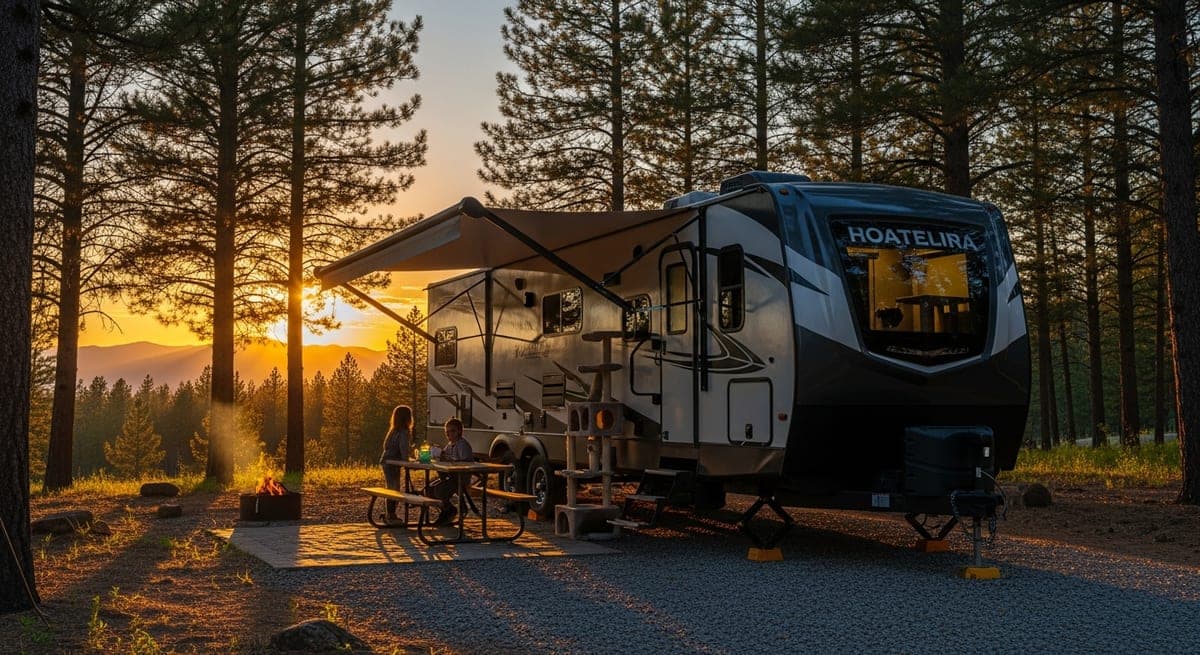
Remote temperature sensors are a common solution among cat-owning full-timers. Devices like Temp Stick (a WiFi and cellular sensor with app-based alerts) and the RV Whisper system allow owners to monitor interior readings from a distance while at an attraction or visitor center. Many national park campgrounds, including loops at Shenandoah (Loft Mountain, Mathews Arm) and Acadia (Blackwoods, Seawall), place RVs in partly shaded sites. Full-timers in cat-travel threads specifically recommend requesting shaded hookup sites when traveling with heat-sensitive pets.
Familiar Comfort Items
Bring the cat's existing bedding, a favorite toy, and an unwashed item of clothing. Owner feedback across RV pet forums consistently points to scent familiarity as the most effective settling tool in a new space. Placing bedding at an elevated spot with sight lines into the main living area tends to produce faster settling than floor-level placement, according to reports in full-timer cat communities. Cats prefer to monitor from height, and a perch near a window with a view of the campsite is frequently cited as a reliable calming setup across those threads.
On the Road: Carrier Setup and Arrival Routines
Most experienced cat RVers keep cats in a secured carrier during travel rather than loose in the cab. A spooked cat loose in a moving vehicle is a genuine safety hazard for both the cat and the driver. Full-timer communities on iRV2 and r/fulltimervliving describe using soft-sided carriers secured with a seatbelt or cargo strap, positioned away from direct sunlight and angled so the cat has a sightline toward familiar faces in the cab.
After arriving at a site and closing all doors and windows, cats typically investigate the space before settling. How long that takes varies considerably by individual cat and by how many trips they have made. First-timers often take noticeably longer to relax than cats with several drives behind them. Full-timers on r/fulltimervliving cat-travel threads report that by the third or fourth trip, most cats begin to treat arrival as a recognizable routine rather than a disruption, moving directly to a preferred perch rather than hiding.
Campground and National Park Pet Policies
NPS pet rules vary meaningfully by park unit, so checking the specific park's pet page on NPS.gov before arrival is standard practice among full-timers. At most national parks, NPS policy requires pets on a leash no longer than 6 feet and generally restricts them to campgrounds, roads, and parking areas, with most trails off-limits to pets. Recreation areas and other NPS-administered lands sometimes apply different standards, which makes the per-park lookup worth doing before planning harness walks.
Confirmed pet-accessible areas at national parks are more limited than at state parks or KOA campgrounds, which typically allow leashed pets throughout common areas. Campgrounds at Shenandoah and Acadia are well-documented in full-timer communities as workable cat-travel destinations given their shaded loops and walkable sites, even where surrounding trail systems remain closed to pets.
Related: Best dog-friendly national parks for RVers · RV travel with dogs guide
Is that campground membership actually worth it?
Plug in your camping nights and typical nightly rate. Our free calculator does the break-even math for Good Sam, Passport America, Thousand Trails, and KOA Rewards.