The Fundamental Rule: RVs Are Not Shelter in a Hurricane
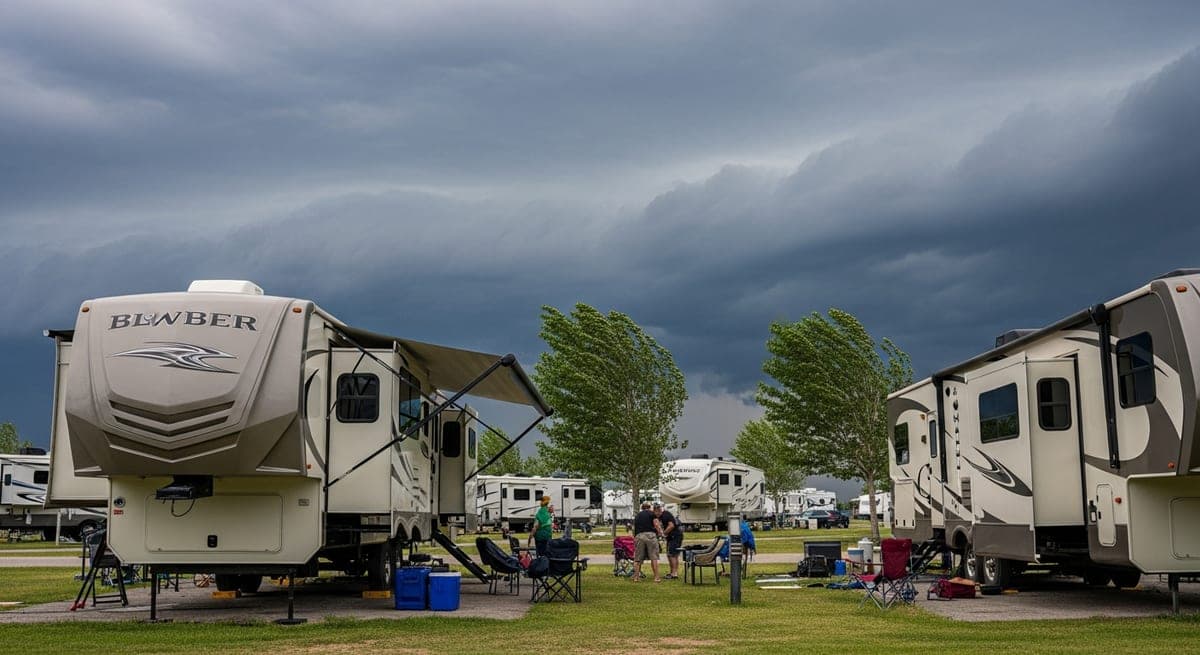
An RV — whether a Class A motorhome or a travel trailer — offers no meaningful protection from hurricane-force winds. Wind speeds above 75 mph can flip or destroy most RVs. A Class A motorhome is large enough to create a significant sail area in hurricane winds. Travel trailers with less ground contact are even more vulnerable.
The only appropriate action when a hurricane threatens your location is evacuation. Don't attempt to ride out a hurricane in your RV. This is the single most important point in this guide — everything else is secondary.
Evacuation Planning Before Hurricane Season
If you're snowbirding in Florida or the Gulf Coast from October through May, hurricane preparedness should be part of your trip planning before you depart from home:
Know the evacuation routes: Florida has numbered evacuation zones (Zone A is highest risk, closest to coast). Know which zone your campground is in and the designated routes out. These routes are marked and published by county emergency management — look them up for every county you'll be camping in during hurricane season.
Have a specific destination: Know where you're going if you evacuate. Family in a northern state, a campground outside the storm's projected path, or a campground more than 200 miles inland. Vague "heading north" plans during a storm-track shift can leave you in the path of a fast-developing event.
Fuel strategy: Gas station lines during a hurricane evacuation are measured in hours. Keep your tank above half-full during hurricane season. Know where you can get propane for cooking if power is out at your destination.
What to Do With Your RV If You Must Leave It
If evacuation is ordered and you cannot take your RV (tow vehicle unavailable, RV in the shop), these steps reduce — but do not eliminate — damage risk. They are not substitutes for evacuation:
Lower awnings and retract any slides if possible (reduces wind load surface area). Tie down with heavy straps to ground anchors. Disconnect shore power. Fill propane cylinders and turn off valves. Remove anything from outside the RV that could become a projectile. Document the condition with photos for insurance purposes before you leave.
After the Storm
Do not return to a campground before the all-clear from local emergency management. Flood damage, downed power lines, structural damage, and road hazards persist after the storm passes. Insurance claims for storm damage require documentation — photograph all damage thoroughly before any cleanup or repair.
Is that campground membership actually worth it?
Plug in your camping nights and typical nightly rate. Our free calculator does the break-even math for Good Sam, Passport America, Thousand Trails, and KOA Rewards.