This article contains affiliate links. If you make a purchase through these links, we may earn a small commission at no extra cost to you. Learn more.
Understanding Your RV Fresh Water System
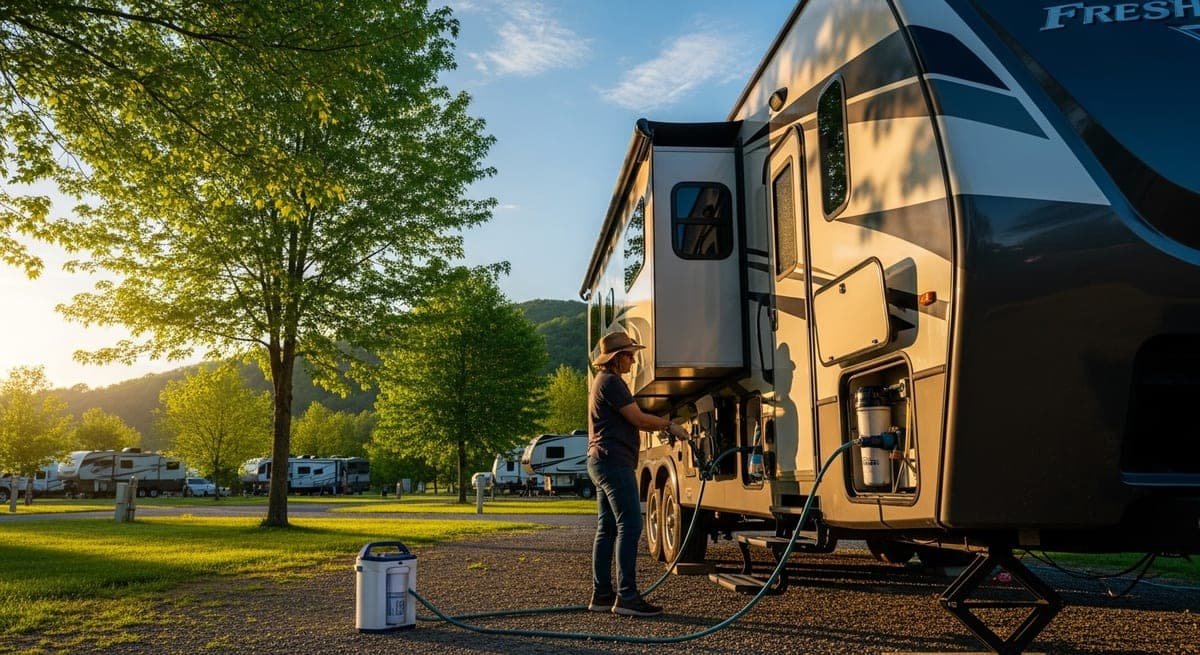
Your RV's fresh water system has several components, each of which needs periodic attention: the fresh water tank (stores your water supply), the 12V water pump (pressurizes the system when not on city water), water lines (typically flexible tubing or PEX), a water heater (typically 6–10 gallon propane/electric), an inline water filter, and various connections and faucets. Understanding this system helps you maintain it and troubleshoot when something doesn't work.
Sanitizing the Fresh Water Tank
If your RV has been in storage, or if the fresh water tank hasn't been flushed recently, sanitize it before drinking or cooking from it. The standard procedure:
- Fill the tank 1/4 full with fresh water.
- Add 1/4 cup of household bleach (5.25% sodium hypochlorite) per 15 gallons of tank capacity. Example: a 45-gallon tank needs 3/4 cup bleach.
- Fill the tank completely with fresh water.
- Run water from all faucets (hot and cold) until you smell bleach at each outlet. This ensures the bleach solution reaches all lines.
- Let the solution sit for 3–12 hours.
- Drain completely and flush with multiple tank-fulls of fresh water until the bleach smell is gone.
Do this at the beginning of each camping season and whenever your water has been sitting for more than 2–3 weeks.
Water Filter Maintenance
Most RVs have an inline water filter at the entry point for city water. Replace the cartridge every 3–6 months of active use, or at the beginning of each season. If you're on well water or questionable municipal water at campgrounds, consider adding a second stage filter (KDF or carbon block) to improve taste and remove additional contaminants.
External inline filters on the hose connection are worth adding. They protect the internal system from sediment and chlorine spikes at campgrounds with older infrastructure. The Camco TastePURE and Culligan RV filters are popular and inexpensive ($15–$30).
Winterizing the Water System
If you're storing your RV through winter in a climate where temperatures drop below freezing, winterizing the water system is non-negotiable. Frozen water expands and cracks pipes, fittings, and tanks, a repair that costs hundreds to thousands of dollars.
Blow-out method: Use an air compressor to blow all water from every line and the water heater bypass. More thorough but requires an air compressor.
RV antifreeze method: Pour non-toxic RV antifreeze (pink antifreeze, NOT automotive antifreeze which is toxic) into the system until it comes out all faucets and the toilet. Leave the antifreeze in lines through storage. Flush completely before first use in spring.
Most RV service shops offer winterizing as a service for $75–$150 if you'd rather have it done professionally the first time to see the procedure.
From the RVmapper team
Fishing along your route?
Hooked Fisherman publishes fishing reports for all 50 states, species guides, and honest gear reviews. Know what's biting before you park the rig.