Junior Ranger programs at more than 400 National Park Service sites have become one of the most frequently cited reasons grandparent travelers choose national parks as the anchor for multigenerational RV trips — the structured badge-earning booklets give kids a mission and give adults breathing room, a pairing that grandparent RVers across community forums consistently describe as "the thing that actually saved the trip." Getting the rest of the planning right, though, requires thinking through a handful of decisions that feel minor at home but tend to define the whole experience once you're on the road.
The Age Window — and Why It Matters
Grandparent travelers in multigenerational RV communities broadly report that the elementary-to-middle-school years — roughly ages 6 through 14 — tend to be the most workable window for these trips. Younger than 6 is possible, but most grandparents who've attempted it describe needing significantly more logistical support from parents. By the mid-teens, many kids have competing social priorities that make a week away harder to negotiate.
Within that window, grandparent travelers describe two distinct dynamics. Ages 6–10 generate what owner accounts describe as near-universal wonder: everything on the road is new, energy for hiking and campfire stories runs high, and the trip tends to imprint deeply. The tradeoff is more supervision, earlier bedtimes, and less flexibility when things go sideways. With ages 10–14, community feedback skews toward a different kind of value — these kids can help with camp setup, navigate, read maps, and hold genuine conversations. Full-timers who've done both often report the older trips are less exhausting and more nuanced, even if the younger-kid trips feel more magical in retrospect.
Destinations That Work for Both Generations
The destinations grandparent travelers return to most often in community discussions tend to share a common quality: built-in structure for kids that doesn't require the grandparent to orchestrate every moment. A few that appear consistently:
- National parks with Junior Ranger programs: Grand Canyon, Yellowstone, Great Smoky Mountains, and most major NPS units offer free Junior Ranger booklets — available at over 400 parks as of 2026 — that structure exploration around age-appropriate activities. Earning the badge is an official NPS accomplishment kids frequently cite years later. Grandparent travelers name this program more than almost any other single feature when explaining why a trip worked.
- State parks near water: Lake and beach campgrounds with swimming, paddleboats, and fishing tend to be consistently engaging across age ranges without requiring constant hiking. Grandparent travelers frequently mention Oregon's Champoeg State Heritage Area, Michigan's Traverse City State Park, and Florida's St. Joseph Peninsula State Park as sites that hold up well across multigenerational trips.
- KOA Holiday campgrounds: Most KOA Holiday locations — as distinct from KOA Journeys and KOA Resorts — include pools, playgrounds, and often mini golf and planned programming, though amenities vary by property and it's worth checking the specific location before booking. Grandparent travelers on multigenerational forums describe the built-in activity structure as a genuine practical relief when managing multiple grandkids without parental backup nearby.
- Historical sites on a route: Colonial Williamsburg, Gettysburg, and San Antonio's historic district appear regularly in grandparent travel accounts. Owner feedback notes that kids who've covered the material in school often engage more than adults expect — something grandparent travelers mention with some frequency when describing what surprised them most.
Pacing: Where Grandparent Travelers Say Itineraries Most Often Break Down
Community feedback from grandparent RVers on pacing points consistently in one direction: most itineraries start too ambitious and need to be scaled back once the trip begins. The pull to see as much as possible is understandable, but grandparent travelers with multiple multigenerational trips behind them tend to recommend building in at least one full unscheduled day per three-day block — time for kids to throw rocks in a creek, explore the campsite, or simply stay put without an agenda.
Child development research broadly supports what grandparent travelers report from experience: unstructured outdoor time produces a different kind of engagement than planned activities. Many grandparents in community threads describe the unscheduled afternoons as generating the conversations and moments that get retold longest. The practical upside for adults is real too — those hours don't require actively managing an itinerary.
Grandparent travelers also consistently recommend booking at least one campground for two or more consecutive nights rather than moving every day. Breaking down and setting up camp daily across a full week is tiring under any circumstances; doing it while managing grandchildren compounds it significantly, according to owner accounts across several RV community forums.
Getting Parent Permission Right
Before the trip:
- Get a signed medical authorization letter from the parents allowing you to authorize medical care if needed
- Carry copies of health insurance cards and any medication lists
- Establish a daily check-in routine — a quick text or call — so parents feel connected without it becoming disruptive to the trip rhythm
- Discuss screen time expectations in advance; grandparent travelers frequently cite clear pre-trip parameters as one of the decisions that prevents this from becoming a friction point mid-trip
The Campfire Hours
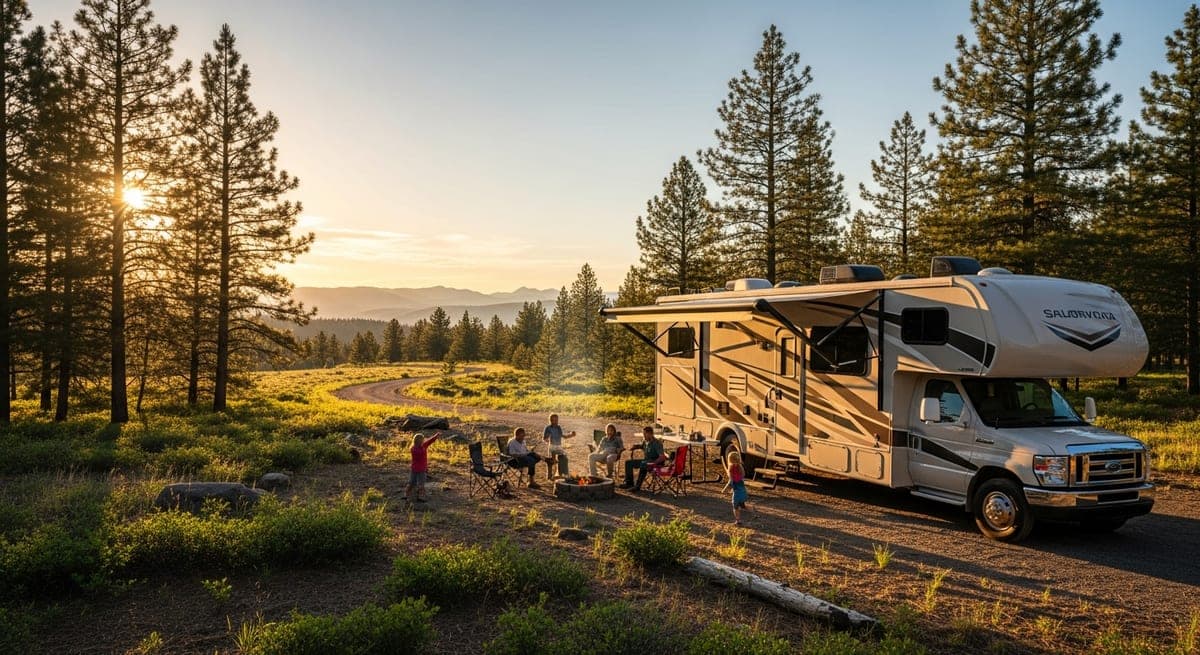
Grandparent travelers who document multigenerational RV trips mention campfire evenings more than almost any other element — not as a planned activity, but as the time when the most memorable exchanges tend to happen. Full-timers describe a consistent pattern: s'mores, no fixed agenda, and a clear sky reliably create the conditions for conversations kids don't have at home and for stories grandparents have rarely found the right moment to tell.
Constellation apps — SkySafari and Star Walk 2 both work offline and without a cell signal — give kids a task that naturally extends time outdoors without forcing it. The consensus among multigenerational travelers is that two or three evenings like this, rather than filling every night with organized activities, tends to be where the trip earns its long-term value. The instinct to schedule everything is understandable when you're responsible for grandkids on your own; experienced grandparent travelers broadly recommend leaving at least part of most evenings open to unfold on their own.
Related: RV travel with kids · RV camping with toddlers · Best national parks for RV camping
From the RVmapper team
Fishing along your route?
Hooked Fisherman publishes fishing reports for all 50 states, species guides, and honest gear reviews. Know what's biting before you park the rig.