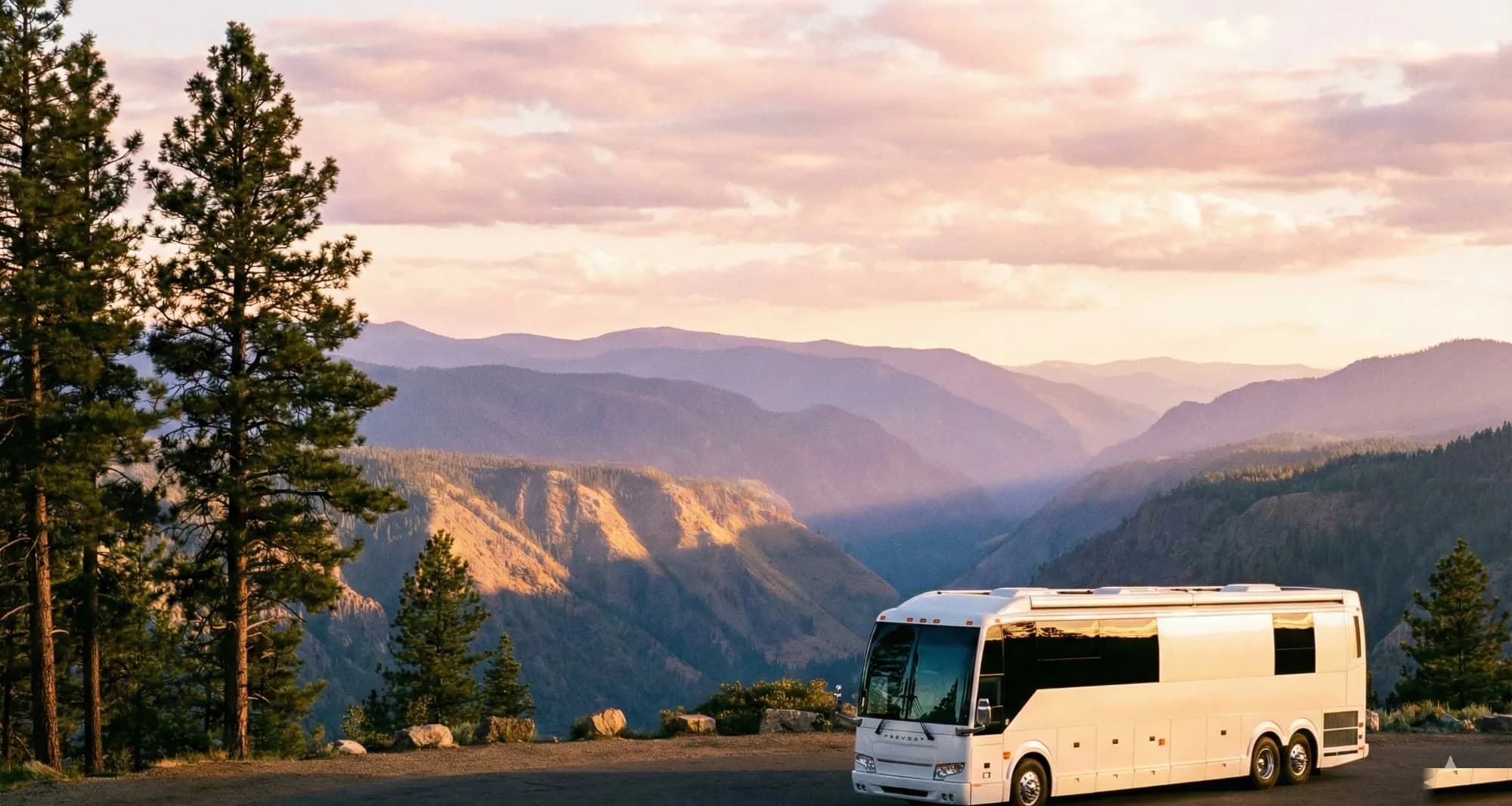
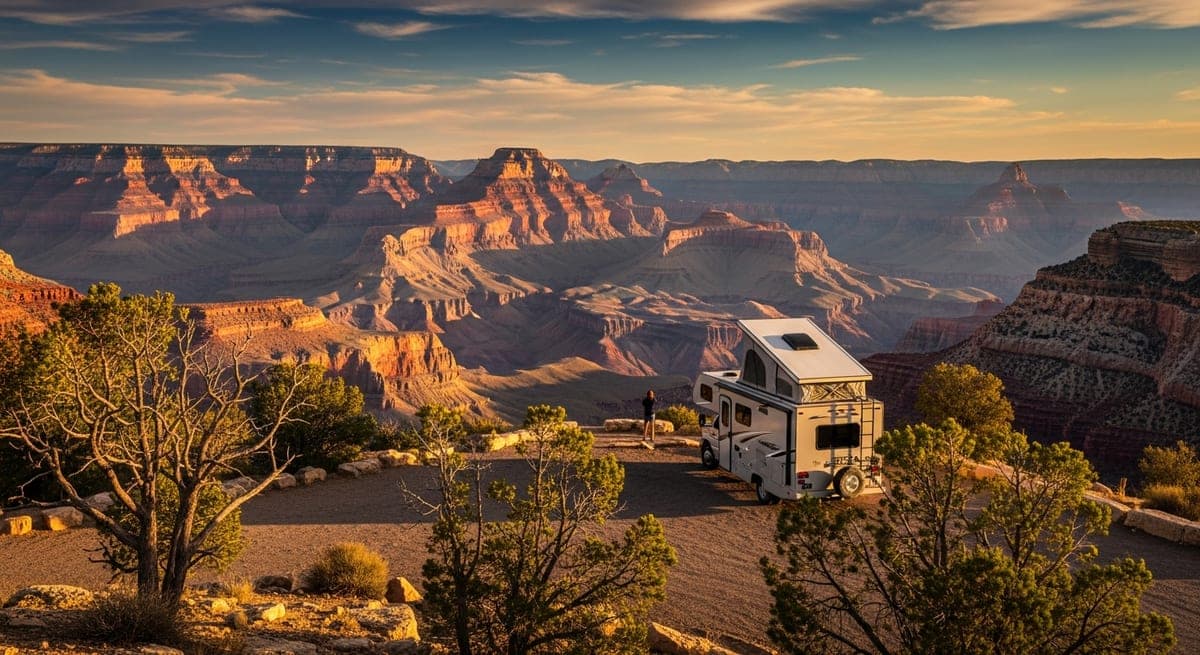
The Grand Canyon is 277 river miles long, a mile deep, and up to 18 miles wide. It is, by any objective measure, one of the most spectacular places on Earth. It's also one of the most RV-logistically complex national parks in the system — strict size limits, limited hookups, campground reservations that book out months in advance, and a South Rim road that gets genuinely congested. Here's how to plan it right.
South Rim vs. North Rim: The Essential Choice
Most Grand Canyon visitors go to the South Rim — and it's the better choice for RVers in most scenarios. Here's why:
- South Rim: Open year-round. More campgrounds. Better infrastructure. Shuttle system runs throughout summer to reduce vehicle congestion. Higher elevation (6,860 ft) means cooler summer temperatures than you'd expect. Most services, visitor centers, and iconic viewpoints are here.
- North Rim: Open mid-May through mid-October only (the access road closes for winter). 1,000 feet higher than the South Rim (8,000 ft elevation) — actually cooler and more forested. Dramatically fewer visitors — if you go in September, you may have stretches of rim trail nearly to yourself. Limited camping (one campground) and services. Requires a significant detour from any South Rim visit.
Most RVers should go to the South Rim. The North Rim is worth the extra drive if you're traveling in May–June or September–October and want a completely different experience without the crowds.
South Rim Campgrounds for RVs
Mather Campground — The primary campground on the South Rim. Located in Grand Canyon Village, walkable to rim viewpoints and shuttle stops.
- 319 sites total; RV sites in multiple loops
- No hookups — generator-only power for most sites; a separate area has electrical hookups (reserved for medical necessity hardship requests)
- Maximum RV length: 30 feet in most loops; some sites accommodate up to 40 feet
- Reservations open 6 months in advance at Recreation.gov — book immediately when the window opens, especially for summer
- Dump station on site, coin-op showers, flush toilets
- Cost: ~$18/night (no hookups)
Trailer Village — The only full-hookup RV campground on the South Rim, operated by Xanterra (the park concession).
- Accommodates RVs up to 50 feet
- Full hookups: water, electric (30/50 amp), sewer
- Adjacent to Mather Campground — same walkable access to village and rim
- Cost: ~$55/night (full hookup)
- Reservations: xanterra.com — books out weeks to months in advance for summer
Desert View Campground — 25 miles east of Grand Canyon Village near the East Entrance. No hookups, no showers, more primitive.
- Open May through mid-October
- 50 sites; some accommodate RVs up to 30 feet
- Beautiful setting near the Desert View Watchtower viewpoint
- Often has availability when Mather and Trailer Village are full — worth checking
North Rim Camping
North Rim Campground — The only campground on the North Rim.
- Open mid-May through mid-October
- 87 sites; some RV sites, maximum length 40 feet
- No hookups; generator hours restricted to reduce noise in this quieter area
- Coin-op showers and laundry; dump station on site
- Reserve at Recreation.gov; books out quickly for summer despite lower overall visitation
RV Size Limits and Road Restrictions
This is where Grand Canyon planning gets complicated for larger rigs:
- Bright Angel Point Road (South Rim Village area): Vehicles longer than 22 feet are prohibited during peak season. Park your RV at Mather Campground or Trailer Village and use the free shuttle system.
- Desert View Drive: Open to all vehicles year-round, no stated size limit, but tight turns near certain overlooks require care in large rigs.
- North Rim Road (SR-67): No stated size restriction, but 44 miles of two-lane road through the Kaibab Plateau requires attentiveness with a large rig. Check for any seasonal weight restrictions.
- Inner canyon (Hermit Road): Private vehicles prohibited March through November — shuttle only. Not relevant for RV camping logistics but important to know for sight-seeing.
Best Approach Routes
From the West / Las Vegas: US-93 north to Kingman, AZ, then east on I-40 to Williams, then north on AZ-64 to the South Rim. Williams has excellent RV parks and is worth a night for the historic Route 66 main street. Distance from Las Vegas to South Rim: ~280 miles.
From the East (Monument Valley / Four Corners direction): US-89 north to junction AZ-64, west to Desert View entrance. This approach gives you the stunning Desert View Watchtower arrival — a better first glimpse of the canyon than the busy Village area.
From the South / Phoenix/Tucson: I-17 north to Flagstaff, then AZ-180 northwest to South Rim. Flagstaff has full-service RV parks, camping supply stores, and excellent dining — worth a stop.
For the North Rim: Isolated geography requires commitment. From Utah: US-89 south to Jacob Lake, then AZ-67 south 44 miles to the rim. There's nothing else on AZ-67 — gas up at Jacob Lake (the small resort there has a gas station).
What to Plan For: A 3-Night Grand Canyon RV Trip
Three nights gives you time to see the canyon properly without rushing:
- Day 1 — Arrive, settle, rim walk: Check in to Mather or Trailer Village. Walk the Rim Trail west from Grand Canyon Village to Trailview Overlook and back. Catch sunset from Mather Point or Yavapai Point.
- Day 2 — South Kaibab Trail: Hike down South Kaibab Trail to Cedar Ridge (3 miles round trip, 1,140 ft descent) for the best canyon views of any short hike. Start before 7 AM in summer — it's exposed and hot once the sun clears the canyon walls. Afternoon: shuttle to Hermits Rest overlooks.
- Day 3 — Desert View Drive: Drive the 25-mile Desert View Drive east from the village to Desert View Watchtower. Stops at Grandview Point and Lipan Point are outstanding. Return via the village and catch the sunset from any rim viewpoint.
- Day 4 — Depart: Sunrise at Yaki Point, then on the road by 9 AM ahead of the day-tripping crowds.
Practical Tips
- Water: Fill your freshwater tank before arrival — South Rim water is available but limited at campgrounds
- Generator hours: Mather has restricted generator hours (8 AM–8 PM) — plan your battery/shore power accordingly if no hookups
- Groceries: The small general store at Grand Canyon Village is limited and expensive. Stock up at Flagstaff Walmart or Williams before entering the park.
- Cell service: Spotty inside the park. Download the NPS Grand Canyon app offline before you arrive — it includes maps, shuttle routes, and trail info without cell service.
- Elevation: South Rim sits at 6,860 feet. If you or your engine is sensitive to altitude, give it a day to adjust.
Related: Best national parks for RV camping · Zion and Bryce Canyon RV guide · Unforgettable Southwest RV routes
Ready to Plan Your Trip?
Put this knowledge to work. Let our AI build a personalized RV itinerary for your next adventure, or browse community trips for inspiration.
Keep Reading
RV Camping in the Appalachian Mountains: Blue Ridge, Shenandoah, and Beyond
10 min read
Destination GuidesColorado RV Camping: Rocky Mountain National Park, Mesa Verde & the Million Dollar Highway
15 min read
Destination GuidesAcadia National Park RV Camping: Size Limits, Campgrounds & the Best Way to See Mount Desert Island
13 min read