Why Eastern Canada Deserves More RV Attention
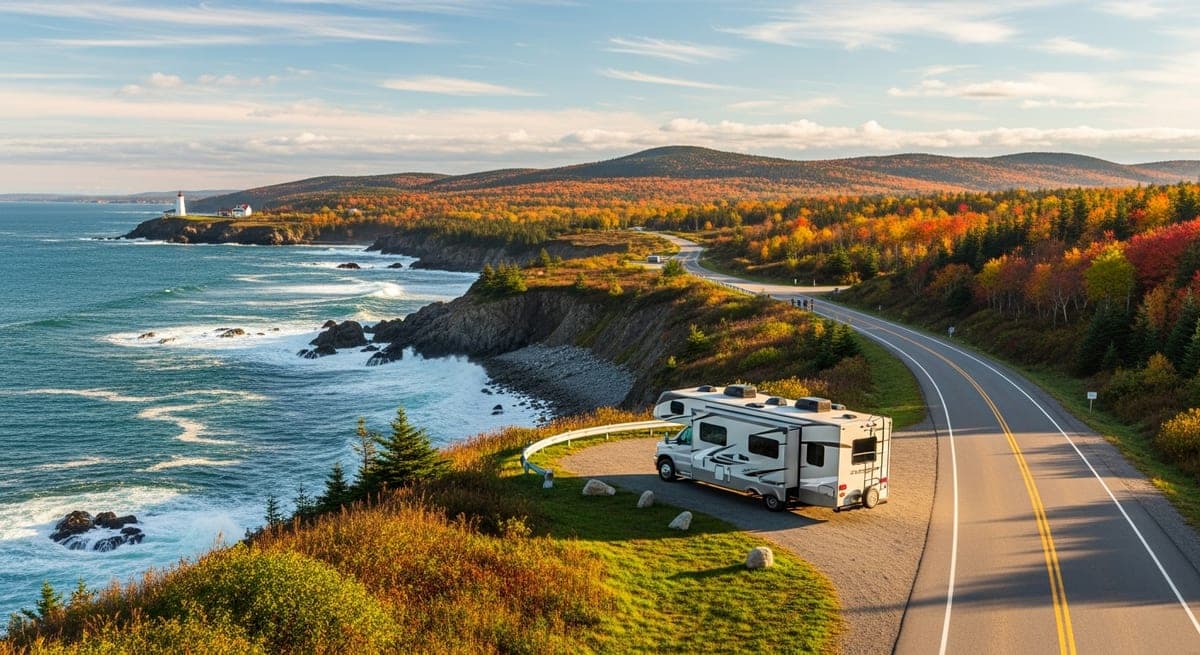
American RVers overwhelmingly head west — the national parks corridor, the Pacific Coast, Alaska. Eastern Canada receives a fraction of the RV tourist traffic and is spectacular for it. The Maritime provinces offer lobster boats, tidal bore rivers that fill and drain 50 feet of water in six hours, the Cabot Trail through Cape Breton's highlands, PEI's red sandstone beaches, and some of the friendliest small-town hospitality in North America. The crowds that plague US national parks simply don't exist here.
The best time: July through mid-September. Water temperatures on the Bay of Fundy and southern Nova Scotia reach 65-70°F for swimming. Foliage begins in late September and rivals New England.
Getting Into Canada With an RV
US citizens and permanent residents cross into Canada with a valid US passport (passport cards work at land borders). No special RV documentation is required beyond normal vehicle registration and proof of insurance. Canadian customs may ask about food items — fresh fruits, vegetables, and meats from the US can be restricted. Declare everything; the penalties for not declaring are much worse than the item being confiscated.
Entry points for the Maritimes: Calais/St. Stephen (Maine to New Brunswick), Houlton/Woodstock (I-95 to Trans-Canada), or Vanceboro/McAdam. The Calais/St. Stephen crossing is the most common for travelers driving up the Maine coast.
The Route: Two Weeks Through the Maritimes
Day 1-2: New Brunswick — The Fundy Coast
Cross at Calais into St. Stephen, NB and drive to Fundy Trail Parkway (St. Martins). The Bay of Fundy has the highest tides in the world — 48-52 feet at Burncoat Head. The Fundy Trail gives access to dramatic coastal cliffs. Camp at Hopewell Rocks — watch the famous "flowerpots" (rock pillars) go from a beach you can walk on to being surrounded by 40 feet of water in 6 hours. This is one of the most dramatic natural phenomena you can witness in North America.
Day 3-4: Moncton and the Cavendish Shore
Drive to Cape Tormentine and take the Confederation Bridge (13 km, the longest bridge over ice-covered water in the world) to Prince Edward Island. The $50 toll applies to vehicles crossing to PEI from the mainland; the return ferry from Wood Islands is free.
Day 5-6: Prince Edward Island
PEI is the smallest Canadian province and among the most charming. Red sandstone beaches (the sand really is red-orange), lobster suppers in the fishing villages, Anne of Green Gables country in Cavendish, and the entire island is accessible in a weekend. Cavendish Campground (National Park) has excellent sites. North Rustico Harbour's lobster boats unload catches you can buy directly from fishermen.
Day 7-9: Nova Scotia — The Fundy Shore to Halifax
Return to mainland via the Wood Islands ferry to Caribou, NS (spring/summer/fall only — book ahead in July/August). Drive the Trans-Canada to Truro and south to Halifax. The Halifax Waterfront is walkable, historic, and has excellent restaurants. Peggy's Cove lighthouse is 45 minutes from Halifax — the most photographed lighthouse in Canada.
Day 10-12: Cape Breton Island — The Cabot Trail
Drive north through Antigonish and over the Canso Causeway to Cape Breton Island. The Cabot Trail is a 298 km loop through the Cape Breton Highlands — coastal cliffs, highland plateaus, and small fishing villages. Comparable to Big Sur in drama; uncrowded compared to any equivalent US drive. Cape Breton Highlands National Park has several campgrounds along the trail.
Day 13-14: Return Route
Drive back through New Brunswick on the Trans-Canada to Edmundston and south into Maine via Madawaska. Or extend the trip with a detour to Percé Rock and Gaspé Peninsula in Québec — one of the most dramatic coastal drives in eastern North America.
Practical Notes for Maritimes RVing
Fuel: Gas prices in Canada are in liters, not gallons. Multiply the price per liter by 3.785 to get the price per gallon equivalent (and then convert CAD to USD). Expect to pay roughly 20-30% more per gallon equivalent than US prices.
Campgrounds: Provincial parks in Nova Scotia, NB, and PEI are excellent value — typically $25-$40 CAD/night for partial or full hookups. Book ahead for July and August; many fill weeks in advance. US campground memberships do not apply in Canada.
Cell service: US cell plans typically have roaming agreements with Canadian carriers but throttle data quickly. Consider a Canadian SIM from Rogers or Telus for a two-week trip if data use is important. Campground WiFi varies widely.
Currency: Carry some Canadian cash. Most places accept major US credit cards, but small fishing villages and campground facilities sometimes prefer cash. Exchange rates at banks and credit card companies are far better than exchange kiosks.
Is that campground membership actually worth it?
Plug in your camping nights and typical nightly rate. Our free calculator does the break-even math for Good Sam, Passport America, Thousand Trails, and KOA Rewards.
Keep Reading
RV Camping in the Appalachian Mountains: Blue Ridge, Shenandoah, and Beyond
10 min read
Destination GuidesColorado RV Camping: Rocky Mountain National Park, Mesa Verde & the Million Dollar Highway
15 min read
Destination GuidesAcadia National Park RV Camping: Size Limits, Campgrounds & the Best Way to See Mount Desert Island
13 min read