Planning the Route
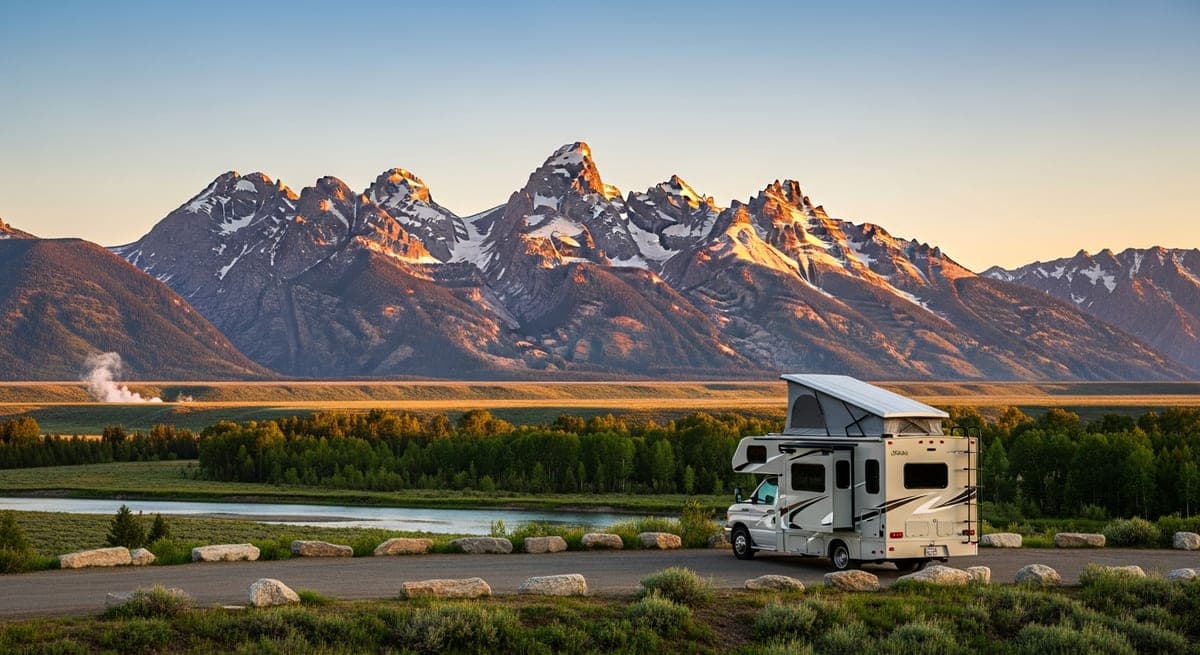
Yellowstone National Park and Grand Teton National Park sit adjacent to each other in northwestern Wyoming, making a combined trip logical and efficient. The standard approach: enter Grand Teton from the south (Jackson Hole area), drive north through Teton Park on the Teton Park Road (which has vehicle length restrictions — more below), then enter Yellowstone through the South Entrance. Alternatively, enter Yellowstone from the West (West Yellowstone, MT) and add Grand Teton as a southern extension.
Total driving within both parks: 150–300 miles depending on how thoroughly you explore Yellowstone's five distinct regions (Mammoth Hot Springs in the north, Tower-Roosevelt in the northeast, Canyon in the center, Lake in the southeast, and the geyser-dense Old Faithful/West Thumb area in the southwest). A thorough visit to both parks requires 5–8 days minimum.
Vehicle and Rig Size Restrictions
Yellowstone and Grand Teton have specific vehicle length restrictions on certain roads that are critical to know before planning your trip with a larger rig. The most important: Teton Park Road (the primary scenic road in Grand Teton) restricts vehicles over 45 feet in combined length — this includes your tow vehicle + trailer. Several Yellowstone roads restrict RVs over 35 feet (combined). Mount Washburn road and some backcountry loops are closed to RVs entirely.
The park roads designed for full-size RVs include the Grand Loop Road in Yellowstone (the figure-8 main road) and most primary routes. The restrictions apply to secondary and scenic byways. Research specific road restrictions at nps.gov before your trip and plan your daily drives accordingly. Class B and smaller Class C motorhomes or shorter trailers have the most flexibility.
Campgrounds in Both Parks
Both parks have campgrounds managed by different entities: NPS-operated campgrounds and Xanterra-operated concession campgrounds. All are in high demand from late June through mid-August.
In Yellowstone, Madison Campground (near the western geyser basins) and Bridge Bay (on Yellowstone Lake) are the most popular. Bridge Bay accommodates large RVs (full hookup loop). Grant Village has full hookups. The loop roads require 6-month advance reservation on Recreation.gov for summer dates.
Grand Teton's Colter Bay RV Park has full hookups and is the most RV-friendly option in the park. Gros Ventre and Signal Mountain campgrounds are NPS-operated with electric hookups at some sites. All book fast.
Wildlife and the Wildlife Viewing Experience
Yellowstone's wildlife is a primary attraction — bison herds blocking roads, bears visible from safe distances, wolves (bring binoculars or a spotting scope — the Lamar Valley is the wolf watching capital of North America), elk, moose, and bighorn sheep. Early morning and evening are the most active viewing periods.
Bison are not domesticated cattle. They move at their own pace on park roads and can charge a vehicle without warning. Don't exit your vehicle near bison. The 25-yard minimum rule (25 yards from bison; 100 yards from bears and wolves) is enforced and genuinely protective. A bison at close range is a real risk.
From the RVmapper team
Fishing along your route?
Hooked Fisherman publishes fishing reports for all 50 states, species guides, and honest gear reviews. Know what's biting before you park the rig.
Keep Reading
RV Camping in the Appalachian Mountains: Blue Ridge, Shenandoah, and Beyond
10 min read
Destination GuidesColorado RV Camping: Rocky Mountain National Park, Mesa Verde & the Million Dollar Highway
15 min read
Destination GuidesAcadia National Park RV Camping: Size Limits, Campgrounds & the Best Way to See Mount Desert Island
13 min read