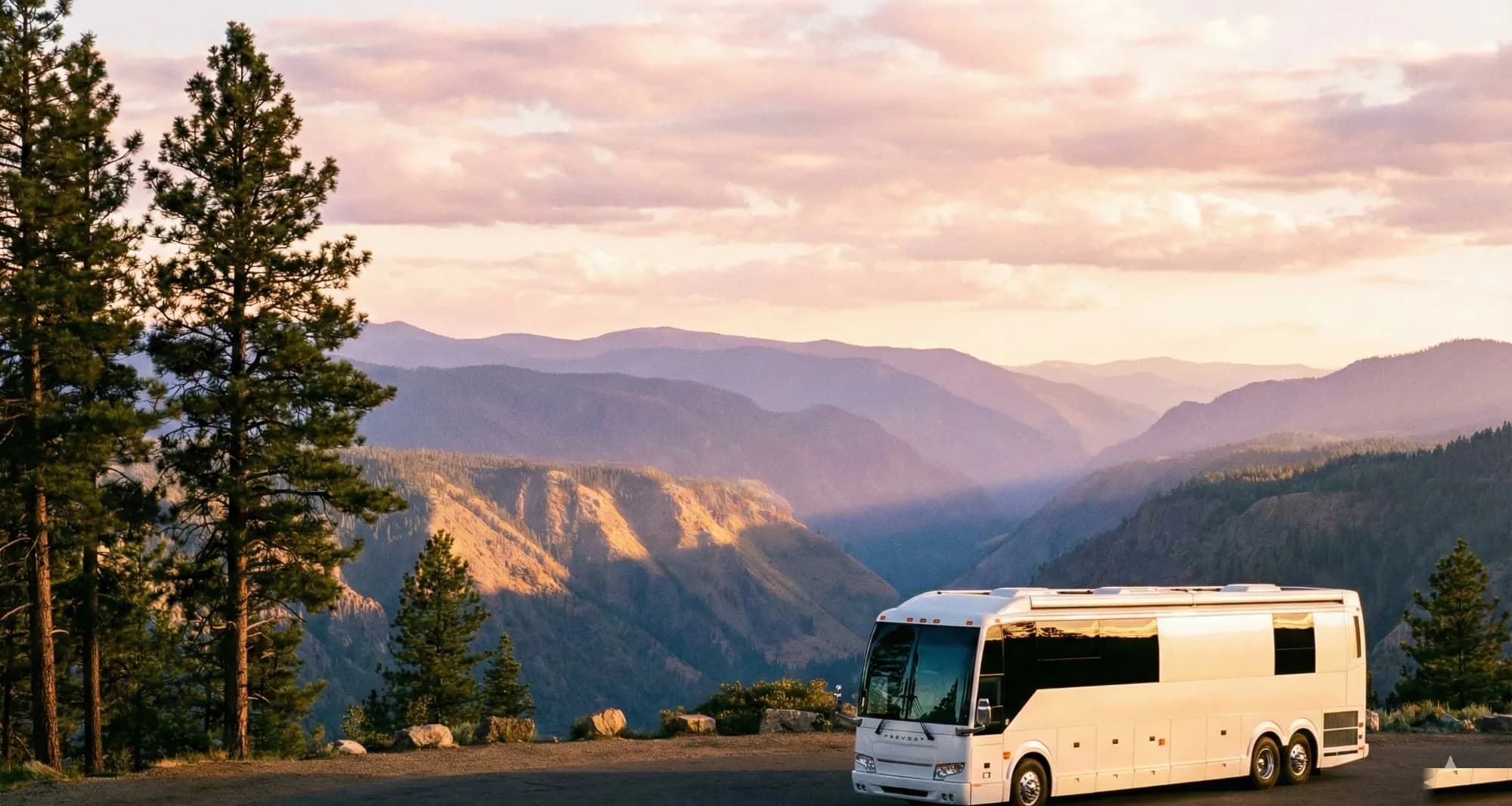

The most consistent finding across RV parenting groups and forums isn't about gear — it's the two-hour limit. Toddlers, regardless of snacks or entertainment, tend to hit a hard ceiling around 90 to 120 minutes in a moving vehicle, and families who don't plan around that window report that long driving days unravel quickly. Nearly every practical decision in toddler RV camping flows from that single constraint.
Which RV Layout Actually Works
Owner feedback in RV family communities consistently points to bunkhouse floor plans as the most practical choice for ages 1–4. The core advantage: a dedicated sleeping zone physically separated from the living area lets a toddler nap while adults have quiet time up front. Class B vans offer almost no spatial separation — parents in those rigs describe managing nap schedules as significantly harder, particularly during rain.
Class A and C motorhomes with slide-outs provide the most usable floor space, which matters on days when the rig is the only option. For sleeping, a Graco Pack 'n Play or BabyBjörn Travel Crib fits in most dinette areas or bedroom corners. A Regalo Play Yard or North States Superyard to create a defined campsite perimeter comes up repeatedly in family forums — particularly for sites near fire rings and campground roads where containment matters from the moment of arrival.
Driving Days: The Two-Hour Rule in Practice
Most experienced RV families with toddlers follow the same structure: cap driving legs at two hours, build in 30–45 minute stops, and treat long travel days as segments rather than pushes. A six-hour drive becomes three legs. Parents in multiple forum threads describe using Google Maps' playground filter to locate stops along the route — urban splash pads exist in many cities, though coverage in smaller and rural communities varies considerably by region and municipal budget.
Some families try to align a driving window with nap time, particularly for younger toddlers who still sleep in car seats. Owner reports on this strategy are split — it works for some children between 12 and 18 months and backfires for many in the 18-month-to-3-year range who resist motion sleep. The forum consensus leans toward treating nap time as protected time at camp rather than a driving opportunity.
First 20 Minutes at Camp: Safety Before Anything Else
Parents in RV family communities identify the same three hazards that need addressing before any gear comes out of the storage bays: fire rings (even cold ones retain heat longer than expected), campground roads, and nearby water. The recommendation that surfaces most frequently is to set up a portable play yard perimeter first — not after the awning is out and leveling is done.
For toddlers 2 and older who can internalize a boundary rule, a consistent perimeter enforced the same way every arrival is what parent feedback suggests actually holds up over a multi-night trip. Near water, the consensus is straightforward: eyes-on at all times, regardless of age or ability.
One overlooked item that comes up regularly: a portable potty for the campsite, even for toddlers who are reliably trained at home. Many campground bathhouses sit 150–200 yards from sites, and the urgency window for toddlers doesn't accommodate that distance reliably.
Sleep Logistics: Light, Sound, and Schedule
Keeping sleep within 30 minutes of the home schedule is the factor RV parents cite most often as the difference between a trip that holds together and one that ends early. The biggest practical obstacle for summer camping: sunset at northern campgrounds stays past 9 p.m., and standard RV curtains don't block it adequately for toddler sleep.
Blackout window covers and a SlumberPod privacy canopy over the travel crib are the most frequently recommended solutions in threads on this problem. A small travel white noise speaker running during sleep helps mask campground ambient sounds — generator noise from neighboring sites, early-rising dogs, group campsites with late-night activity.
For families with toddlers still on a nap schedule, the consensus in RV parenting groups is to plan arrivals before the nap window, not to drive through it.
What to Actually Pack (Toddler-Specific Additions)
Beyond standard RV supplies, families in RV parenting communities repeatedly flag these additions as the ones that matter most for ages 1–4:
- Travel high chair or clip-on booster — the Chicco Travel Seat and BabyBjörn Booster Seat are both mentioned frequently in family RV threads as dinette-compatible options
- Portable splash tub or small inflatable pool — serves as an evening cleanup station and afternoon activity in one
- Double your clothing estimate — owner reports are consistent on this; mud and water contact is constant
- Comfort objects from home — same stuffed animal, same blanket; familiar items consistently show up in parent reports as improving sleep in unfamiliar environments
- Children's first aid kit — children's acetaminophen, antihistamine, hydrocortisone cream, assorted bandages, and tweezers; splinters are a near-daily occurrence
- DEET-free insect repellent — picaridin is widely recommended for children under 3; oil of lemon eucalyptus (OLE/PMD) is EPA-registered and CDC-approved for children 3 and older, but is not recommended for children under 3
- Mineral sunscreen — SPF 30 or higher, reapplied every two hours in direct sun
- Portable campsite potty — standalone, separate from the RV toilet; parent reports suggest it gets used more than expected directly at the site
Campgrounds That Work for Toddlers
When families in RV communities are asked what makes a campground functional for ages 1–4, the same criteria surface: on-site playground, some water feature, relatively flat and contained sites, and bathrooms within walking distance. Remote or rugged campgrounds that require hiking to amenities get flagged consistently as "wait until they're older" by parents who've tried them with toddlers.
Jellystone Park Camp-Resorts come up frequently in toddler-specific threads — the chain's typical amenity profile (splash pads, pools, themed programming) aligns well with what families with young children actually use. Jellystone Park Cave Country in Horse Cave, Kentucky and Jellystone Park Camp-Resort Larkspur in Colorado both appear in family forum recommendations, cited for their age-appropriate facilities and proximity to regional attractions.
KOA Holiday and KOA Resort properties tend to score higher than KOA Journey locations in reviews from parents with young children — Journey campgrounds skew toward overnighters with fewer play amenities. That said, quality varies significantly by property. Campendium and The Dyrt both support filtering reviews by family type, and parents in RV communities consistently recommend doing that search before booking any campground with a toddler in tow.
State park campgrounds are a mixed category for this age group. Turkey Run State Park in Indiana and Cheraw State Park in South Carolina are two that appear in family-focused RV conversations as examples that combine modern bathhouses, manageable site-to-facility distances, and enough natural variety to hold a toddler's attention without requiring long hikes.
Related: RV travel with older kids · KOA campgrounds guide · Campsite setup guide
From the RVmapper team
Fishing along your route?
Hooked Fisherman publishes fishing reports for all 50 states, species guides, and honest gear reviews. Know what's biting before you park the rig.