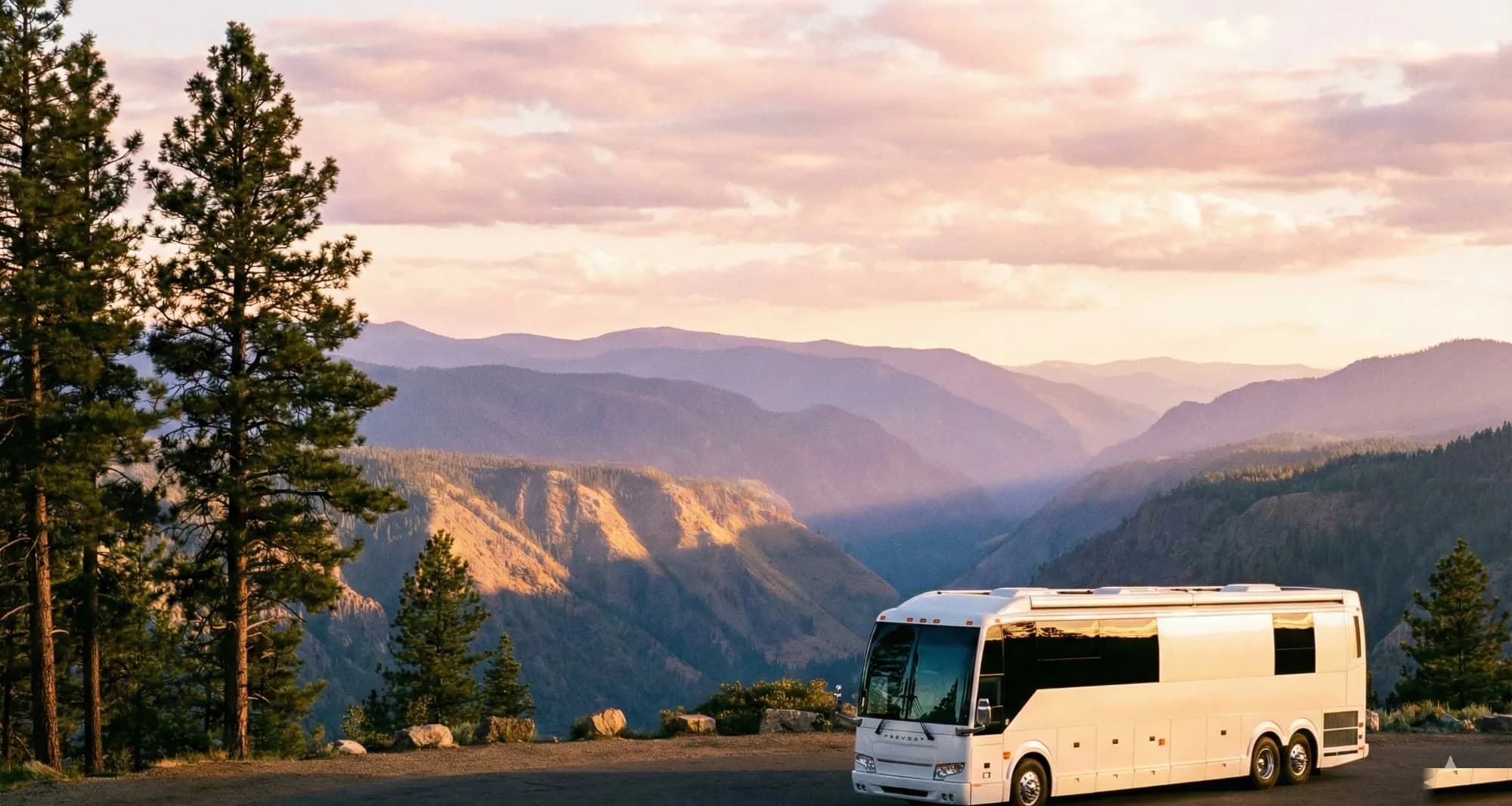

Pulling into a campsite for the first time is overwhelming. There are things to connect, things to level, things to deploy — and it's not always obvious what order they go in. After a few trips you develop a routine so automatic you don't think about it. Here's that routine, built from the ground up.
Step 1: Pre-Park Walk-Through
Before you pull into the site, stop the rig and walk the site on foot. Check: which direction the hookups are (this determines your pull-in direction), whether there are any low branches or obstacles in the path of your slide-outs, where the sewer connection is relative to your compartment, and the grade of the site (determines which side needs leveling blocks).
Two minutes on foot saves you from the frustrating experience of pulling in the wrong direction and having to back out and reposition.
Step 2: Back In and Rough Level
Most full-hookup sites are pull-through or back-in. For back-ins, use a spotter outside — they stand where you can see them in your mirror and signal direction. Agree on signals before you start: arm overhead = keep going, hands down = stop.
Rough level means getting the rig close enough to level that you can deploy slide-outs without stress and the refrigerator will run properly. Your tongue jack and leveling blocks (or auto-leveling system if you have it) handle this. Most modern Class As and fifth wheels have auto-leveling that you simply press a button for.
Step 3: Deploy Stabilizers (Not Levelers)
Stabilizer jacks go down after leveling, not before. Their job is to prevent the rig from rocking, not to level it. Over-extending stabilizers to compensate for an unlevel site damages them. Lower them until they contact the ground, then a quarter turn more. Done.
Step 4: Connect Shore Power
Connect the 30-amp or 50-amp power cord before turning anything on inside. Check the pedestal for damage (burn marks, corrosion, loose connections) before plugging in. Use a surge protector between the pedestal and your rig — this is non-negotiable for protecting thousands of dollars of electronics from bad campground power.
Once connected, check your voltage meter (most newer RVs have one on the display panel). Acceptable range: 108–130V for 120V circuits. Outside that range, unplug and notify the campground.
Step 5: Water Connection
Connect the city water hose (white NSF-approved drinking water hose, not a garden hose) with a pressure regulator inline. Campground water pressure is inconsistent — pressure spikes can damage your water lines. A regulator that limits to 45–50 PSI is standard.
Turn on the water supply, check under the rig for any drips, then check connections inside at the kitchen and bathroom. If you have a water filter, it goes between the regulator and the rig's water inlet.
Step 6: Sewer Connection
Sewer connects last. Use a sewer hose support (the accordion-style support that keeps the hose off the ground) to ensure proper slope from the rig to the cleanout. Connect the bayonet fitting to your rig's output, connect the other end to the campground cleanout, and leave both valves closed until you're ready to dump.
The fundamental rule: never leave the black tank valve open. This causes solids to accumulate at the bottom (the "pyramid problem"). Leave gray valve closed too. Dump both together when black is around two-thirds full — the gray water flushes the hose.
Step 7: Slide-Outs and Awning
Deploy slide-outs only after leveling and only if you've confirmed clearance during your walk-through. Do one slide at a time and watch it travel out. If anything catches or sounds unusual, stop immediately and investigate before continuing.
Awnings go out last. Never leave your awning out when you leave the site, even for a short time — unexpected wind gusts destroy awnings quickly and expensively.
Step 8: Final Checks
Run through this mental checklist: wheel chocks in place, TV antenna up (if applicable), slides fully out, no tire contact with curb or obstacles, outdoor rug down, camp chairs out. You're set up. Go relax.
Related: Common first-time RV mistakes · First RV trip checklist · Campground etiquette
Is that campground membership actually worth it?
Plug in your camping nights and typical nightly rate. Our free calculator does the break-even math for Good Sam, Passport America, Thousand Trails, and KOA Rewards.