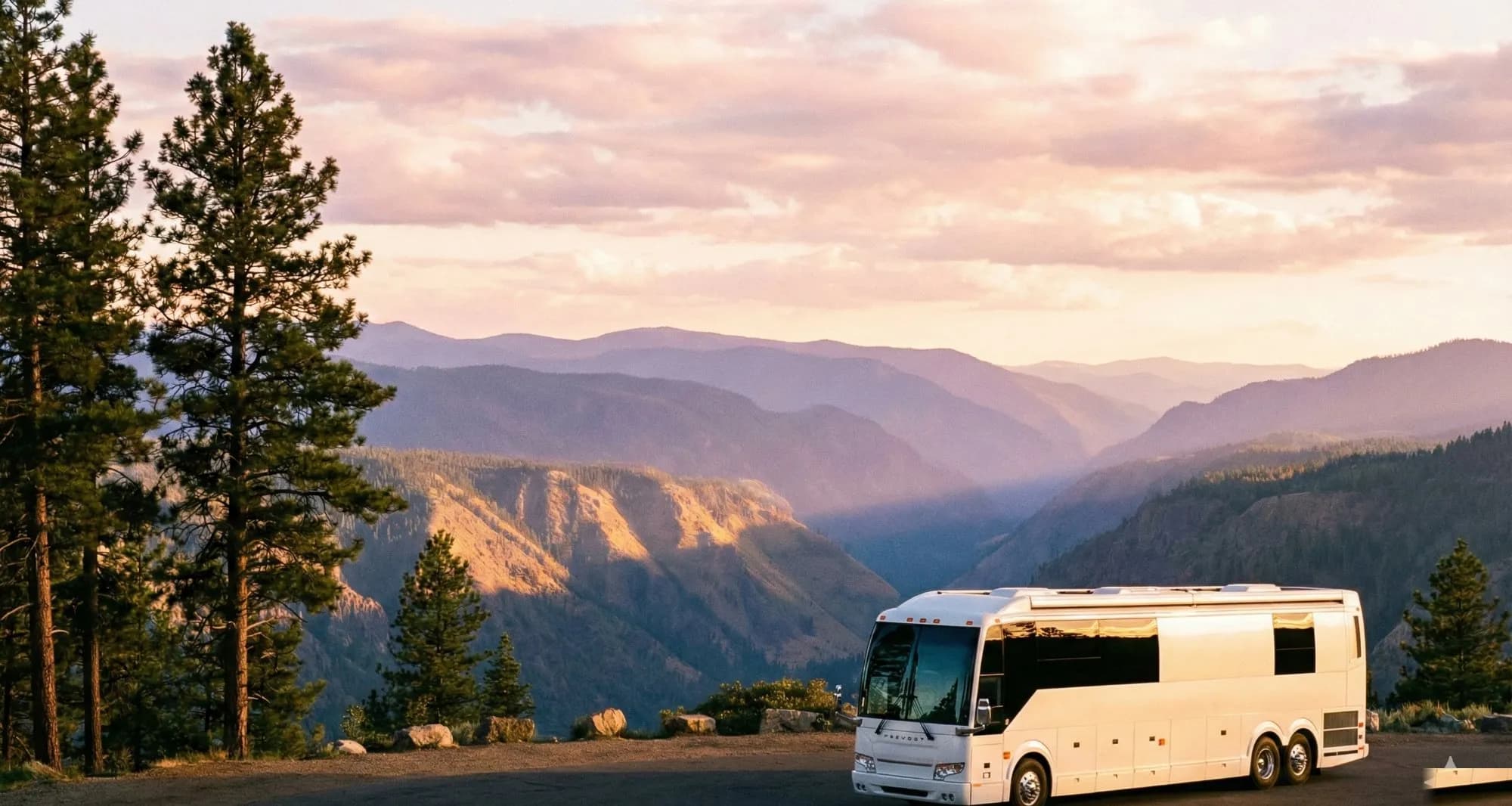

Memorial Day weekend claims more campsite reservations than any other holiday on the US outdoor calendar. Recreation.gov data released in prior seasons shows that top-tier federal campgrounds, including Yosemite Valley, Glacier's Apgar loop, Rocky Mountain National Park's Moraine Park, routinely sell out within minutes of their six-month booking window opening, not within hours or days. For RV owners who miss that opening, the weekend can feel like a locked door. But feedback from full-timers and repeat holiday campers consistently points to a more nuanced picture: the difference between a confirmed site and a scrambled last-minute search has less to do with luck and more to do with understanding when, where, and what type of site to target.
Why Memorial Day consistently defeats last-minute planners
Memorial Day weekend isn't just busy—it structurally concentrates demand in ways that amplify scarcity. The holiday always falls on the last Monday of May, which means the preceding Friday evening through Monday afternoon is the peak of what outdoor industry analysts describe as the "season-opener" effect: millions of households who haven't camped since Labor Day return to the market simultaneously.
National Park Service occupancy data shows that gateway communities near major parks see 2–4x their typical late-May overnight traffic during Memorial Day weekend. This surge isn't evenly distributed. Owners who track site availability report that hookup sites with 50-amp service disappear first—often within the first day of a booking window opening—while dry-camping tent loops and primitive pull-offs linger available for weeks longer. For large rigs requiring full hookups, the supply is even tighter than aggregate availability figures suggest.
Contributing factors that owners on long-term camping forums cite as making Memorial Day uniquely difficult:
- Six-month booking windows align with November and December, when most RVers aren't yet thinking about summer camping
- State park systems often have shorter booking windows (3–4 months) that don't open until February or March, creating a second wave of competition
- Private KOA and Thousand Trails parks fill on a different, sometimes shorter cycle that catches planners off guard
- Cancellations are real but statistically unpredictable; counting on them as a primary strategy fails more often than it succeeds
Booking windows that consistently work across Recreation.gov, state systems, and private parks
The most reliable data point that full-timers share is direct: six months in advance is the minimum for federal sites on major-holiday weekends. Recreation.gov allows reservations to open exactly 180 days before a site's arrival date. For Memorial Day weekend, that window opens in late November. Owners who set calendar reminders and log in at 10:00 AM Eastern—when Recreation.gov's booking clock releases—report the highest success rates for premium sites.
State park systems operate on different timelines, and tracking them requires per-state research. Reported booking windows from experienced state park campers:
- California State Parks (ReserveCalifornia): Opens 6 months out; Carpinteria, Leo Carrillo, and Pfeiffer Big Sur fill within hours of window open
- Colorado State Parks: 6-month window; Chatfield and Cherry Creek near Denver are perennial holiday sellouts
- Texas State Parks (Texas Parks & Wildlife): 5-month window; Enchanted Rock and Garner fill fast
- Florida State Parks: 11-month window for some parks—a notable outlier that rewards early planners significantly
- Virginia State Parks: 11-month window as well, creating a meaningful early-bird advantage
Private campground booking windows vary more widely. KOA locations typically open reservations 6–12 months ahead and charge a non-refundable booking fee that discourages speculative holds. Thousand Trails members access an internal reservation system on a rolling 30-day window, which limits far-advance planning for that network. Owners who travel primarily in private-park systems report that Memorial Day inventory drops noticeably by February for desirable coastal and mountain locations.
For Recreation.gov specifically, a pattern that experienced users report: if a primary site sells out at window open, check back on the same afternoon. Reservation holds that weren't completed expire within 15 minutes, and a small number of sites cycle back into availability within the first few hours after a window opens.
Underbooked site types that fill last on holiday weekends
The community-aggregated insight that catches most casual campers off guard is that underbooked site categories exist even on Memorial Day weekend—they just don't look like the sites most RVers target by default. Owners who have camped the holiday weekend for multiple consecutive years point to several consistently slower-to-fill categories.
Equestrian overflow areas. Many federal and state parks maintain equestrian campgrounds with large pull-through spaces and water access designed for horse trailers. These loops are open to RV use when no equestrian reservation is present, but they rarely surface in standard site-type filters. Owners report finding available sites in these loops well into April and sometimes May. The tradeoff: no electrical hookups in most cases, and a longer walk to shower facilities.
Group site splits. Large group sites designed for 25–50 people can sometimes be reserved by a single party or split between two rigs. These don't always appear in standard single-site searches. Calling the campground host directly—rather than relying entirely on the online booking interface—is the method owners describe for identifying and reserving them.
Walk-in tent loops. For RV owners with compact rigs—Class B vans or teardrop trailers in the sub-20-foot range—walk-in tent loops that allow vehicle parking nearby rarely fill to capacity and often have same-week availability. Owners of compact rigs report consistent success with this category even at otherwise fully booked parks.
Secondary campground loops within the same park. The named main loop at a popular park fills first. Secondary administrative units—often labeled "overflow," "group C," or a secondary trailhead campground within the same park boundary—fill weeks later. Searching by map view on Recreation.gov rather than by campground name surfaces these.
Corps of Engineers campgrounds. U.S. Army Corps of Engineers recreation areas manage hundreds of lakeside campgrounds that rarely appear in standard national park searches. These campgrounds frequently offer full hookup sites, boat launches, and swimming areas. Owners report that Corps campgrounds are consistently underbooked relative to National Park Service sites on holiday weekends, with availability appearing well into May for prime sites.
Private campgrounds more than 30 miles from a gateway anchor. The further a private park is from a major urban center or scenic draw—a national park entrance, a beach access point, a ski resort town—the slower it fills. Owners who are flexible on destination report that parks 35–60 miles from the nearest anchor often carry availability through Memorial Day weekend itself.
Arrival timing and departure strategy that experienced campers rely on
Assuming a site is confirmed, the on-the-ground Memorial Day experience varies substantially based on when an RV rolls in and rolls out. Feedback from repeat holiday campers indicates that the worst-case scenario—arriving Friday evening to a campground at full capacity, crowded bathrooms, and unpredictable neighbors—is largely avoidable with deliberate timing adjustments.
Arrive Thursday, depart Tuesday. The most consistently reported strategy from full-timers is to add a night on each end. Thursday arrivals beat the Friday evening traffic surge entirely. Tuesday departures mean driving home on an open interstate rather than a stop-and-go Memorial Day afternoon. Owners who are flexible on start and end date report that Thursday-to-Tuesday reservations are significantly easier to book than Friday-to-Monday slots at the same campground.
Enter before noon or after 8 PM on Friday. For those who can't take Thursday off, the traffic patterns that full-timers cite are consistent: interstate RV traffic on Memorial Day Friday peaks between 2 PM and 7 PM. Owners who are wheels-rolling by 10 AM report much smoother arrivals than those hitting the road at standard commute-end hours.
Site-management specifics that experienced campers flag for holiday weekends:
- Confirm site length and slide clearance before departure, not at the campground entrance—holiday weekend staff have no capacity to assist with mid-rush reassignments
- Arrive with full fresh water and a topped propane tank; camp store lines and dump station queues run long on holiday weekends
- Plan the first dump station visit for Sunday morning, not Friday or Saturday; host reports from busy campgrounds indicate 30–60 minute waits at peak holiday times
- Set realistic expectations for quiet hours—owners consistently note that holiday weekends at popular campgrounds attract more noise, more late arrivals, and less predictable neighbor behavior than shoulder-season weekends
For cancellation-hunting as a supplemental strategy: Recreation.gov cancellations release immediately and appear in real time. Owners who monitor availability—either through the site's notification feature or third-party tracking tools—report picking up cancellations as late as the week before the holiday. This works best for campgrounds with shorter minimum-stay requirements; those requiring 3-night minimums see fewer mid-window cancellations because partial-refund calculations create a financial disincentive to cancel.
Building a backup plan that actually functions
Full-timers who have camped 10 or more consecutive Memorial Day weekends describe their approach not as a single reservation but as a tiered system. The primary reservation is booked at the six-month window. A backup campground—typically a Corps of Engineers site or private park in a different region—is secured simultaneously. A third option, a boondocking location on BLM or National Forest dispersed land within a day's drive, is identified in advance but not reserved (dispersed camping requires no reservation in most management areas).
BLM dispersed camping is worth understanding as a legitimate Memorial Day option, not a fallback of last resort. Reports from RV owners who use dispersed sites on holiday weekends describe quieter, more spacious experiences than developed campgrounds, with the significant caveat that full self-sufficiency is required: no hookups, no dump stations, no camp hosts, and no water. For owners with solar capacity, sufficient tank volume, and comfort navigating to dispersed areas, this tier functions as a genuine primary option.
National Forest campgrounds occupy a middle tier: most sites are reservable, but some loops remain first-come, first-served. Feedback from owners who use Forest Service first-come sites: arrive by 10 AM Thursday for these loops, as sites turn over from the previous week's campers on Wednesday or Thursday morning. Early Thursday arrivals at Forest Service first-come campgrounds report strong success rates even on Memorial Day weekend, based on aggregated trip reports across camping communities.
The underlying pattern across all of these strategies is consistent: Memorial Day weekend rewards lead time and punishes inertia. Owners who consistently secure good sites have mapped the booking calendar across federal, state, and private systems, identified the underutilized site categories at their target campgrounds, and built in timing flexibility on both ends. That is a replicable system, and the community data suggests it works.
Is that campground membership actually worth it?
Plug in your camping nights and typical nightly rate. Our free calculator does the break-even math for Good Sam, Passport America, Thousand Trails, and KOA Rewards.