Skip the marketing math. Plug in your camping nights and typical campsite rate, and our free calculator does the break-even math for Good Sam, Passport America, Thousand Trails, and KOA Rewards.
The Real Cost of Campground Fees
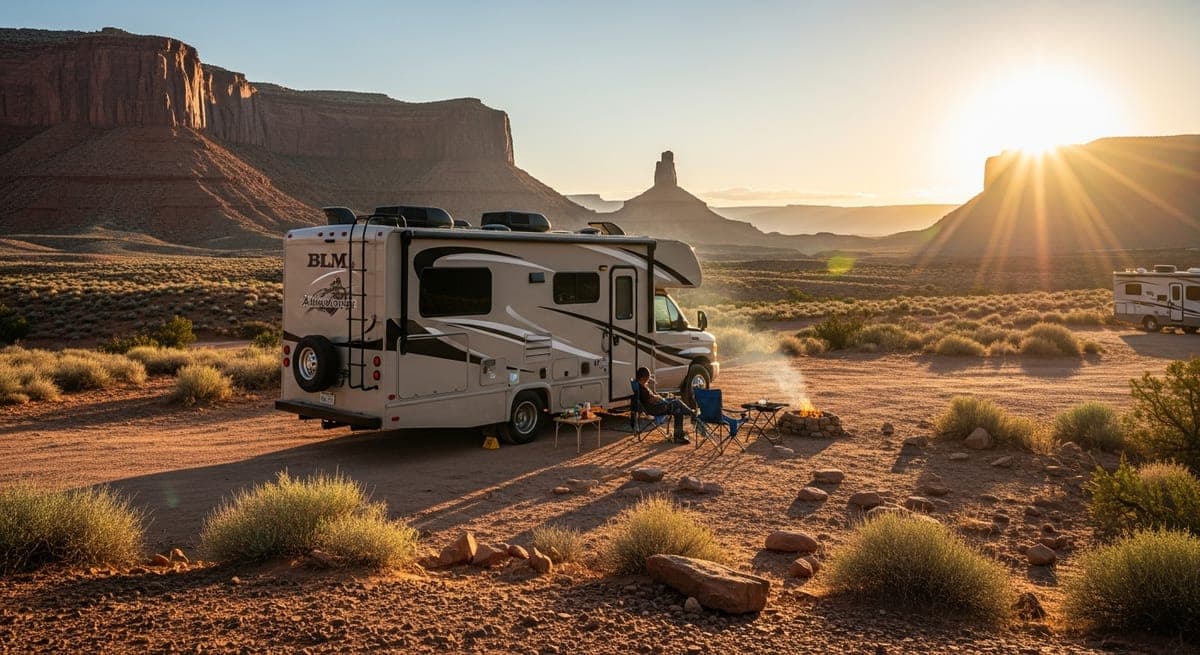
Every January, more than 40,000 RVers converge on the BLM desert outside Quartzsite, Arizona — and the overwhelming majority of them pay exactly $0 per night. That's not luck, and it's not roughing it. It's what happens when you build your travel around the systems that actually work.
Full-hookup sites at private RV parks typically run $40–$70/night across most of the US, sometimes significantly more in tourist corridors. Over a month, that adds up fast. Cutting that to $0–$500/month is genuinely achievable once you layer in public land, the right memberships, and a few options most guides skip.
Free Public Land Camping
BLM and National Forest dispersed camping covers a massive portion of the western US, and most of it is free for up to 14 days. Some field offices cap stays at 7 days, so check the specific rules before you settle in for a long stretch. This isn't a rugged expedition reserved for overlanders — Quartzsite is BLM. The dispersed camping near Moab, outside Sedona, and along the Eastern Sierra corridor puts you in stunning spots within a few miles of everything.
The real requirement for dispersed camping is self-sufficiency: water storage for 3–5 days, a plan for gray and black waste, and a power setup that doesn't need shore power. A 200W solar panel paired with a 100Ah lithium battery handles the basics comfortably — lighting, phones, a 12V refrigerator, and a fan. Add a second panel if you're running a CPAP or working remotely. That setup pays for itself quickly once you're camping free.
Best resources for finding spots: Freecampsites.net, iOverlander, and the BLM's own field office maps. The user-contributed databases have gotten genuinely good — most established spots include GPS coordinates, photos, road condition notes, and cell signal ratings.
Membership Clubs: Worth It If You Actually Use Them
Campground memberships sound like a sales pitch right up until you map them against your actual travel patterns. Some deliver real savings. Others sit in your wallet unused. It depends almost entirely on where you camp and how often.
Passport America: 50% off nightly rates at 1,900+ campgrounds across North America. At a typical $35 campground discounted to $17.50, you break even after a handful of nights per year. It's earned its place in my kit — check their site for current pricing since it shifts occasionally. For the discount depth and coverage, it's the easiest membership to justify for most RVers.
Good Sam Club: 10% off at 2,000+ campgrounds and a fuel discount at Pilot and Flying J stops. The fuel savings alone tend to cover the annual cost for folks putting on regular miles. Nearly every KOA and Thousand Trails accepts it. Current pricing is on their site — it's moved around over the years so don't rely on any number you read elsewhere.
Thousand Trails: Unlimited camping at 80+ campgrounds with no nightly fee. Use it 20+ nights per year and it typically pays for itself versus paying nightly. The Zone Plan restricts which campgrounds are accessible, so map your usual routes against the coverage before committing. Plan structures and pricing change more than they should — call their sales line for current options rather than trusting anything static.
Harvest Hosts: Overnight stays at wineries, farms, breweries, and distilleries — often in scenic spots commercial campgrounds never reach. No hookups, one-night limits are common, but it's a great tool for travel days and for discovering places you'd never find otherwise. They've grown their partner network substantially over the past few years; check their current listing count and membership pricing at harvesthosts.com since both have shifted.
Casino Overnight Parking
Hundreds of casinos across the US and Canada allow RV overnight parking in their lots — free or for a small nightly fee. Many have power hookups, dump stations, and occasionally a complimentary breakfast offer. The arrangement is straightforward: they let you park expecting you'll spend something inside, which is a fair trade for a clean, safe overnight stop.
Nevada is the most RV-friendly casino state by a wide margin. New Mexico and Oklahoma have extensive tribal casino networks with solid overnight setups throughout both states. Connecticut, New York, and Massachusetts have tribal casinos worth knowing about for Northeast routes. Campendium maps casino overnight options with user reviews, which matters — the experience varies significantly by location.
Walmart and Truck Stop Overnights
Walmart's corporate policy leaves overnight RV parking up to each individual store manager. In practice, roughly half of locations allow it — mostly rural and suburban stores. Calling ahead takes thirty seconds: "Is overnight RV parking okay tonight?" If yes, park away from the main entrance, keep the generator quiet after 10pm, and buy something while you're there. It's a fair exchange and most managers appreciate the straightforward ask.
Pilot and Flying J truck stops formally accommodate RVs with overnight parking, showers, and dump stations at a fee. Cracker Barrel has a longstanding informal policy of welcoming self-contained rigs — no reservation needed, just park, sleep, and grab breakfast in the morning if you like.
State Parks: Underrated Value
State park campgrounds typically run $15–$30/night — half to a third the cost of private parks, and often in far better locations. Annual passes in most states run $60–$80 and eliminate daily entry fees, which adds up fast if you're hitting multiple parks in a season. Reservations at popular parks in California, Colorado, and Oregon open 4–6 months out and book solid within days, so set calendar reminders if those routes are on your list.
The combination that keeps working for me: a state park pass for your home state and the states you frequent most, Passport America for nights when you need full hookups, and BLM dispersed camping for the nights in between. That three-layer approach covers virtually every camping situation and keeps the monthly total as low as any system I've put together.
Ready to Plan Your Trip?
Put this knowledge to work. Let our AI build a personalized RV itinerary for your next adventure, or browse community trips for inspiration.