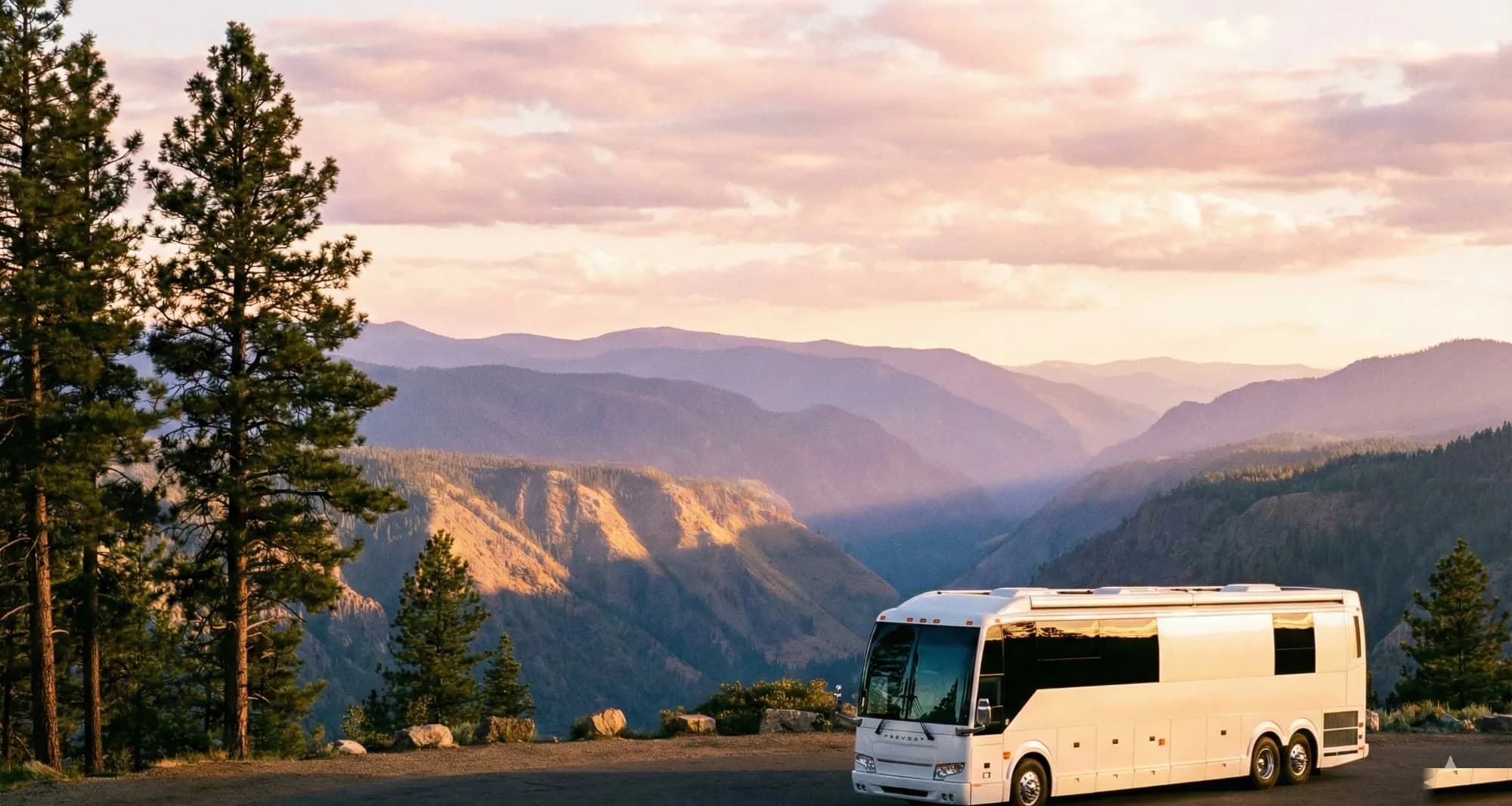
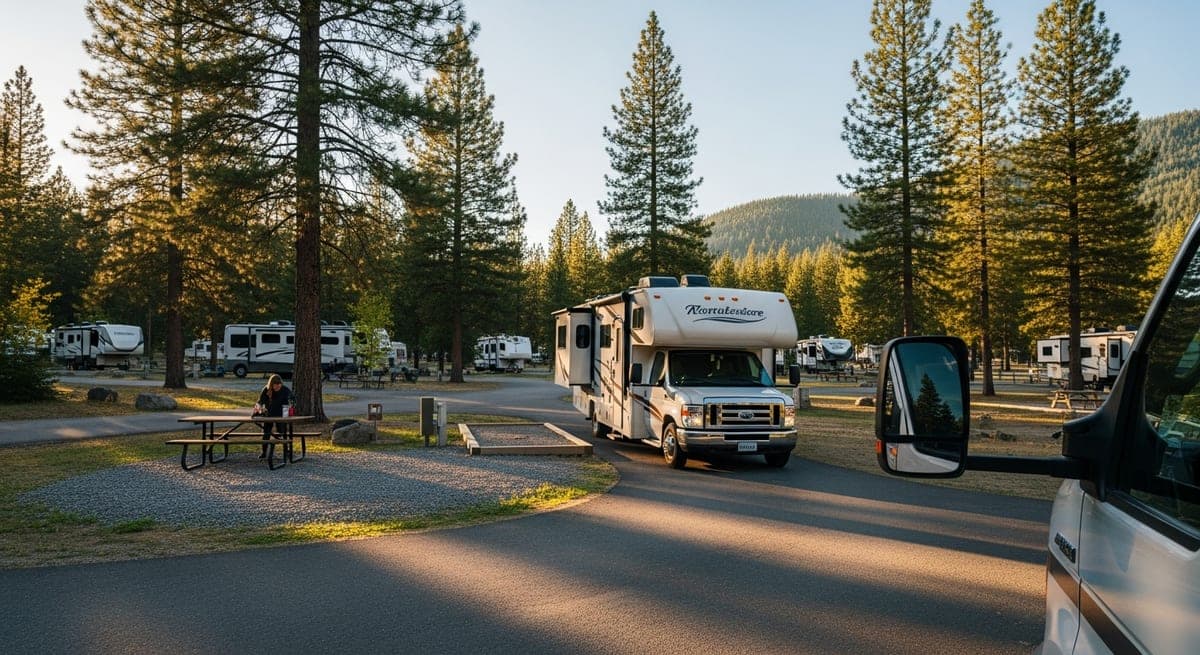
Width — not length, height, or braking — is what most first-time RV drivers say catches them off guard, according to recurring threads in major RV owner communities. The adjustment period is real, but shorter than most expect: owner reports consistently describe the shift from "this feels enormous" to "this feels normal" happening somewhere between the second and fifth trip, depending on how much deliberate practice goes into those early drives.
What's Actually Different
Width: Most Class A and Class C motorhomes measure 8–8.5 feet wide — a full foot wider than a large pickup truck. The additional 6 inches on each side requires spatial recalibration that experienced RVers describe as becoming second-nature within a few highway hours, but that accounts for most early parking-lot scrapes.
Length: Class A motorhomes run 30–45 feet long. Travel trailers vary widely — popular models range from 18 to 35 feet, and many (including Airstream Bambi and Lance 2075 variants) fall well under 25 feet, making a blanket length comparison between the two classes misleading. Either way, added length changes turn radius, lane-change timing, and the gap needed to safely merge or stop.
Height: 12–13.5 feet is typical for most RVs. New owners need to know their exact height and watch actively for low-clearance obstacles — drive-throughs, parking garages, gas station canopies, and overhanging tree branches. Setting rig height in a GPS before every trip is a step experienced RVers consistently recommend in new-driver discussions.
Braking distance: A fully loaded large Class A motorhome can approach 30,000 pounds — though Class C and travel trailer rigs typically weigh 10,000–18,000 lbs loaded. At any size, an RV takes significantly longer to stop than a passenger vehicle. AAA and FMCSA commercial vehicle guidance both emphasize extended following distances for large vehicles; the community consensus among experienced RVers is to maintain at least double the gap that felt comfortable in a car — often described as 6 or more seconds at highway speed.
Turning: The Biggest Technique Shift
The rear wheels track a different path than the front wheels — and new RVers consistently describe this as the most disorienting early discovery. Two common mistakes surface repeatedly in owner discussions:
- Right turns: Pulling forward further before initiating the turn prevents the rear wheels from mounting the curb or clipping the corner. Most new owners encounter this the first time they hear the rear tires scrub a raised curb edge.
- Left turns at intersections: Watching the right mirror when turning left through an intersection is a habit experienced drivers develop early — the rear overhang swings right as the front tracks left, and the swing can be larger than it looks from the driver's seat.
- Parking lot practice: Before any highway driving with an unfamiliar rig, 20–30 minutes in an empty large parking lot doing slow turns in both directions is the approach RV owners most frequently recommend in first-timer threads. Understanding swing and turn radius in a low-stakes environment before encountering real traffic is widely described as time well spent.
Backing Into a Campsite
Backing into a campsite is the skill new RVers most commonly describe as anxiety-inducing — and the one most frequently described as becoming routine fastest once the fundamentals click.
- Using a spotter is standard practice. Experienced RVers establish a signal system before approaching the site — stopping means something specific, and agreed-upon hand motions prevent the confusion that comes from shouting across a campground loop.
- Small steering inputs matter more than most new drivers expect. The RV amplifies corrections at low speeds, and owner accounts consistently note that tiny wheel movements move the rear further than they did in a car.
- For trailers: turning the steering wheel opposite the intended direction of the trailer is the adjustment new trailer owners most commonly describe as hardest to internalize — it contradicts every instinct built driving a car. Most report needing 10–15 practice backing sessions before it starts to feel natural rather than forced.
- Pulling forward and re-approaching when the angle is off is faster than correcting with multiple small backing maneuvers — a tip that appears in nearly every "first campsite backing" thread across RV owner forums.
- Backup cameras make a measurable difference in backing confidence. Wireless camera systems in the $100–$200 range are consistently rated by new RV owners as one of the highest-impact early additions when a rig doesn't have one factory-installed.
Highway Driving
- Wind sensitivity: Box-shaped RVs are significantly affected by crosswinds and by the draft of passing semi-trucks. The community consensus is to keep two hands on the wheel and expect a brief correction when a semi passes at speed — a manageable phenomenon that catches new drivers off guard the first time it happens at 65 mph.
- Speed: The consensus among full-timers sits at 55–65 mph on the highway, not 70–75. Fuel economy drops noticeably above 65, handling becomes less predictable, and tire wear increases. Most experienced RVers cruise at 60 mph on longer trips and report it reduces fatigue as much as it saves fuel.
- Lane changes: Signaling early and allowing extra gap before merging is the approach experienced drivers consistently describe — a gap that looks sufficient in a car often isn't for a 35–45-foot rig, particularly on busy interstates.
- Mountain passes: Engine braking in a lower gear on long descents is standard practice among experienced mountain-highway drivers. Owner discussions from routes like I-70 through Colorado's Eisenhower Tunnel corridor (elevation 11,158 ft) and US-50 over Monarch Pass consistently warn against riding the brakes downhill in a heavy vehicle — brake fade is a genuine risk in a loaded RV, and most experienced drivers recommend familiarizing with engine braking technique before encountering a long grade.
Parking and Fueling Logistics
Not every fuel station, parking lot, or drive-through can accommodate an RV, and getting locked into a tight lot is among the early mistakes owner communities most frequently document.
- GasBuddy filtered for truck stops and RV-accessible stations is a common planning tool. Flying J, Pilot, and Love's truck stops reliably offer pull-through fueling lanes suited to Class A and Class C rigs — something that matters when fuel tanks run 75–100 gallons.
- Big-box store parking (Walmart, Cabela's) and truck stops provide flat, open overnight parking for many RVers. Policies vary by location, and owner communities recommend calling ahead rather than assuming permission is blanket.
- Knowing the exit route before entering any lot or station is the rule experienced RVers most consistently pass to first-timers. A slow pass by the entrance to assess layout — before committing — is a habit that takes seconds and prevents the stuck-lot scenario that shows up repeatedly in new-owner posts.
Related: First RV trip checklist · RV towing and weight guide · Choosing the right RV class
Is that campground membership actually worth it?
Plug in your camping nights and typical nightly rate. Our free calculator does the break-even math for Good Sam, Passport America, Thousand Trails, and KOA Rewards.