This article contains affiliate links. If you make a purchase through these links, we may earn a small commission at no extra cost to you. Learn more.
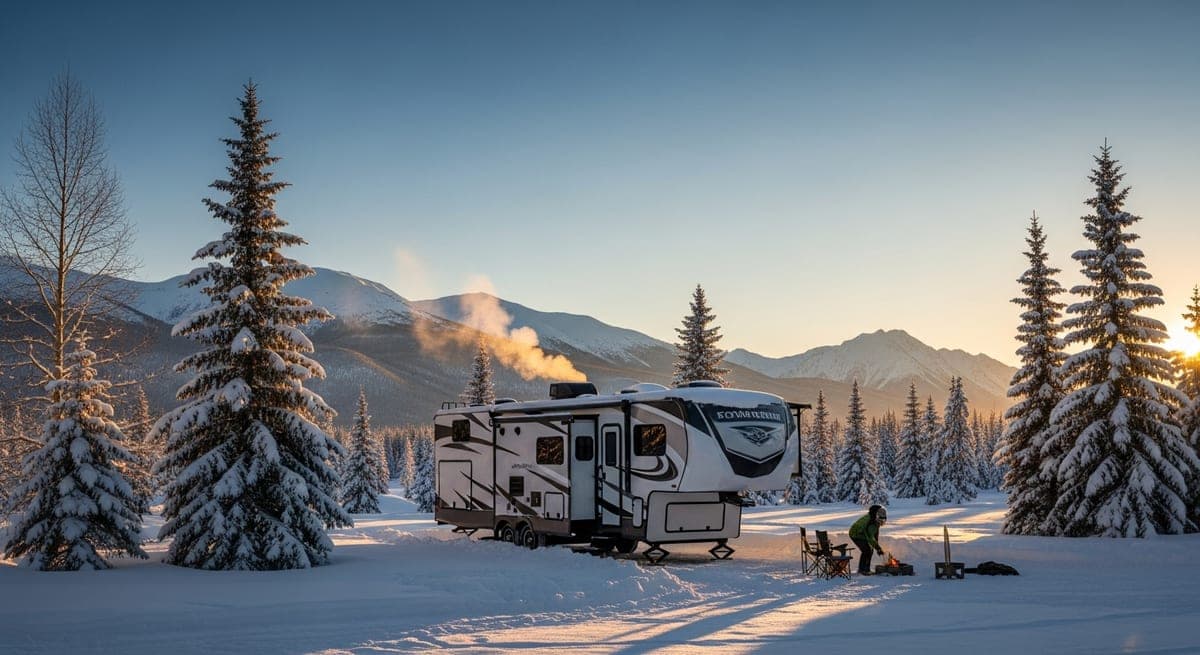
Many RVers park their rigs from November to March, but winter camping offers unique rewards: fewer crowds, lower campground rates, stunning landscapes, and a cozy intimacy that summer camping can't match. With the right preparation, winter RV travel can be comfortable and magical.
Winterizing vs. Winter Camping
There's an important distinction: winterizing your RV means preparing it for storage in freezing conditions. Winter camping means actively using your RV in cold weather. These require different approaches. For winter camping, you want your water system operational, your heater working, and your insulation maximized — the opposite of winterizing.
Keeping Your RV Warm
Your furnace is your primary heat source. Make sure it's serviced and your propane supply is ample — a typical RV furnace burns through propane faster than you'd expect. Supplement with a portable electric heater when you have shore power. Close off rooms you're not using. Insulated window covers (Reflectix or custom thermal curtains) make a dramatic difference — windows are the biggest source of heat loss.
For below-freezing camping, heat tape on exposed water pipes is essential. Keep a small cabinet door open under sinks to let warm air circulate around plumbing. A heated water hose prevents your fresh water connection from freezing. Keep your holding tanks closed until full to minimize freezing risk.
Best Winter RV Destinations
The desert Southwest is winter RV paradise. Quartzsite, Arizona (January-February) hosts the largest RV gathering in the world — tens of thousands of RVers descend on BLM land for swap meets, gem shows, and community. The Gulf Coast from Texas to Florida offers mild temperatures and beach camping. Southern California's Anza-Borrego Desert State Park is spectacular in winter when wildflowers begin appearing.
For those who embrace the cold: Yellowstone in winter (accessible from the north entrance) is hauntingly beautiful. Northern Minnesota and Wisconsin offer ice fishing and aurora viewing. Colorado's hot springs — like Pagosa Springs and Glenwood Springs — are incredible in winter with a warm RV to retreat to.
Winter Driving Considerations
Carry chains and know how to install them. Reduce speed and increase following distance on icy or snowy roads. Large RVs are particularly susceptible to crosswinds — watch weather forecasts for wind advisories. Consider staying put during winter storms rather than pushing through. Build flexibility into your itinerary for weather delays.
The Snowbird Lifestyle
Hundreds of thousands of RVers "migrate" south for winter, earning the nickname "snowbirds." Popular snowbird destinations include the Rio Grande Valley in Texas, Yuma and Tucson in Arizona, and the Florida Gulf Coast. Many campgrounds offer monthly rates ($400-800) that are cheaper than heating your house up north. It's a lifestyle that grows on you — many snowbirds say they'll never spend another winter at home.
From the RVmapper team
Fishing along your route?
Hooked Fisherman publishes fishing reports for all 50 states, species guides, and honest gear reviews. Know what's biting before you park the rig.