This article contains affiliate links. If you make a purchase through these links, we may earn a small commission at no extra cost to you. Learn more.
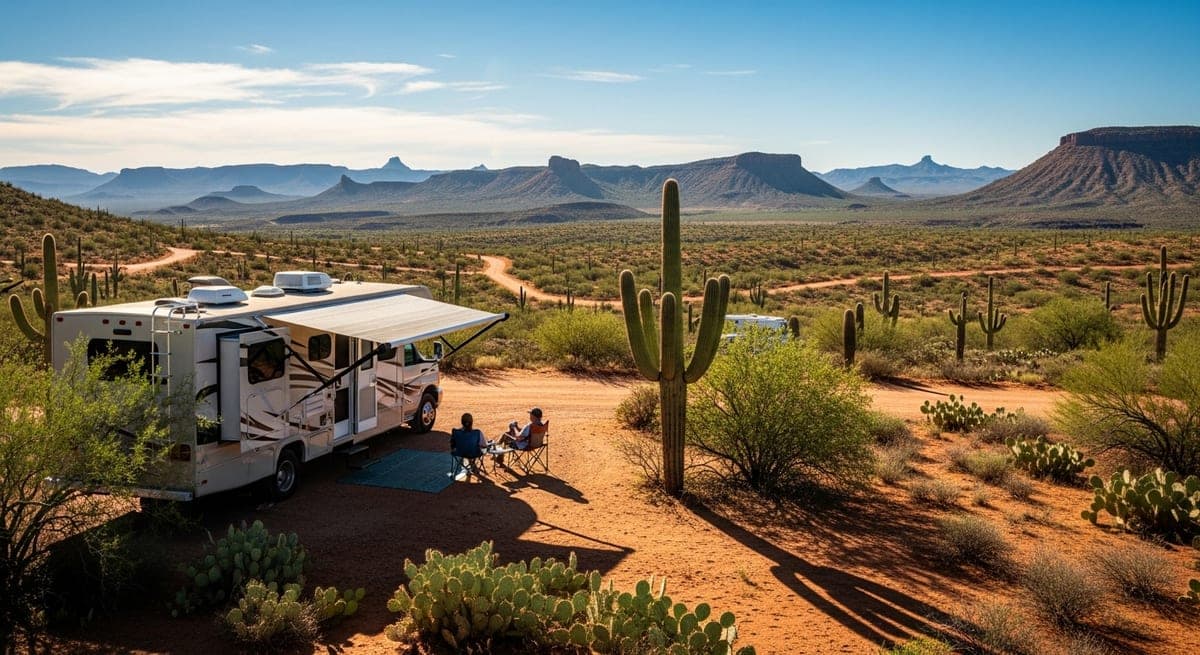
Why Summer in the Southwest Is Worth It — If You're Prepared
Temperatures above 110°F in Phoenix, 105°F in Las Vegas, and humid 100°F in the lower Colorado River valley are real — and your RV's air conditioning, refrigerator, and sleeping comfort all depend on systems that were not designed for sustained extreme heat. But summer in the Southwest also means uncrowded national parks (Grand Canyon North Rim, Zion, Bryce), perfect temperatures at elevation (7,000+ feet in northern Arizona and New Mexico), and dramatic monsoon thunderstorms that transform the desert.
The key is understanding which areas are manageable, which are genuinely uncomfortable, and what preparations your rig needs before you roll into 115-degree desert.
Elevation Is Everything
The single most powerful tool for comfortable Southwest summer RVing is choosing higher elevation campsites. Temperature drops approximately 3-5°F for every 1,000 feet of elevation gain. This transforms the summer Southwest:
- Flagstaff, AZ (6,900 ft): Average July high of 81°F. A base camp for Grand Canyon's South Rim without Phoenix heat.
- Durango, CO (6,500 ft): Mid-70s in July. Access to Mesa Verde National Park and the San Juan Mountains.
- Santa Fe, NM (7,200 ft): July highs around 82°F with afternoon monsoon storms.
- Prescott, AZ (5,400 ft): 90°F highs — much more manageable than Phoenix's 110°F.
- Taos, NM (6,900 ft): Excellent summer temperatures and dramatic high-desert landscape.
The strategy: sleep high, visit lower-elevation attractions in the morning before heat peaks (usually 2-4pm), and retreat to elevation by early afternoon.
AC System Reality Check
Most RV air conditioners are rated to cool to about 20°F below ambient temperature. A 13,500 BTU unit will cool your RV to roughly 90°F when it's 110°F outside — not comfortable sleeping. Understanding this helps set expectations and plan mitigation.
Two-AC rigs: If your RV has two air conditioners, both running simultaneously in extreme heat gives much better results. Make sure you're at a 50-amp hookup to run both.
Roof vents and fans: A Fantastic Fan or MaxxAir vent in the roof dramatically improves airflow at night when temperatures drop. Running the fan on exhaust mode pulls hot air from inside the RV out, replacing it with cooler outside air. This is often more effective than AC in the late-night hours when desert temps drop to the 80s.
Window coverings: Reflective foil window inserts (Reflectix cut to window size) block radiant heat through glass, the biggest source of heat gain. Install these before noon on south and west-facing windows. A cheap foil windshield sunscreen on the front cab windows makes an enormous difference in cab-over motorhomes.
Shade: Park under shade trees or position the coach so the least window area faces west (afternoon sun). A reflective tarp rigged over the roof — crude but effective — can drop interior temps 10-15°F.
Power Needs in Extreme Heat
Heat increases power consumption dramatically. AC runs longer to maintain temperature. Refrigerators work harder. Fans run constantly. A rig that uses 30-40 amps in moderate weather may push 50+ amps in extreme heat.
50-amp hookups: Essential in summer Southwest. Many desert campgrounds and RV parks offer 50-amp service — prioritize these. Running two ACs on a 30-amp service blows breakers.
Generator load: If boondocking in extreme heat, generator runtime will be nearly continuous during hot hours. A 3,500+ watt generator handles one large AC plus essentials. A 2,000-watt inverter generator cannot run a standard 13,500 BTU RV air conditioner.
Solar reality in extreme heat: More solar panels than you think are needed for desert summer boondocking. A 400-watt system handles overnight phone charging and fan power but not AC. 800+ watts plus a large battery bank (200+ Ah lithium) can reduce generator hours but not eliminate them for full AC use.
Water, Health, and Safety
Heat illness — dehydration, heat exhaustion, and heat stroke — is a genuine risk in the desert Southwest. Take it seriously:
- Drink water before you're thirsty. In extreme heat, thirst lags behind actual dehydration.
- Set a minimum: at least 1 liter of water per hour during outdoor activity in 100°F+ heat.
- Electrolytes matter — water alone isn't enough during extended outdoor time. Bring electrolyte packets or sports drinks.
- Plan outdoor activities for 5-10am and 5-7pm. Noon to 4pm in the desert in July is genuinely dangerous for strenuous activity.
- Know the signs of heat stroke: confusion, lack of sweating despite extreme heat, red/dry/hot skin. This is a medical emergency.
Pets: Desert summer is extremely dangerous for dogs. Pavement temperatures regularly exceed 160°F — if you can't hold your hand to the pavement for 5 seconds, it will burn your dog's paws. Limit walks to early morning and evening. Never leave pets unattended in vehicles.
Best Southwest Summer Destinations by Elevation
Bryce Canyon National Park, UT (8,000-9,000 ft): Summer highs in the low 70s. One of the most otherworldly landscapes in the country and comfortable in July/August when southern Utah lowlands are unbearable.
Zion National Park, UT (canyon floor 4,000 ft): Canyon floor gets hot (100°F) but morning hikes are manageable. The Narrows water hike is perfect for summer — you're walking through a river in a slot canyon.
Mesa Verde National Park, CO (7,000-8,500 ft): Uncrowded in summer due to Colorado's reputation for heat elsewhere. Cliff dwelling tours, excellent campground, comfortable temperatures.
Chiricahua National Monument, AZ (5,400 ft): One of the most undervisited monuments in the Southwest. Bizarre rock columns, hummingbirds, summer highs around 90°F. No crowds.
White Sands National Park, NM (4,200 ft): Mornings and evenings are spectacular — gypsum dunes at sunrise or sunset are unforgettable. Midday visits in summer require sun protection and water discipline.
Is that campground membership actually worth it?
Plug in your camping nights and typical nightly rate. Our free calculator does the break-even math for Good Sam, Passport America, Thousand Trails, and KOA Rewards.