For 25 years, Texans have been watching as a chunk of rugged limestone mesa near the small town of Strawn sat protected by the Trust for Public Land — beautiful country, clearly special, but with no public access. That changed on March 1, 2026, when Palo Pinto Mountains State Park officially opened, ending the longest wait in Texas state park history.
Texas Parks and Wildlife calls it "some of the most rugged terrain in the state." The early visitors are calling it a revelation. Here's what you need to know before the rest of Texas figures it out.
Where Is It?
Palo Pinto Mountains State Park sits about 85 miles west of Fort Worth, near the small community of Strawn in Palo Pinto County. The drive from Dallas is roughly 2 hours via I-20 West. From Austin, it's about 3.5 hours. It's not a destination you stumble into — you make the trip specifically for this park — but the landscape makes it completely worth the planning.
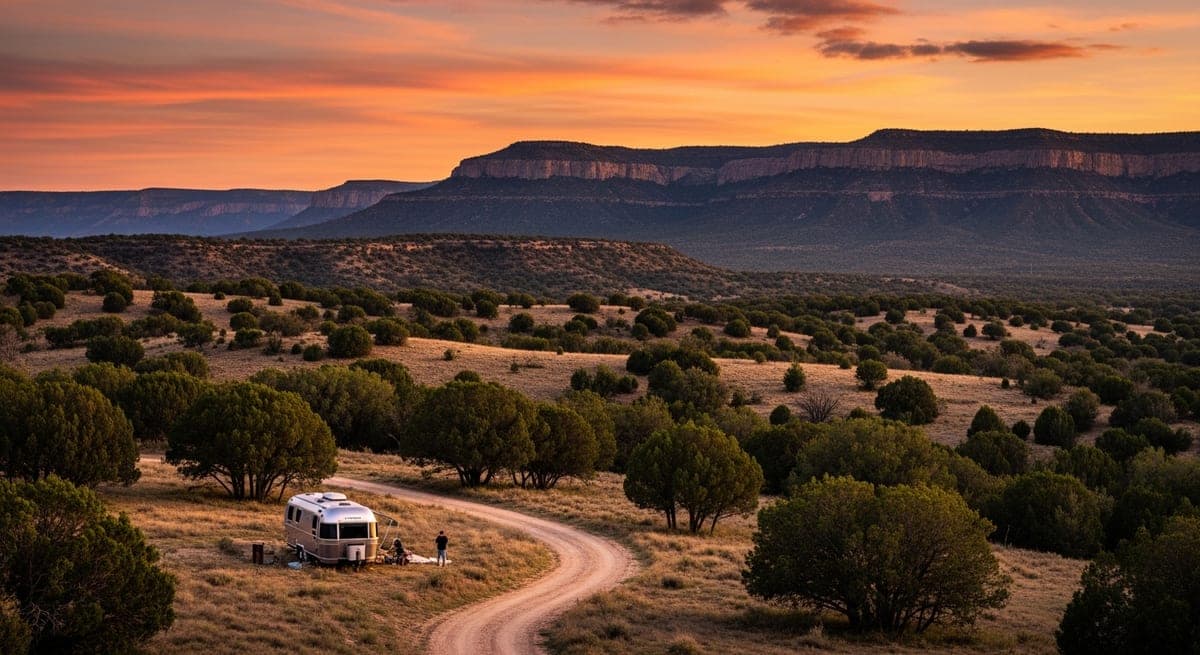
The park covers approximately 5,000 acres of post oak woodland, cedar-covered mesas, and limestone outcrops dropping into the Brazos River basin. Elevation changes of 600+ feet are dramatic by Texas standards, and the views from the mesa tops stretch for miles.
Camping
The park opened with a campground featuring approximately 50 sites with water and electric hookups, plus primitive tent sites for hikers and backpackers. Sites accommodate rigs up to 40 feet on the main loops, with a handful of pull-through sites for longer vehicles. Reservations are through the standard Texas State Parks system at texasstateparks.reserveamerica.com.
Rates run $20-30/night for hookup sites. The campground is set among live oaks and cedar elms, with good shade coverage — a meaningful upgrade from some of the sunbaked Texas state park campgrounds in West Texas. Bathrooms and showers are modern, because everything is brand new. When everything is fresh-built, the facilities game is hard to beat.
Because the park is new and doesn't yet have the years of word-of-mouth that older Texas parks have built, weekday reservations are easier to snag than you'd expect for a park this beautiful. That window will close. Book now while it's relatively wide open.
Trails
The park launched with a trail network covering more than 20 miles — significant for a Texas state park at opening. The standout is the mesa loop trail system, which climbs to the highest points in the park and delivers the kind of big-sky views that are rare in North Texas. Expect limestone ledges, cedar breaks, and wildflower meadows on the slopes in spring.
The terrain is legitimately rugged by Texas standards — not Colorado rugged, but the trails are rocky, there's real elevation change, and the park itself warns of difficult conditions in wet weather. Bring trekking poles if you're bringing kids or are less sure-footed on uneven limestone. The backcountry primitive sites are accessible via the longer trail segments for those who want an overnight on foot.
Wildlife
The park has been managed as wildlife habitat for decades, with no hunting, no off-road vehicles, and minimal human disturbance. The result is an unusually wildlife-rich environment. Early visitors report white-tailed deer in abundance, wild turkey throughout the cedar breaks, and excellent birding — the park sits in an important migratory corridor, and the mix of woodland and open mesa habitat attracts a wide variety of species. Bring binoculars.
The Brazos River drainage below the park provides riparian habitat that adds herons, kingfishers, and shorebirds to the species list. There are no confirmed bear sightings, but mountain lions are present in the broader region — standard precautions apply.
What to Bring
The park is genuinely remote. The nearest grocery store is in Mineral Wells or Strawn, and the gas situation requires planning — fill up before you arrive. The park store sells basics, but don't count on it for a full resupply. Cell service is limited in much of the park, so download offline maps before you go (the Texas State Parks app has downloadable trail maps). Water is available at the campground but not on trail — carry at least 2 liters per person for any hike over 3 miles.
Why Go Now
This is one of those genuinely rare moments in the Texas state park world: a brand-new, well-funded, thoughtfully designed park that hasn't yet built the waiting list and booking frenzy that places like Enchanted Rock and Garner State Park deal with every weekend. The trails are fresh, the facilities are modern, and the campground doesn't have years of wear on it.
That will change. It always does in Texas when a genuinely beautiful state park exists. Spring 2026 is the window to experience Palo Pinto Mountains before it becomes a "book 3 months out" situation. If you're within 4 hours, this belongs on your calendar for the next available weekend.
Nearby Add-Ons
Possum Kingdom State Park is about 45 minutes north of Palo Pinto Mountains on the Brazos River and offers excellent cliff jumping, swimming, and boat camping options for those who want to extend the trip. The two parks together make for an excellent 4-5 day North Texas adventure that most RVers have never done.
Mineral Wells (20 minutes east of the park) has a surprisingly vibrant downtown centered around the historic Baker Hotel — a 14-story Art Deco masterpiece currently under renovation. The main street has several decent restaurants and a good coffee shop for a morning detour before a day of hiking.
Getting a Reservation
Book at texasstateparks.reserveamerica.com up to 90 days in advance. The park uses the standard TPWD system. Spring weekends are filling faster than weekdays — if your schedule is flexible, Tuesday through Thursday nights have significantly more availability. Day passes for non-campers are $7/person and appear to be available at the entrance (call ahead to confirm, as policies are still being finalized).
Ready to Plan Your Trip?
Put this knowledge to work. Let our AI build a personalized RV itinerary for your next adventure, or browse community trips for inspiration.
Keep Reading
RV Camping in the Appalachian Mountains: Blue Ridge, Shenandoah, and Beyond
10 min read
Destination GuidesColorado RV Camping: Rocky Mountain National Park, Mesa Verde & the Million Dollar Highway
15 min read
Destination GuidesAcadia National Park RV Camping: Size Limits, Campgrounds & the Best Way to See Mount Desert Island
13 min read