In summer 2023, I rolled into a dispersed site in the Coconino National Forest with an armload of firewood I'd hauled from Flagstaff — about 18 miles away. A ranger stopped by two hours later and pointed at a sign I'd missed: Stage 2 restrictions had been in effect since early June. No open fires. No charcoal. No propane stoves in certain zones. I hadn't lit a single match and I'd already broken three rules. That trip changed how I prep for every campfire situation — and the regulations genuinely do vary enough to catch experienced RVers off guard. — The RVMapper editorial team, camping the American West since 2014
Why Campfire Rules Are Never the Same Twice
Campfire regulations in the US are set by federal land management agencies, state park systems, county authorities, and individual campground operators — sometimes all overlapping in the same area. What's allowed in a New England state park in October may be completely prohibited in the same campground during a July drought.
I've camped at sites where the campground host had a fire ban posted that contradicted what the county website said. In those cases, the more restrictive rule always wins — and the campground host is the one who will knock on your door at 10pm. The practical lesson: check at the local level, not just the federal one.
Decoding Fire Restriction Levels
Federal lands use a tiered restriction system that most campers learn about only after they've already set up camp:
- Stage 1 Restrictions: Open fires prohibited. Charcoal grills and propane stoves are typically still allowed in this tier.
- Stage 2 Restrictions: All open flames prohibited — including propane camp stoves in some jurisdictions. The specific order matters; don't assume Stage 2 always permits propane.
- Complete Closure: No fires of any kind. Campgrounds may close entirely during severe fire risk periods.
The mistake I see most RV campers make is checking fire status once, three days before their trip, and assuming it holds. Conditions change fast in August — sometimes inside 24 hours in the Southwest. Check again the morning you leave.
Where to check before you go:
- InciWeb (inciweb.wildfire.gov): Current wildfire incidents and related closure maps
- USFS Forest Alerts: Each National Forest posts current fire restrictions on its own website — bookmark the specific forest page, not just the USFS homepage
- Recreation.gov: Many campground listings note current fire restrictions in the notices section
- Call the ranger district: The most reliable method when your plans depend on having a fire. Takes five minutes. Worth every one of them.
Building a Safe Fire When You're Cleared to Have One
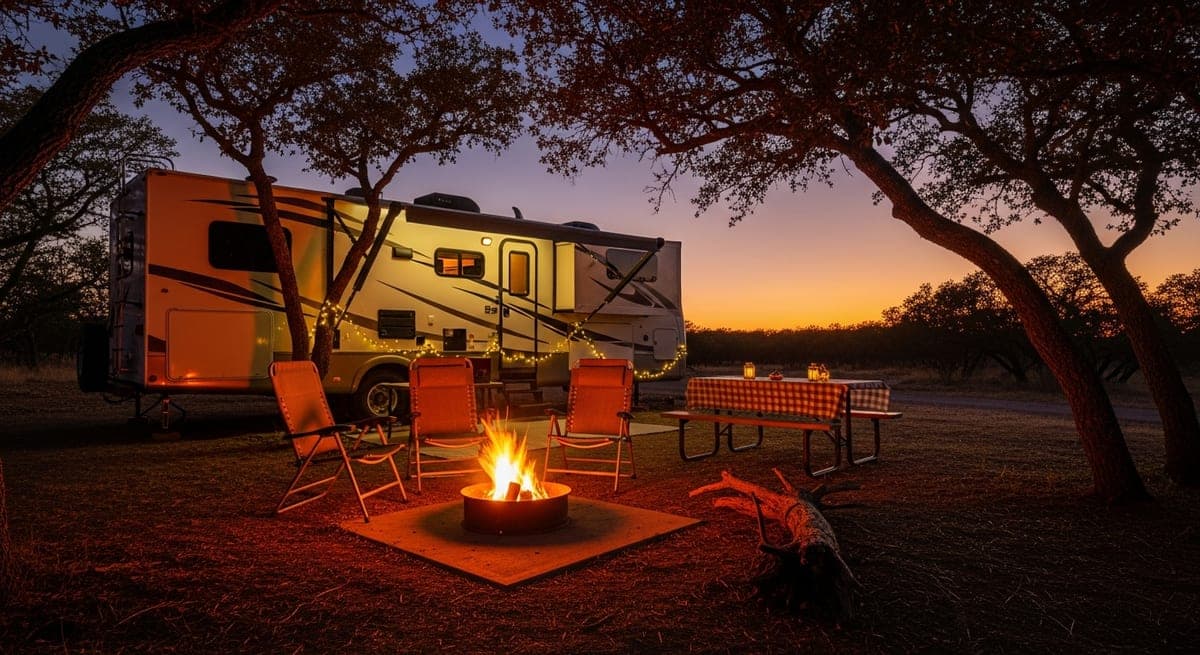
For established campgrounds with designated fire rings, the mechanics are straightforward — but I've watched experienced campers skip steps that genuinely matter:
- Use the existing fire ring — never build a fire on the ground outside a ring, even if it looks like a safe clearing.
- Clear a 10-foot radius of dry leaves and debris around the fire ring before you light anything.
- Keep fires small — a 2-foot fire generates plenty of heat and light for most campsite needs, and small fires are dramatically easier to extinguish completely.
- Never leave a fire unattended. I don't care how quick the bathroom trip is.
- Keep water or a bucket of dirt immediately available — not back in the RV, not across the site.
- Extinguish completely before sleeping or leaving: drown it, stir the coals, drown again. The standard is cold to the touch. If you're hovering your hand three inches above the ash trying to feel for heat, you're not done yet.
The Firewood Rule That Catches People Every Season
Moving firewood spreads invasive insects and diseases that have devastated forests across the US — emerald ash borer, spotted lanternfly, pine beetle, and others travel in untreated wood. Many state and federal campgrounds restrict bringing in wood from outside the immediate area; the specific distance limit varies by jurisdiction, so check with your destination rather than assuming any universal rule applies.
Buy local: Purchase firewood at the campground, a nearby gas station, or hardware store. It's almost always available, and a bundle typically lasts 2–3 hours of a modest fire. Prices vary widely depending on region and campground operator — budget for it rather than hauling wood from home, even when home feels close on a map. The fines and the ecological damage aren't worth whatever you'd save.
What Good Fire Etiquette Actually Looks Like
- Keep smoke away from neighbors — position yourself upwind when possible and keep the fire small to minimize drift. This shows up in campground reviews more than almost anything else.
- Quiet hours apply to fire activities too. No wood chopping, no loud fire-related noise after posted quiet hours. Last fall we had a neighbor splitting wood at 11pm in Zion — don't be that campsite.
- Don't burn trash. Plastics, food packaging, and foil produce toxic smoke and leave residue in the fire ring that affects every camper after you.
- Don't burn wood larger than your fire ring — partially burned logs extending outside the ring are a hazard and a sure sign of a careless camper.
- Pack out ash if the campground requires it. Some dispersed sites on federal land require you to remove all fire evidence. Check your permit terms before arrival.
When a Propane Fire Pit Is the Smarter Call
Portable propane fire pits have become genuinely popular in the RV community over the last few seasons — and I understand why. They provide campfire ambiance without wood sourcing, smoke, or most fire ban concerns. Check local rules first: some strict fire ban zones prohibit these too, so don't assume they're always exempt just because there's no wood involved.
If you camp frequently in dry western states where Stage 1 and Stage 2 restrictions are common from June through September, a propane fire pit is worth serious consideration. Models like the Outland Firebowl and Camp Chef Fire Pit get consistent long-term reviews from the RV community. We've used a propane pit on four consecutive nights of Stage 1 restrictions in southern Utah without any issue — it's not a campfire, but it's close enough when the alternative is staring at a cold ring all evening.
Related: RV campground etiquette guide · National Forest camping guide · RV weather preparedness guide
Ready to Plan Your Trip?
Put this knowledge to work. Let our AI build a personalized RV itinerary for your next adventure, or browse community trips for inspiration.