Why RV Travel with Kids Is Worth It
Junior Ranger badges outlast most souvenirs — kids who earn them in national parks are more likely to remember that trip than the one with the hotel pool. Family RV trips are some of the best memories kids carry into adulthood: falling asleep to rain on the roof, waking up at Acadia or Grand Teton, campfire s'mores earned after a real hike. An RV is actually one of the best vehicles for family travel — you bring your routines, your food, your kids' comfort items — and you're not trapped in a hotel room at 8pm with overtired children. That alone is worth the learning curve.
Choosing the Right RV for a Family
After one long trip in an undersized rig, most families never make that mistake twice. A 19-foot travel trailer works fine for two adults but turns claustrophobic with three kids by day four. The features that matter when sizing up a family rig:
- Bunk bed models: Dedicated bunk house floorplans give kids their own space and parents their sanity. Many manufacturers offer bunk-house travel trailers and fifth wheels — look for them specifically in the 28–38 foot range. For families with 2+ kids, this is often the single most important floorplan feature to prioritize above all others.
- Outdoor kitchen: Cooking outside keeps the interior cooler and reduces mess. An outdoor kitchen pass-through or exterior kitchen setup is worth prioritizing — especially on hot summer trips when the last thing you want is steam from a boiling pot inside a sealed RV.
- Full bathroom: Non-negotiable with kids. The split bath (separate toilet from shower/sink) is especially useful for morning routines with multiple family members trying to move at once.
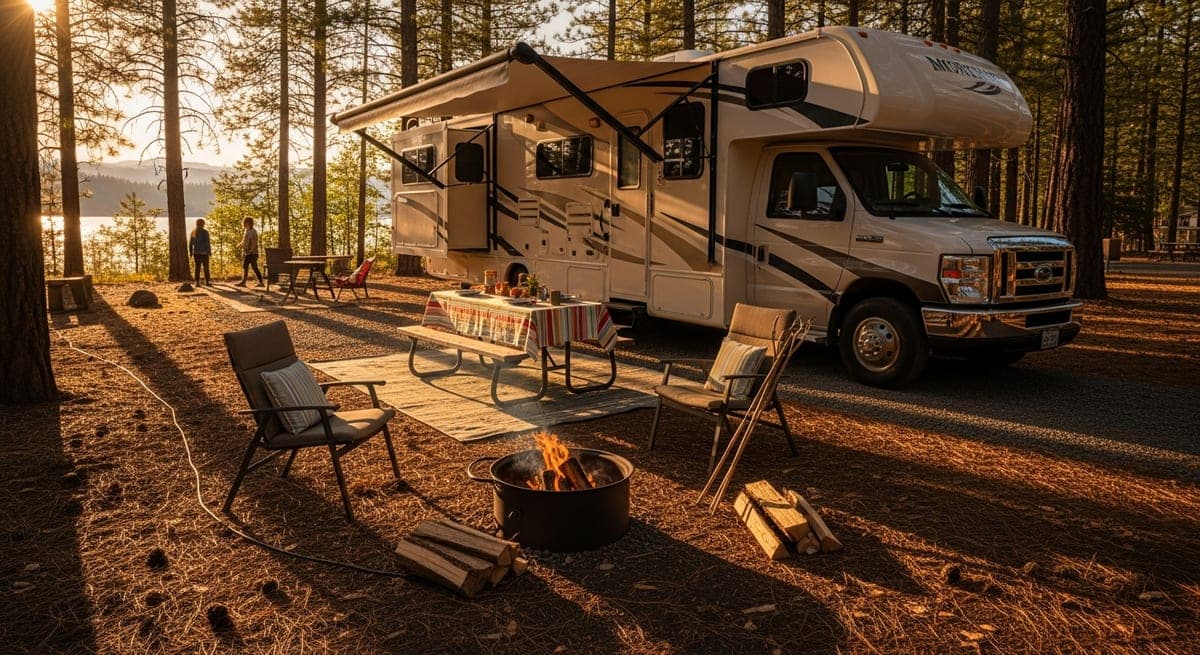
- Awning: An extended awning creates outdoor living space that keeps kids cool and gives parents a shaded sitting area. Motorized awnings are worth the premium — you'll use it every single day.
Managing RV Travel with Young Children
- Keep driving days short — and know when that rule matters most: In summer heat, many families cap driving at 3–4 hours to avoid afternoon meltdowns from kids and overheated RV interiors alike. In shoulder season when everyone's fresher, you can push further without drama. Plan destinations roughly 150–200 miles apart, and treat the stops — not the miles — as the actual itinerary. The drive is not the trip.
- Campground selection matters more than site hookups: Choose campgrounds with playgrounds, swimming areas, or access to kid-friendly trails. For beach swimming, Hammonasset Beach State Park in Connecticut and Promised Land State Park in Pennsylvania are standouts in the Northeast. Itasca State Park in Minnesota works well for Midwest families who want a mix of lake swimming and old-growth forest. State parks typically outperform generic commercial campgrounds for natural play space — check reviews specifically for family amenities before booking, not just for site quality.
- Maintain routines: Kids sleep better and behave better when bedtime routines stay consistent — even in a new campsite. Familiar pillows, pajama rituals, and consistent wake times help more than most parents expect on the first trip.
- Involve kids in planning: Let older children choose one destination per trip. They have more investment in the travel when they've contributed to the plan — and they complain less on the drive there.
Activities and Entertainment
- Nature scavenger hunts: Free, location-adaptable, and genuinely engaging for 5–12 year olds. Print one before you leave or make one up at the picnic table — kids don't care as long as they get to check things off.
- Junior Ranger programs: National parks, national monuments, and many state parks offer Junior Ranger programs — kids complete a booklet of age-appropriate activities and earn a badge. It turns every park visit into a mission. Zion, Acadia, and Glacier run particularly well-organized programs worth building a route around.
- Fishing: Campground fishing ponds are perfect for young anglers. A simple rod and worm setup is all you need — don't overcomplicate it.
- Campground game nights: Cards, travel board games, and family trivia fill evenings better than screens — and they're often the nights kids actually talk about later.
- Screen time: Build in guilt-free screen time for travel days — downloaded shows and movies for offline viewing make 4-hour drives manageable. No one wins a parenting award by suffering through a long travel day without it.
Safety with Kids in an RV
- Children must be in car seats or seat belts in designated seating positions while the RV is moving — never on the couch, in the back room, or on the bed. This is the rule that matters most, and the one families are most likely to bend on long, boring stretches of highway. Don't bend it.
- CO and propane detectors are non-negotiable. Test them at the start of every trip.
- At campgrounds, establish "stay within the campsite" boundaries immediately and walk them with your kids before free play begins — not after they've already wandered.
- Bring a first aid kit stocked for kids — children's fever reducer, bandages, antiseptic, and any prescription medications your children require.
Related: RV camping with grandkids · RV campground etiquette · RV camping packing list
From the RVmapper team
Fishing along your route?
Hooked Fisherman publishes fishing reports for all 50 states, species guides, and honest gear reviews. Know what's biting before you park the rig.