This article contains affiliate links. If you make a purchase through these links, we may earn a small commission at no extra cost to you. Learn more.
We Overpacked. Badly.
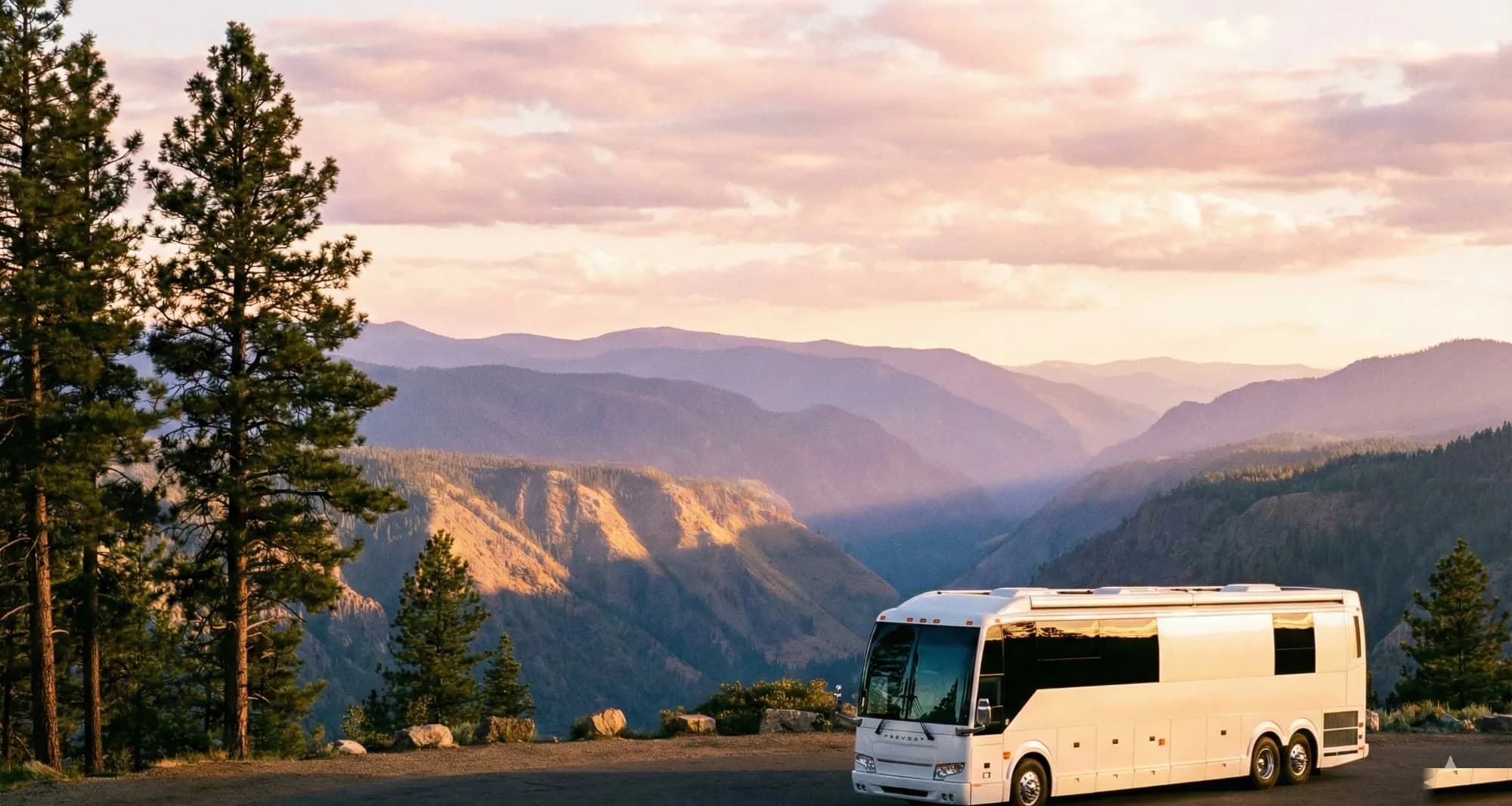
First trip out — a Class C rental headed to Rocky Mountain National Park in May 2023 — we loaded that rig like we were stocking a vacation cabin for a month. Eleven items of cookware for four days. Three sets of bedding. A full knife block. The slideout barely closed. By day two, we were stepping over boxes to reach the bathroom at 2 AM. That trip taught me more about RV packing than any guide I'd read before it. What follows is three seasons of self-inflicted lessons distilled into a list I actually use. — RVMapper editorial team, on the road since 2022
What I Actually Cook (And What Lived in the Cabinet the Whole Trip)
- Keep: One non-stick skillet, one pot, a sheet pan, a cutting board, and a chef's knife. Add a spatula, tongs, and a wooden spoon. That combination covers most of what ends up on the dinner table — though how much variety you get depends on how ambitious your camp cooking gets.
- The knife block story: We left a full 8-piece knife block behind after trip one. Never missed it once. The chef's knife handles everything from slicing vegetables to breaking down chicken at a dusty campsite outside Moab.
- Skip: Specialty appliances — waffle irons, stand mixers, the immersion blender we packed "just in case." They ride to the campsite and ride home again untouched. Road vibration is also rough on glass; switch to melamine or enamelware before you lose a casserole dish to a hard bounce on I-70.
- Worth adding: A cast iron skillet for campfire cooking, a collapsible colander, and a lightweight French press if coffee is non-negotiable for you. It is for me.
- Plates and utensils: Melamine or enamel — durable, easy to clean, and they don't shatter. One set per person plus one extra.
Sleep: The Area People Underinvest In
- RV mattresses range from tolerable to genuinely rough. Bring your own pillows without compromise — this is not where you cut weight.
- Fitted sheets in RV sizes — short queens and other odd dimensions are standard. Measure your mattress before buying anything, because standard queen sheets don't stay put on an RV bed.
- We got caught at 8,500 ft in the Steamboat Springs area of Colorado in mid-July, and temps dropped to 38°F by 3 AM. A lightweight down blanket now travels with us year-round, even in summer.
- Blackout curtains or window covers make a real difference. Campgrounds at first light are bright. Good sleep is the difference between a great travel day and a grumpy one.
The Tools That Have Actually Saved Us on the Road
- Core toolkit: Cordless drill, adjustable wrench, needle-nose pliers, flat and Phillips screwdrivers, duct tape, WD-40, zip ties. In my experience across three seasons, this combination handles the vast majority of roadside problems — a loose bracket, a stuck compartment latch, a wobbly entry step. It won't cover everything, but it covers what actually comes up.
- Leveling: Bubble level plus leveling blocks — Lynx levelers stack flat and store compactly. Don't rely on automatic leveling alone; it's left us tilted more than once at campgrounds with uneven pads.
- Water system: A 25-ft extra hose, a water pressure regulator (campground pressures vary and can spike well above 80 PSI — over time that damages your lines), a water filter, and a hose end cap.
- Electrical: 30A or 50A adapter set for your rig, a surge protector (skip this at older campgrounds and you're gambling — I've watched pedestals brown out hard), and an extension cord rated for your amperage.
- Sewer: 20-ft sewer hose minimum, donut seal, rubber gloves. A translucent sewer elbow lets you confirm the seal before you walk away — worth every dollar.
Safety Gear: The Unsexy Stuff You Want Before You Need It
- CO/propane detector — carry a backup even if your RV has a built-in unit. The detector on our 2019 Forest River failed silently on a trip near Moab. We didn't find out until a dealer inspection months later.
- Fire extinguisher — ABC-rated, and check the expiration date. An expired one sitting in a cabinet is false confidence, not protection.
- First aid kit — stock it yourself. Pre-packaged kits routinely skip the things you'll actually need: blister care, eye wash, a SAM splint.
- Roadside emergency kit: LED warning triangles, a jump pack (lighter and more reliable than jumper cables), tire pressure gauge.
- Paper maps for your region. We lost GPS signal for 40 miles through the Gila Wilderness in New Mexico — cell service had been gone well before that. The paper map got us to the campsite.
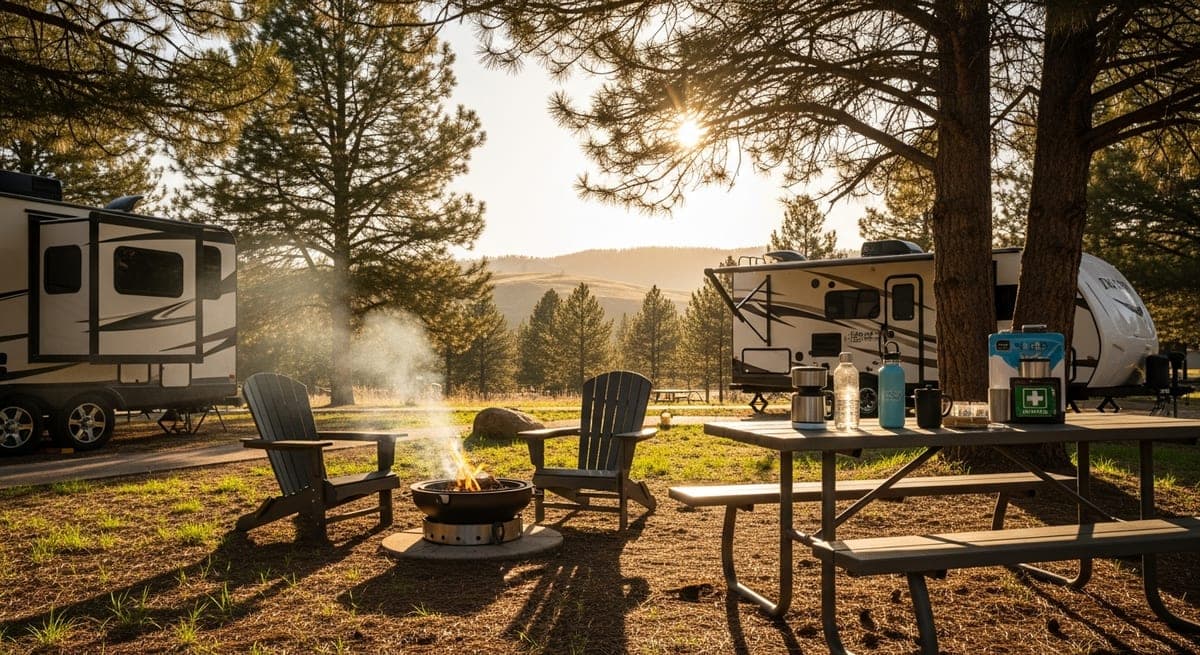
The Outdoor Setup That Made It Feel Like Home
- Folding chairs worth sitting in for hours — Helinox and GCI are what I've stuck with after burning through two cheap sets that failed mid-trip. The price difference is real, and so is the durability.
- A folding table (the one that came with the RV is usually adequate; if not, a basic camp table does the job fine)
- Outdoor mat under the awning — keeps dirt outside and defines your living space. Over a full season, this is the single item that reduces floor cleaning inside more than anything else I've added.
- Headlamps over flashlights, every time. Staking down an awning at 10 PM in a Sedona campground with no site lighting is a lot easier with both hands free.
- Bug spray and sunscreen in real quantities — not travel-size bottles that run out by day three.
The Details That Actually Earn Their Space
- A good outdoor mat at the entry steps: The single highest-value-per-dollar item I've added to the rig. Most of the dirt stays outside.
- Small broom and dustpan: Full-sized brooms are awkward in an RV. A compact hand broom fits in any cabinet and gets used every day on the road.
- Command hooks: No-damage hanging for jackets, bags, and gear. In the limited wall space of an RV, these turn dead vertical space into usable storage.
- Microfiber towels: Quick-dry, pack flat, and work for dishes, cleaning, and personal use. On a 10-day run through southern Utah in spring 2025, we used three towels for everything and they kept up the whole trip.
- Power strip with USB ports: Modern RVs don't have enough outlets for everyone's devices. A 6-outlet strip with USB ports solves this without stressing the circuit.
- Black tank treatment: Happy Campers works well. Use it from day one — don't wait until there's a problem to start addressing it.
Related: RV driving tips for first-timers · RV water system guide · RV storage and organization tips
Ready to Plan Your Trip?
Put this knowledge to work. Let our AI build a personalized RV itinerary for your next adventure, or browse community trips for inspiration.