
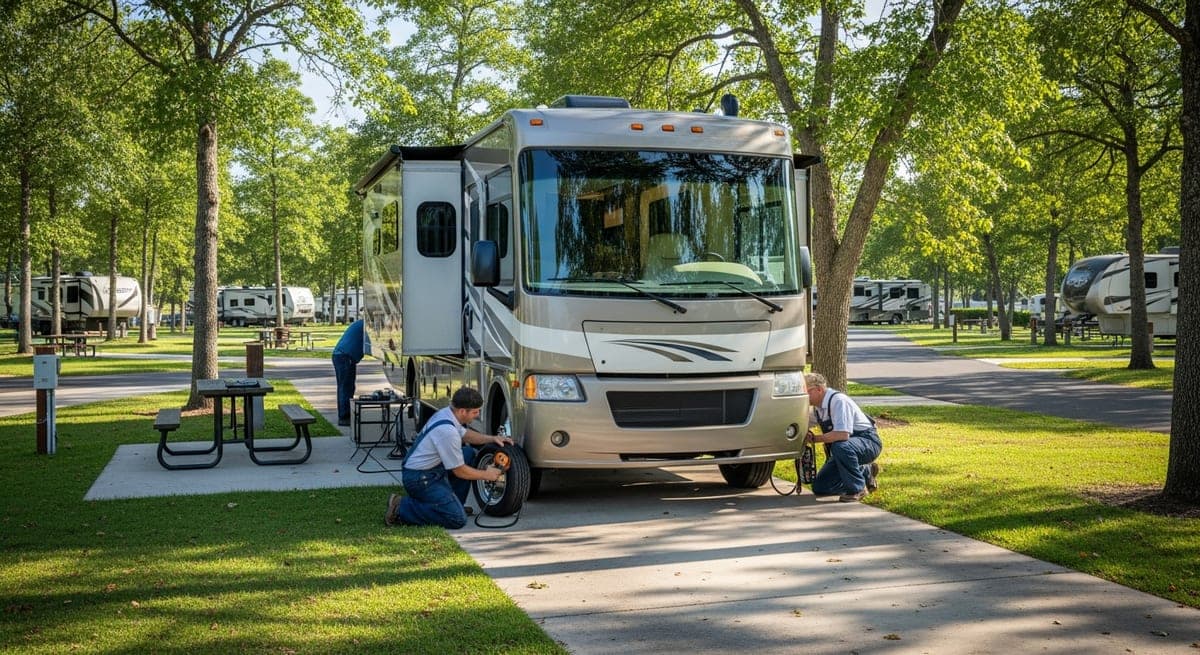
Why Pre-Trip Inspection Matters
The most common on-road RV breakdowns are preventable with a pre-trip inspection. Tire failures, dead batteries, brake problems, and tow hitch failures all have detectable precursors that a thorough pre-trip inspection catches. The cost of roadside assistance, towing a large RV, and emergency repairs far exceeds the 30–60 minutes a good pre-trip inspection takes.
Tires: The Most Critical Check
Tire failures cause serious accidents and are the most common RV breakdown. Tires fail from three causes: underinflation (most common), overloading, and age-related degradation. Pre-trip tire inspection:
- Pressure: Check cold tire pressure (before driving) with a quality gauge. RV tires require specific inflation pressure based on load — find your placard (usually in the entrance doorway) for the correct specs. Low pressure is the leading cause of blowouts.
- Sidewall condition: Look for cracking, bulging, or any deformity in the sidewall. Sidewall cracks indicate UV and age degradation — tires older than 5–7 years should be replaced regardless of tread depth.
- Tread depth: Check tread wear with a penny test. Visible crown of Lincoln's head = replace the tire.
- Lug nut torque: After any recent wheel work, verify lug nut torque with a torque wrench at the correct specification.
Hitch and Tow Connections
If you're towing a trailer, verify before every departure:
- Hitch ball fully seated in coupler, latch locked, safety pin secured
- Safety chains crossed under the tongue and attached with appropriate slack
- Trailer brake breakaway cable attached to tow vehicle, not wrapped around the hitch
- All lights functioning: turn signals, brake lights, running lights (do this before attaching — passenger confirms from the rear)
- Weight distribution bars and sway control properly engaged if equipped
- Slide-outs retracted, stabilizer jacks up, exterior compartments closed
Under-Vehicle and Fluid Checks
Before a significant trip (500+ miles), check:
- Engine oil: Check level on the dipstick; look for any change in color (milky = water intrusion) or grit (contamination)
- Coolant: Level in the overflow reservoir, condition (not rusty or dark)
- Brake fluid: Level in the reservoir; any significant drop indicates a leak
- Power steering fluid: If equipped
- Generator oil: Check before running; generators have their own oil level requirement
- Underneath visual: Look for fresh fluid puddles, hanging hoses or exhaust components, or anything that has shifted since the last inspection
Interior and Systems Check
- LP gas turned off at the tank for travel (Connecticut and most states require this when driving through tunnels)
- Propane detector functional (button test)
- CO detector functional
- Smoke detector functional
- Water heater bypass valve in correct position if water system is in use
- Refrigerator switched from propane to 12V DC mode for travel (prevents flame-out concerns; 12V mode is sufficient for temperature maintenance)
- All loose items secured — overhead bins latched, items on counters stowed, slide-out furniture secured
Post-Setup Arrival Check
When arriving at the campsite, a post-setup confirmation: fresh water connected with pressure regulator in line, electrical connected with surge protector, sewer connected with appropriate fittings, slides extended (check clearances first), and leveling jacks deployed before opening slideouts on units where sequence matters.
Is that campground membership actually worth it?
Plug in your camping nights and typical nightly rate. Our free calculator does the break-even math for Good Sam, Passport America, Thousand Trails, and KOA Rewards.