When Peak Color Actually Happens
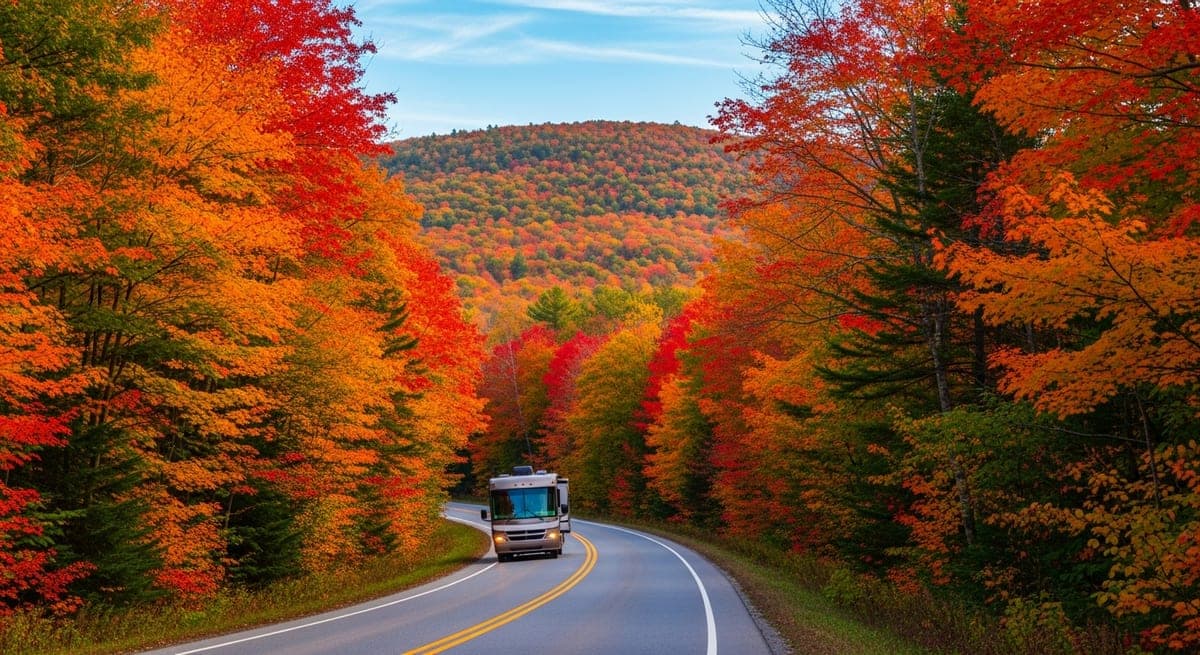
New England fall foliage follows a geographic progression: color moves from north to south and from higher elevation to lower. The timing varies by 10–15 days depending on the summer's weather pattern, but the typical calendar:
- Northern Maine and northern Vermont: mid-September to early October
- New Hampshire White Mountains and central Vermont: late September to mid-October
- Connecticut, Massachusetts, southern Vermont: mid-October to early November
- Cape Cod and the Connecticut shoreline: late October, often the last significant color in the region
The best prediction tools: the UVM Spatial Analysis Lab foliage tracker and the New Hampshire Foliage Report are updated weekly during the season and are more reliable than generic date ranges. Plan your specific destination 1–2 weeks out based on current reports rather than booking months ahead around a fixed date.
Campground Strategy: Book Early or Camp Free
This is the critical planning reality: popular campgrounds in Vermont, New Hampshire, and Maine during peak foliage weeks are booked solid by July or August. State park campgrounds particularly fill early. If you're planning a peak foliage weekend at a specific Vermont state park, you need reservations in summer.
The alternative strategy: plan for weekdays rather than weekends (foliage traffic is dramatically lower Monday–Thursday), use BLM and National Forest dispersed camping in northern Vermont and New Hampshire where reservations aren't required, and stay in less-publicized areas (the Northeast Kingdom of Vermont, western Maine, central New Hampshire outside the White Mountains) where campground competition is lower.
The Best Routes for Color
Vermont Route 100 (north-south spine of Vermont): The premier Vermont foliage drive, running through the center of the state from the Massachusetts border to the Canadian border. Pass through Stowe, Morrisville, Montgomery, and dozens of quintessential Vermont villages. Slow going in peak season — plan for it.
New Hampshire Kancamagus Highway (Route 112): The 34-mile scenic byway through White Mountain National Forest is one of the most photographed foliage routes in New England. No commercial development, multiple campgrounds (reserve through recreation.gov months ahead for foliage season), and dramatic mountain views. Completely closed to commercial trucks.
Maine Route 201 and Moosehead Lake region: Northern Maine's Moosehead Lake area peaks earliest and has the most dramatic combination of big water, mountains, and color. Less crowded than Vermont. Lily Bay State Park on Moosehead Lake is a premier campground (book early).
Connecticut Route 44 (Farmington River valley): For CT-area RVers, the Farmington River valley from Avon through Barkhamsted and into the Berkshires provides excellent color access without leaving the state.
Crowd Management
The "leaf peeper" crowds are concentrated on weekends, on the most famous routes, and at the classic photo overlooks. Moving your travel to Monday–Thursday, camping on state forest roads rather than in leaf-peeper hotspot campgrounds, and seeking color on secondary roads rather than Route 100 puts you in front of the same trees without the traffic jam.
The foliage itself is on every road. Peak color in a small Vermont town's back roads is identical to peak color on Route 100 — without the traffic, the full campgrounds, and the restaurant waits.
Ready to Plan Your Trip?
Put this knowledge to work. Let our AI build a personalized RV itinerary for your next adventure, or browse community trips for inspiration.
Keep Reading
RV Camping in the Appalachian Mountains: Blue Ridge, Shenandoah, and Beyond
10 min read
Destination GuidesColorado RV Camping: Rocky Mountain National Park, Mesa Verde & the Million Dollar Highway
15 min read
Destination GuidesAcadia National Park RV Camping: Size Limits, Campgrounds & the Best Way to See Mount Desert Island
13 min read