Avoiding the Most Common Multi-State Mistake
The 74-mile stretch of US-89 between Page, Arizona and Kanab, Utah contains enough canyon overlooks, BLM pullouts, and free dispersed campsites to fill two full days of exploring — most RVers blow through it in 90 minutes trying to reach Zion before dark. That's the most common multi-state mistake: not bad campground selection, but bad pacing. Trying to cover too much distance means arriving exhausted at every site, driving through places that deserve a stop, and ending the trip burned out rather than refreshed.
Multi-state RV trips that work have one thing in common: built-in buffer days and the flexibility to extend at places you love. Trips that fail have the opposite — a rigid schedule that turns beautiful country into a blur of windshield miles.
The Daily Distance Question
Experienced RVers develop a personal preference for daily driving distance, and it's almost always shorter than they expected when they started. The RV community's generally accepted guideline is no more than 300 miles or 5–6 hours of driving per day — and most full-timers drive less than that on most travel days.
Build your route planning around 200–250 miles per travel day as a starting target. Arriving at your campsite at 2pm beats arriving at 6pm every time, regardless of how many miles you covered. If a segment is longer, add an intermediate overnight rather than grinding through a long driving day.
Booking Windows by Campground Type
Typical lead times vary significantly by specific property and region — treat the ranges below as planning benchmarks, not guarantees, and always verify directly on Recreation.gov or the park's own site. The most important move is identifying your "pinch points" first: the high-demand campgrounds that anchor your route and dictate your dates.
- National park campgrounds (Yellowstone, Grand Canyon, Zion): Windows vary by park — Yellowstone typically opens reservations around 5 months in advance, while other popular parks open earlier or later. Check Recreation.gov for each park's specific opening date and set a calendar reminder so you don't miss it.
- Popular state park campgrounds (California coast, Pacific Northwest, Northeast): Summer availability varies widely by state and individual park. California's coastal state parks often book out 3–4 months ahead; many Midwest and Southeast state parks fill 4–8 weeks in advance.
- KOA and private resorts: 2–4 weeks for most sites; longer for full-hookup premium spots in peak season
- BLM/USFS dispersed camping: No reservation needed — just show up. The Escalante Canyons in Utah and the Jarbidge area in Nevada both offer excellent free dispersed sites near major travel corridors.
With pinch points locked in early, you can fill intermediate nights with flexible options — private campgrounds, state parks with same-week availability, or free BLM nights — without locking yourself into a rigid schedule you'll regret by day three.
Route Design Principles
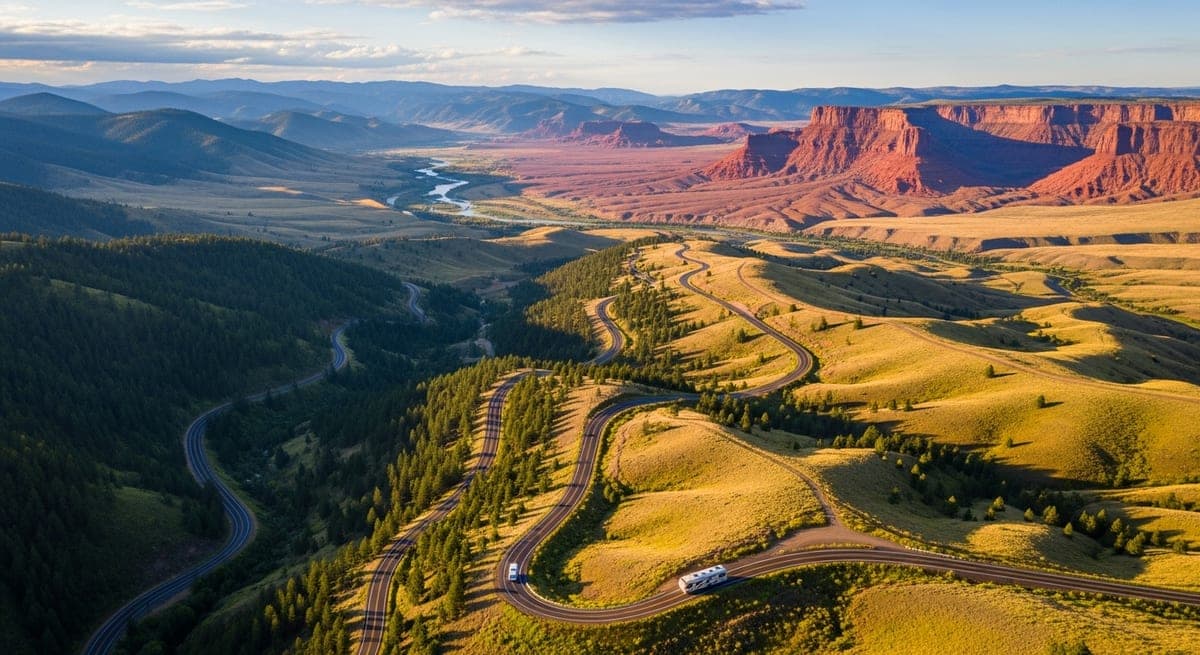
Route for experience, not efficiency. The most scenic roads in America are rarely the fastest — Highway 12 through Utah's canyon country, the Blue Ridge Parkway across Virginia and North Carolina, the Beartooth Highway connecting Billings to Yellowstone's northeast gate. Build extra hours into days that cross beautiful terrain, not into days of interstate driving.
Plan your longest driving days on the least interesting stretches and your shortest days in areas with the most to see. A 300-mile day on I-80 through Nebraska is far less punishing than a 200-mile day navigating switchbacks through the Rockies.
Loop routes are almost always better than out-and-back routes. When you retrace your outbound route, you're driving roads you've already seen instead of new ones. Even imperfect loops — returning via a different but less scenic highway — are usually preferable to driving the same stretch twice. The variety alone is worth the minor detour.
Backup Planning
Multi-state trips need mechanical contingency built in before you leave the driveway. Know the RV service network in your travel area — extended warranties with roadside assistance and programs like Good Sam Roadside Assistance both provide mobile tech coverage when you need help in an unfamiliar area. Have a 24-hour service number saved in your phone before you leave, not earmarked to "look up later."
Keep an accessible emergency repair kit: basic hand tools, electrical connectors, a tire plug kit with a 12V inflator, spare fuses for your coach, and a fresh water hose repair kit. These items take up minimal space and have saved more than a few trips from turning into expensive delays on the side of a two-lane highway far from the nearest RV dealer.
From the RVmapper team
Fishing along your route?
Hooked Fisherman publishes fishing reports for all 50 states, species guides, and honest gear reviews. Know what's biting before you park the rig.