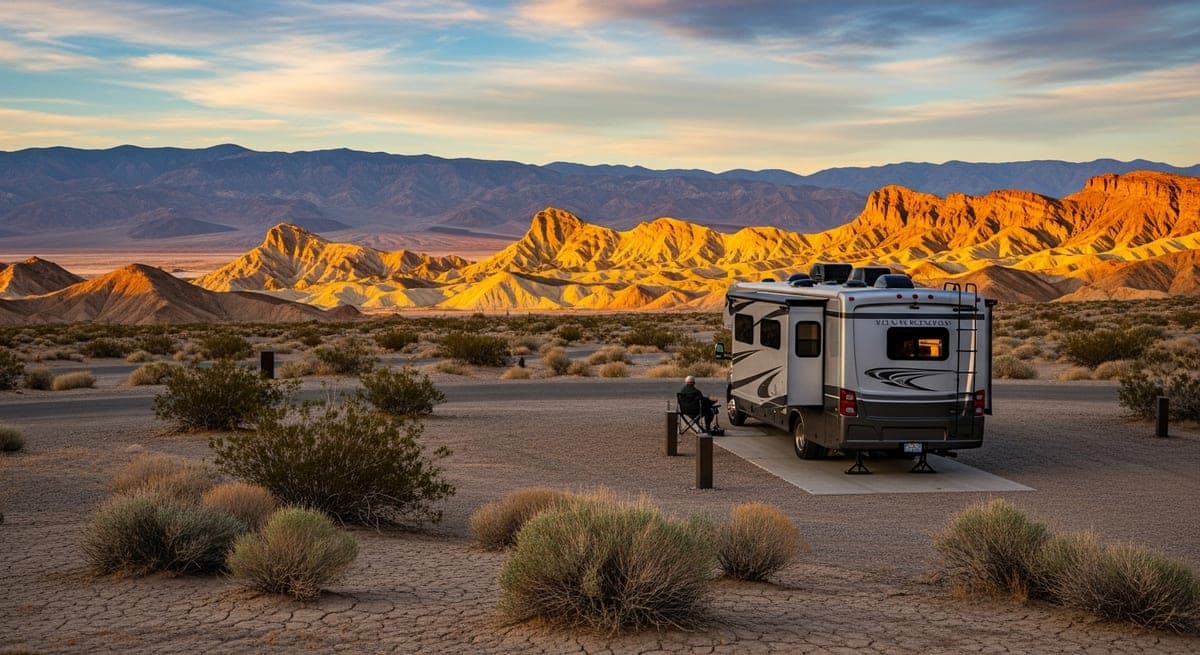
Death Valley National Park is the hottest, driest, and lowest national park in the United States — and one of the most extraordinary landscapes on earth. The salt flats of Badwater Basin sit 282 feet below sea level. Telescope Peak rises 11,043 feet above the valley floor. Summer temperatures regularly exceed 120°F at Furnace Creek. Visiting Death Valley in an RV is absolutely achievable — but only with timing and preparation.
When to Go: The Timing Is Everything
November through March: The prime RV season. Daytime highs at Furnace Creek run 60–75°F, nights 40–50°F. The desert comes alive with clear skies, comfortable hiking temperatures, and (in wet years) wildflower blooms. This is when the park is at its most accessible and enjoyable.
April and October: Shoulder months. April can reach 100°F by late in the month; October is cooling down. These months are manageable but increasingly hot in April.
May through September: Furnace Creek regularly hits 120°F+ in peak summer. RV air conditioners struggle at extreme temperatures, campsite electrical systems are under constant load, and heat-related illness is a genuine risk. Some experienced desert campers do summer Death Valley — with full hookups, shore power for continuous AC, and avoidance of outdoor activity between 10 AM and 6 PM. For most RVers, summer is best avoided.
Campgrounds and Size Limits
Furnace Creek Campground (main, paved): 136 sites in the center of the park. The only Death Valley campground with electrical hookups (30/50 amp available, limited sites — book early). Max length for hookup sites is 35 feet. The dry camping section accommodates up to 35 feet as well. Reservations required October–April. At 190 feet below sea level, this is the lowest campground in the National Park System.
Sunset Campground (large rig friendly): 270 sites with no size limit — essentially a parking lot in the desert. No shade, no hookups, first-come-first-served most of the year. Good for large motorhomes and fifth wheels that don't fit elsewhere. Generator use permitted during set hours.
Stovepipe Wells Campground: 190 sites, no size limit, first-come-first-served most of the year. Hookups available at the adjacent Stovepipe Wells Village RV park (managed by the park concessionaire). Near the sand dunes — highly photogenic at sunrise.
Mesquite Spring (north end of park): 30 sites, max 30 feet. Quieter and cooler than the valley floor campgrounds. Good base for exploring Scotty's Castle area (currently under long-term restoration — check current status).
What Not to Miss
- Badwater Basin (drive-to): The lowest point in North America. The salt flats extend for miles. Drive-to and short walk; accessible in all weather.
- Mesquite Flat Sand Dunes: Accessible from Stovepipe Wells. Most photogenic at sunrise or sunset. 100-foot dunes with no trails needed.
- Artist's Drive and Artist's Palette: A one-way paved loop with multicolored volcanic deposits. Accessible to RVs under 25 feet; larger rigs view from the highway pullout.
- Zabriskie Point: Classic overlook over eroded badlands formations. Short walk from the parking area.
- Dante's View (road restriction): One of the best overlooks in any national park, with views of the full valley floor 5,000 feet below. Road is restricted to vehicles under 25 feet.
Fuel and Water
Death Valley is remote. Fuel is available only at Furnace Creek and Stovepipe Wells — at a significant price premium over surrounding communities. Top off your tank before entering the park whenever possible. Water is available at campgrounds; carry extra in your fresh water tank for between campgrounds. Cell service is nearly nonexistent in most of the park — download offline maps before arrival.
Related: Joshua Tree RV guide · Southwest RV routes · Boondocking guide
From the RVmapper team
Fishing along your route?
Hooked Fisherman publishes fishing reports for all 50 states, species guides, and honest gear reviews. Know what's biting before you park the rig.
Keep Reading
RV Camping in the Appalachian Mountains: Blue Ridge, Shenandoah, and Beyond
10 min read
Destination GuidesColorado RV Camping: Rocky Mountain National Park, Mesa Verde & the Million Dollar Highway
15 min read
Destination GuidesAcadia National Park RV Camping: Size Limits, Campgrounds & the Best Way to See Mount Desert Island
13 min read