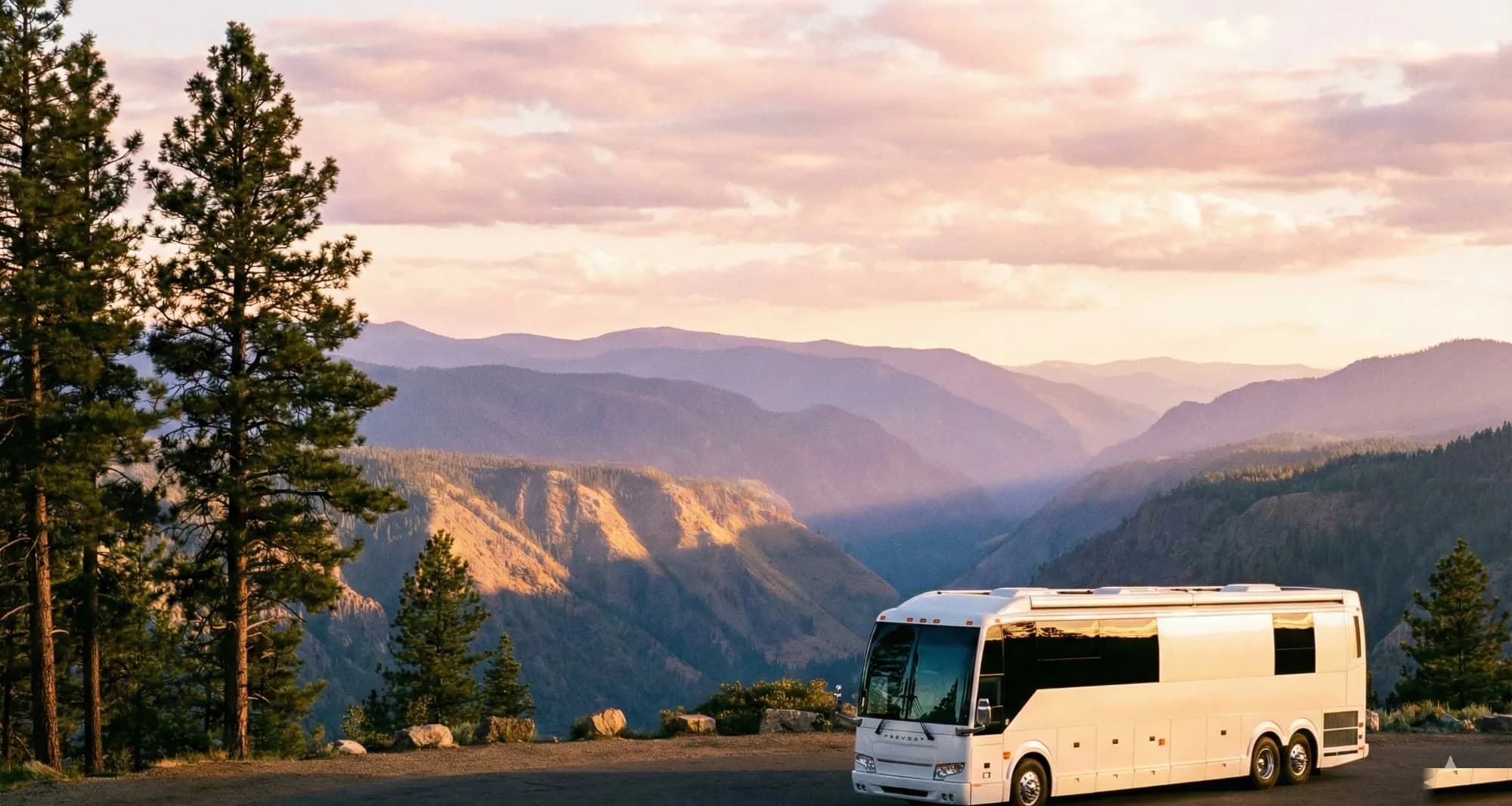
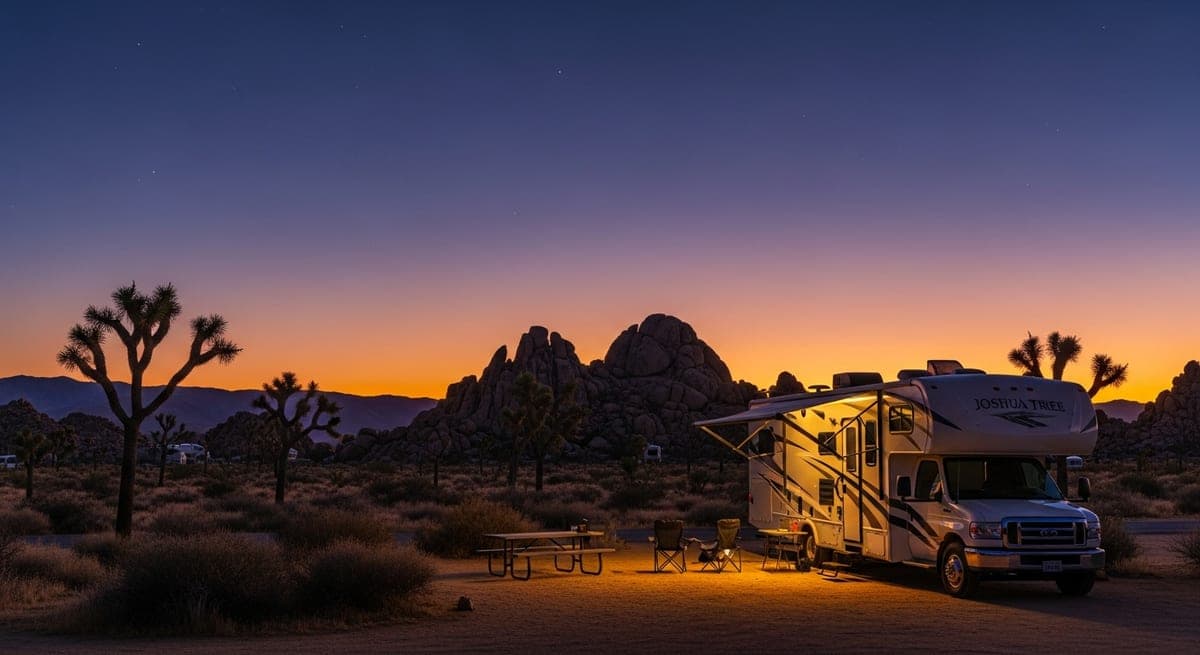
Joshua Tree sits at the collision of two desert ecosystems — the Mojave and the Sonoran — creating a landscape that looks genuinely alien: twisted, arm-raised Joshua trees, surrealist boulder formations the size of houses, and skies that, far from any city, show the full Milky Way on a clear night. It's one of the most accessible desert parks in California, 140 miles from Los Angeles, and an excellent RV destination for those who appreciate wide open country and the specific pleasure of desert camping.
When to Visit: The Critical Timing Issue
Joshua Tree is a desert park at 3,000–5,000 feet elevation. The timing question is more important here than almost any other park:
- October through April: The optimal window. Daytime temperatures from the 50s to 70s°F (occasionally reaching 80s in April). Nights can drop to freezing from November through February. Desert wildflowers bloom in late February and March in good years — one of the most spectacular natural events in California.
- May through September: Generally too hot for comfortable camping and hiking. Daytime temperatures regularly exceed 100°F from June through August. The park is not closed in summer, but most people who camp in July without full hookups and serious AC capacity are making a mistake.
- Best months overall: March, April, October, November.
Campgrounds: The Size Limit Problem
Joshua Tree's campgrounds were built for smaller vehicles and tents. Most have restrictive size limits:
Jumbo Rocks (most popular, central area): 124 sites; no hookups; maximum vehicle length 35 feet. Generator hours: 8 AM–8 PM. First-come or reservable depending on season. The heart of the park's boulder landscape — extraordinary nighttime photography from this campground. Recommended for rigs up to 35 feet.
Cottonwood Campground (south entrance): 62 sites; no hookups; maximum 35 feet. The most accessible campground for those entering from I-10. Generator hours apply. Near the desert wash and Cottonwood Spring oasis.
Black Rock Campground (northwest entrance, near Yucca Valley): 99 sites with water and flush toilets; no electrical hookups; maximum 35 feet. The most developed campground in the park — closest to town services in Yucca Valley. Dump station on site. Reservations recommended year-round.
Indian Cove Campground (north end): 101 sites; no hookups; maximum 35 feet. Popular with rock climbers. Isolated from the main park area — different entrance from Twentynine Palms Highway. Beautiful boulder setting.
Ryan Campground: 31 sites; no hookups; maximum 25 feet only. Smaller sites, more intimate. Near Ryan Mountain trailhead.
Private campgrounds near the park: Several commercial RV parks in Twentynine Palms and Yucca Valley offer full hookups and accommodate larger rigs. These are the only hookup options near the park. Twentynine Palms has a Walmart and full grocery stores — stock up before entering the park.
Dark Sky Experience
Joshua Tree is one of the best accessible dark-sky destinations in the Southwest. The park is located east of the Los Angeles light dome but far enough from Palm Springs and Coachella Valley to preserve genuinely dark skies in the central and eastern areas. On a new moon night, the Milky Way core is visible from March through October.
Best spots for stargazing: Jumbo Rocks area, the open flats of the Pinto Basin (Cholla Cactus Garden area), and the eastern part of the park away from the Palm Springs light dome to the southwest. Arrive after astronomical twilight (about 90 minutes after sunset) for full dark adaptation.
What to Do: The Highlights
- Keys View (5,185 ft): The park's primary panoramic viewpoint — the entire Coachella Valley, the Salton Sea, and on clear days Mexico. Short paved walk from the parking lot. Spectacular at sunset when the valley fills with city light.
- Cholla Cactus Garden: A flat, quarter-mile nature walk through a dense stand of teddy bear cholla — a species with hooked spines that attaches to passing animals and humans at the lightest contact. Photograph them with the sun behind them for the signature Joshua Tree backlit-spine image.
- Skull Rock Nature Trail: 1.7-mile loop near Jumbo Rocks — boulder scrambling, unusual rock formations, and desert wash. Named for an obvious skull-shaped eroded rock formation.
- Ryan Mountain: 3 miles round trip to a 5,457-foot summit with 360-degree views. The best single day hike in the park for the view-to-effort ratio.
- Hidden Valley: 1-mile loop through a hidden rock-enclosed valley. One of the most famous rock climbing areas in the world.
Water and Supplies
There is no water source inside Joshua Tree except at Black Rock Campground and the Cottonwood Campground. All other campgrounds have no water supply. Arrive with a full fresh water tank and adequate water for your entire stay.
The nearest fuel and groceries: Twentynine Palms (north entrance), Yucca Valley (northwest), Palm Springs via I-10 (south). None are inside the park. Plan your fuel stop before entering.
Cell service: limited to nonexistent in most of the park. Download offline maps before entering. The Joshua Tree NPS app has offline capability for trail maps and campground locations.
Related: 5 Unforgettable Southwest RV Routes · Boondocking beginner's guide · RV weight and towing guide
Ready to Plan Your Trip?
Put this knowledge to work. Let our AI build a personalized RV itinerary for your next adventure, or browse community trips for inspiration.
Keep Reading
RV Camping in the Appalachian Mountains: Blue Ridge, Shenandoah, and Beyond
10 min read
Destination GuidesColorado RV Camping: Rocky Mountain National Park, Mesa Verde & the Million Dollar Highway
15 min read
Destination GuidesAcadia National Park RV Camping: Size Limits, Campgrounds & the Best Way to See Mount Desert Island
13 min read