The US East Coast from Acadia National Park in Maine to the Florida Keys is roughly 2,000 miles as a straight shot — but done as an RV road trip with stops, it's a 4 to 8 week journey through American history, diverse geography, and some of the best beaches and seafood in the country. Here's a practical route breakdown with stop recommendations and timing.
Maine (Acadia + Downeast)
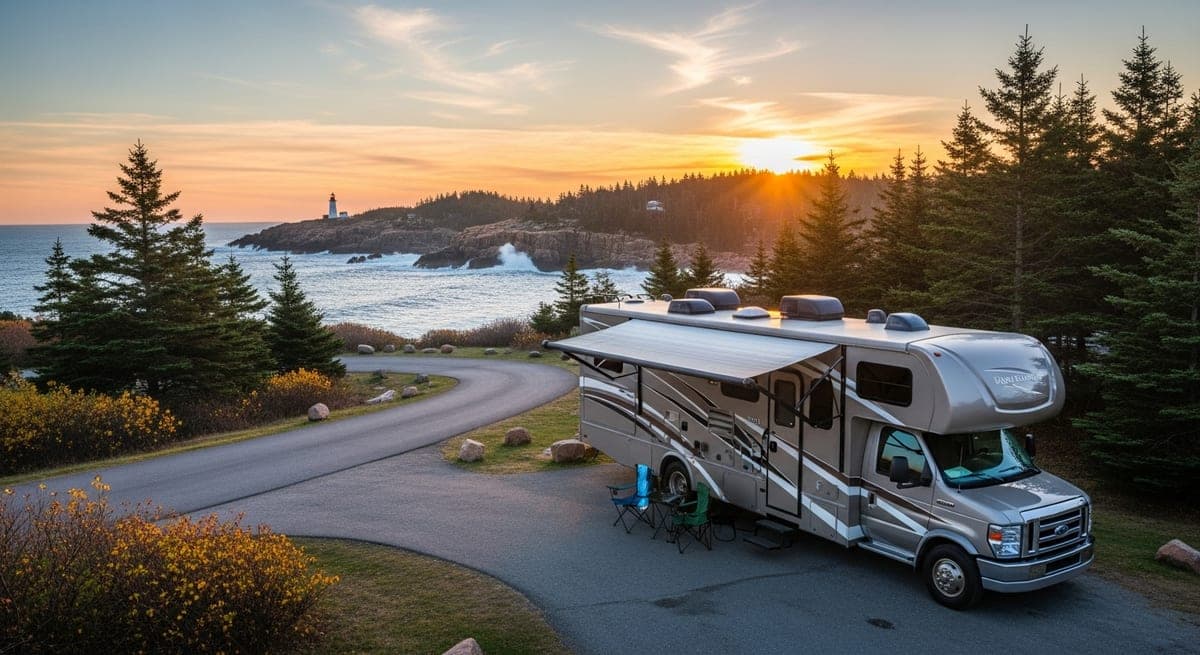
Acadia National Park: The northern starting point. Acadia is one of the most beautiful national parks in the US — mountains rising directly from the ocean, carriage roads, and stunning granite coastline. The main campground is Blackwoods (5 miles south of Bar Harbor, 281 sites, max 35 feet). Book Recreation.gov reservations 6 months out for summer. Route 3 into Bar Harbor has a low bridge near Eagle Lake — verify clearance for your rig or use the alternate approach.
Timing: Mid-June through September. July and August are peak (and crowded). Late September sees foliage colors begin and crowds thin significantly.
New Hampshire + Vermont: White Mountains + Green Mountains
Route 302 through Crawford Notch and the Kancamagus Highway (Route 112) are scenic mountain drives with campgrounds along the way. Franconia Notch State Park (New Hampshire) has one of the best situated campgrounds — sites along the Pemigewasset River in a dramatic mountain notch. Limited to 32-foot maximum length.
Cape Cod and the Islands, Massachusetts
Cape Cod is a must but requires planning for RVers. Nickerson State Park in Brewster (418 sites, max 35 feet) is the best RV campground on the Cape — book 6+ months in advance for summer. Cape Cod National Seashore (Race Point Beach, Coast Guard Beach) has no RV campgrounds but extensive beach access. Note: Route 6 is the main artery and handles all RV sizes; some town roads off-cape have bridge/clearance issues.
Connecticut + Rhode Island
Often bypassed but worth a stop. Rocky Neck State Park (Connecticut) is an underrated campground on Long Island Sound with beach access. Misquamicut State Beach (Rhode Island) and Burlingame State Park are good coastal options. Historic Newport, RI is worth a day — Bellevue Avenue mansion district and the Cliff Walk are excellent.
New Jersey: Delaware Water Gap + Jersey Shore
Delaware Water Gap National Recreation Area (NJ/PA border) has excellent campgrounds for a mid-trip break. Worthington State Forest on the NJ side (69 sites along the Delaware River) handles rigs up to 40 feet. The Jersey Shore gets a bad reputation, but Island Beach State Park is a pristine, undeveloped barrier island worth a visit. Note that it is day-use only with no campground, so base your camping elsewhere (Worthington State Forest, above) and visit the beach as a day trip.
Virginia + the Shenandoah Valley
Shenandoah National Park's Skyline Drive is 105 miles of ridge-top driving with views into Virginia. The four campgrounds (Big Meadows, Mathews Arm, Loft Mountain, Lewis Mountain) handle rigs up to 30 feet (Big Meadows up to 35 feet). Off-season (October–November for fall foliage) is spectacular and less crowded. Colonial Williamsburg, Jamestown, and Yorktown are worth a day or two for history-interested travelers.
Outer Banks, North Carolina
The Outer Banks barrier islands are remote, wild, and spectacular. Oregon Inlet Campground (National Park Service, 120 sites) sits on a sand spit with Atlantic Ocean and Pamlico Sound on either side. Cape Hatteras National Seashore has multiple NPS campgrounds — check size limits (most handle up to 40 feet but beach access roads have their own restrictions). The drive across the Bonner Bridge over Oregon Inlet is a highlight.
South Carolina: Myrtle Beach to the Low Country
Hunting Island State Park near Beaufort, SC is one of the most beautiful state park campgrounds in the Southeast — subtropical maritime forest, lighthouse, and beach. Book 6+ months out. Myrtle Beach has enormous RV parks (full hookups, amenities) if you need a rest day with utilities.
Georgia: Cumberland Island + Golden Isles
Cumberland Island National Seashore is accessible only by ferry (no RV access to the island itself) but the ferry dock at St. Marys, GA has campgrounds nearby. Jekyll Island State Park has an excellent campground with beach access on a beautiful barrier island — max 45 feet. Sea Island and St. Simons are worth slow days.
Florida: From Amelia Island to the Keys
Florida's east coast offers numerous state parks with beach campgrounds: Fort Clinch State Park (Fernandina Beach), Anastasia State Park (near St. Augustine, max 40 feet), Sebastian Inlet State Park. The Florida Keys are the final destination — Bahia Honda State Park (Marathon, FL) is considered the crown jewel of Florida state park campgrounds. Book 11 months out. The approach to Key West on US-1 (Overseas Highway) handles all RV sizes but requires patience — it's 100+ miles of 2-lane road through the Keys with single-lane bridges.
Route Logistics
Total mileage Maine to Key West: approximately 1,900 miles point-to-point. As a road trip with detours: 2,500–3,000 miles. Ideal pace: 4 to 6 weeks. Don't drive I-95 end-to-end — the parallel Route 1 (US-1) follows the coast more closely and has more character, though it adds time.
Related: Gulf Coast RV road trip · Cape Cod RV guide · Escapees RV Club guide
Ready to Plan Your Trip?
Put this knowledge to work. Let our AI build a personalized RV itinerary for your next adventure, or browse community trips for inspiration.