The Overseas Highway: What to Know Before You Drive
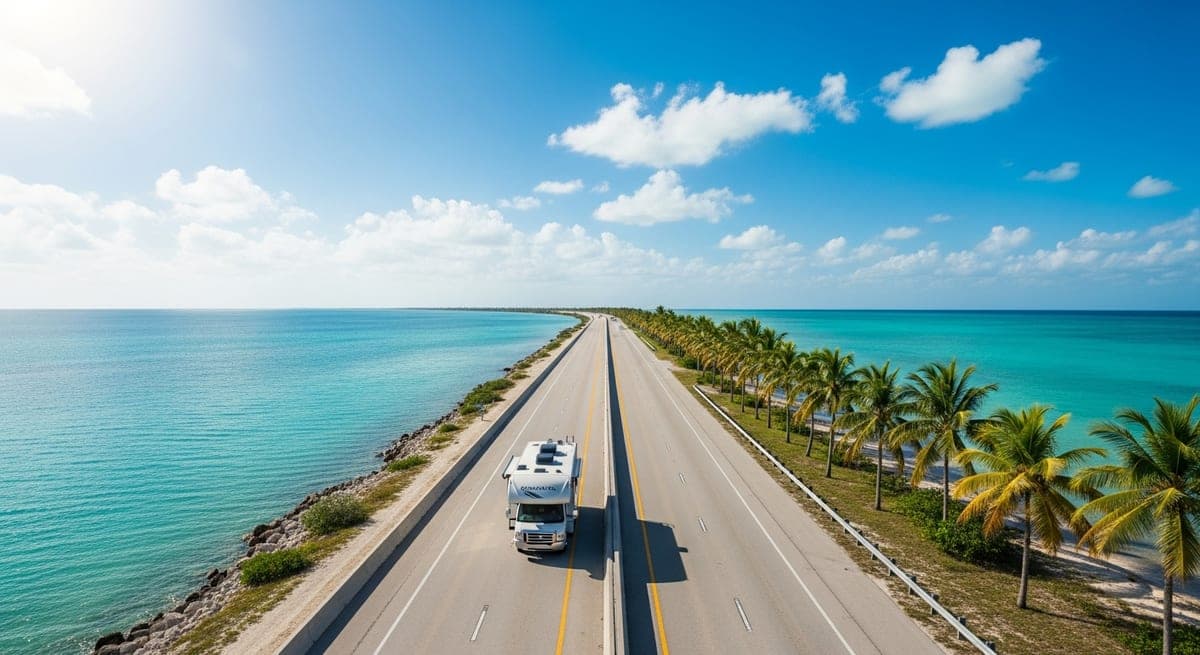
The Florida Keys Overseas Highway (US-1) runs 113 miles from Florida City (south of Miami) to Key West across a series of bridges over the turquoise water of Florida Bay and the Atlantic. It's one of the most spectacular drives in the United States — and one of the most logistically demanding for larger RVs.
The road is two lanes for most of its length. There is almost no place to turn a large rig around once you're committed. RVs over 40 feet in length will struggle with some campgrounds' sites and the tight turns at Key West. The bridge over Seven Mile Bridge (the most iconic span) is manageable for most rigs but requires attention. The practical maximum for comfortable Keys RVing is a motorhome or trailer under 35 feet — Class B vans and smaller Class C motorhomes are ideal.
Campgrounds in the Florida Keys
Campground availability in the Florida Keys is severely limited — the islands are narrow and developed, leaving little space for large RV parks. What's available fills up months in advance for winter season (November–April). Plan accordingly:
John Pennekamp Coral Reef State Park (Key Largo): One of the most coveted campsites in Florida. Right on the water. Snorkeling directly from the park. Books 11 months out for winter. Electric/water hookups. 47 sites — a fraction of the demand.
Bahia Honda State Park (Big Pine Key): On a beautiful oceanfront property with direct Atlantic beach access. Considered one of the best state park campgrounds in Florida. Same booking challenge as Pennekamp — plan 6–11 months ahead.
Dry Tortugas National Park: The end-of-road experience — accessible by ferry from Key West. You can kayak-camp or ferry-camp at Fort Jefferson, 70 miles offshore. No RVs (no road access), but worth knowing about for the most adventurous travelers.
Private campgrounds: Multiple RV parks scattered through the Keys fill available space with mostly seasonal/annual residents in winter. Transient (nightly/weekly) sites are limited and expensive — $100–$150+/night is standard at the better locations.
What to Do in the Keys
Snorkeling and diving: The Florida Keys reef is the third-largest barrier reef in the world and the only living coral reef in the continental US. John Pennekamp offers glass-bottom boat tours and snorkel trips. Dive operators in Key Largo, Islamorada, and Marathon offer reef diving for all certification levels.
Fishing: The Keys are one of the world's premier sport fishing destinations — tarpon, bonefish, permit, mahi-mahi, sailfish, and more. Charter fishing is expensive ($800–$2,000 per trip) but fishing from bridges and kayaks is accessible and free.
Key West: The southernmost point of the continental US is worth a night or two. Mallory Square sunset ceremony, Hemingway House, Duval Street, and the general atmosphere of a unique American place. Key West parking for large RVs is nearly impossible — park at a campground on the outskirts and use rideshare or bicycle.
From the RVmapper team
Fishing along your route?
Hooked Fisherman publishes fishing reports for all 50 states, species guides, and honest gear reviews. Know what's biting before you park the rig.
Keep Reading
RV Camping in the Appalachian Mountains: Blue Ridge, Shenandoah, and Beyond
10 min read
Destination GuidesColorado RV Camping: Rocky Mountain National Park, Mesa Verde & the Million Dollar Highway
15 min read
Destination GuidesAcadia National Park RV Camping: Size Limits, Campgrounds & the Best Way to See Mount Desert Island
13 min read