When you start planning an RV trip, campsite listings throw terms at you — full hookup, water/electric, dry camping, primitive, boondocking — and it's not always obvious what each means or which you want. Here's the complete breakdown, including what gear your RV needs for each and when each type makes sense.
Full Hookup Sites
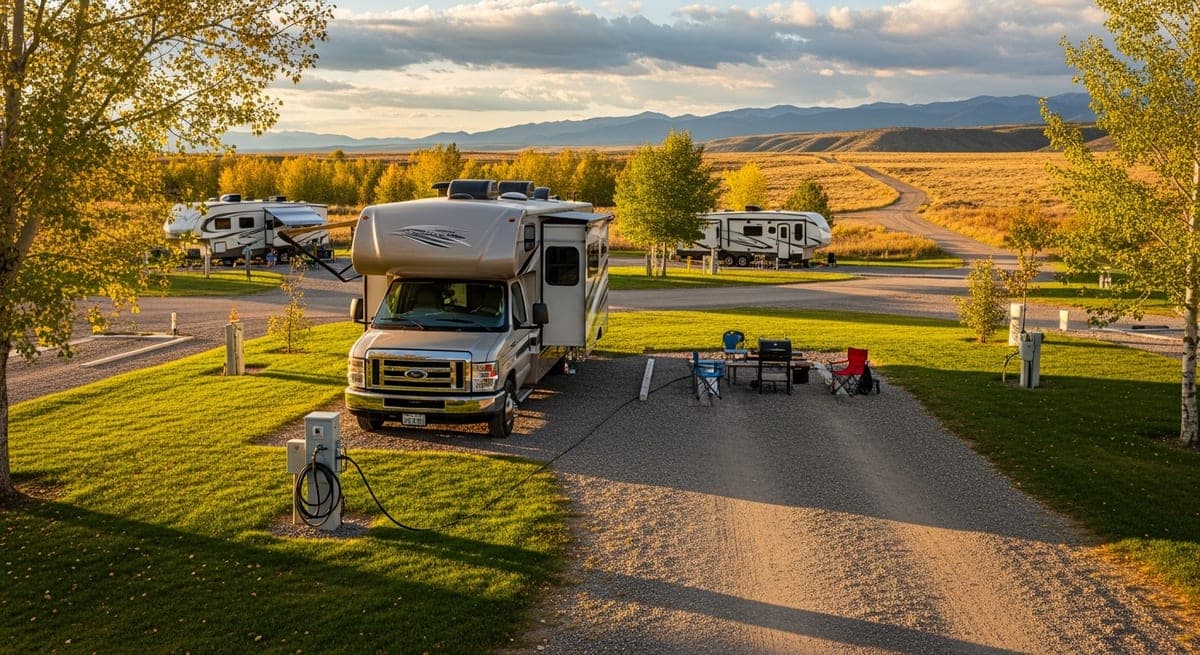
A full hookup site provides three connections: shore power (30 or 50 amp electric), water (city water connection), and sewer (dump connection directly at your site). You're connected to the campground's infrastructure like a house.
What you get: Unlimited water, no need to manage holding tanks or dump at a separate dump station, and reliable power for climate control, appliances, and charging. Your black and gray tanks drain directly from the site — no driving to a dump station.
Cost: Full hookup sites typically run $45–$85/night at commercial RV parks. State park full hookup sites range $25–$45/night where available.
Best for: Extended stays, hot weather (running AC continuously), traveling with anyone who needs consistent utilities (medical equipment, work-from-home setups), or newer RVers who want maximum convenience while learning the ropes.
Water and Electric (Partial Hookup)
Water and electric without sewer. You have shore power and a water connection, but your tanks fill and need to be dumped at a dump station (most campgrounds have one). You drive or walk to the dump station every 3–5 days depending on usage.
Cost: $35–$65/night at commercial parks. Very common at state parks ($20–$40).
Best for: Most standard camping trips. You get power for AC and appliances and unlimited water without paying for the premium sewer connection. Dump station visits take 15–20 minutes and are straightforward once you've done it a few times.
Electric Only (No Water Connection)
Shore power but no water or sewer at the site. Less common, but found at some state parks and municipal campgrounds. You fill your fresh water tank at a water fill station (most campgrounds have one near the dump station) and manage holding tanks the same way as water/electric.
Best for: When that's what's available. Less ideal for long stays but completely functional for 2–4 nights.
Dry Camping (No Hookups)
No electric, no water, no sewer at the site — but you're still in a designated campground. National park campgrounds are frequently dry camping: Yosemite's Camp 4, most primitive sites in national forests, and many state parks outside the hookup loops.
What you need: A battery bank (or generator) for power, a full fresh water tank, and holding tank capacity for the duration of your stay. Most modern RVs can do 3–4 days of dry camping with conservative usage; larger battery banks and solar setups extend that to a week or more.
Cost: $15–$25/night at national parks and state parks. Often $10–$15 at national forests. Some sites are free with a recreation pass (America the Beautiful).
Best for: National park camping (most of the iconic sites are dry camping), budget-focused trips, and campgrounds in remote areas without utility infrastructure.
Boondocking (Dispersed Free Camping)
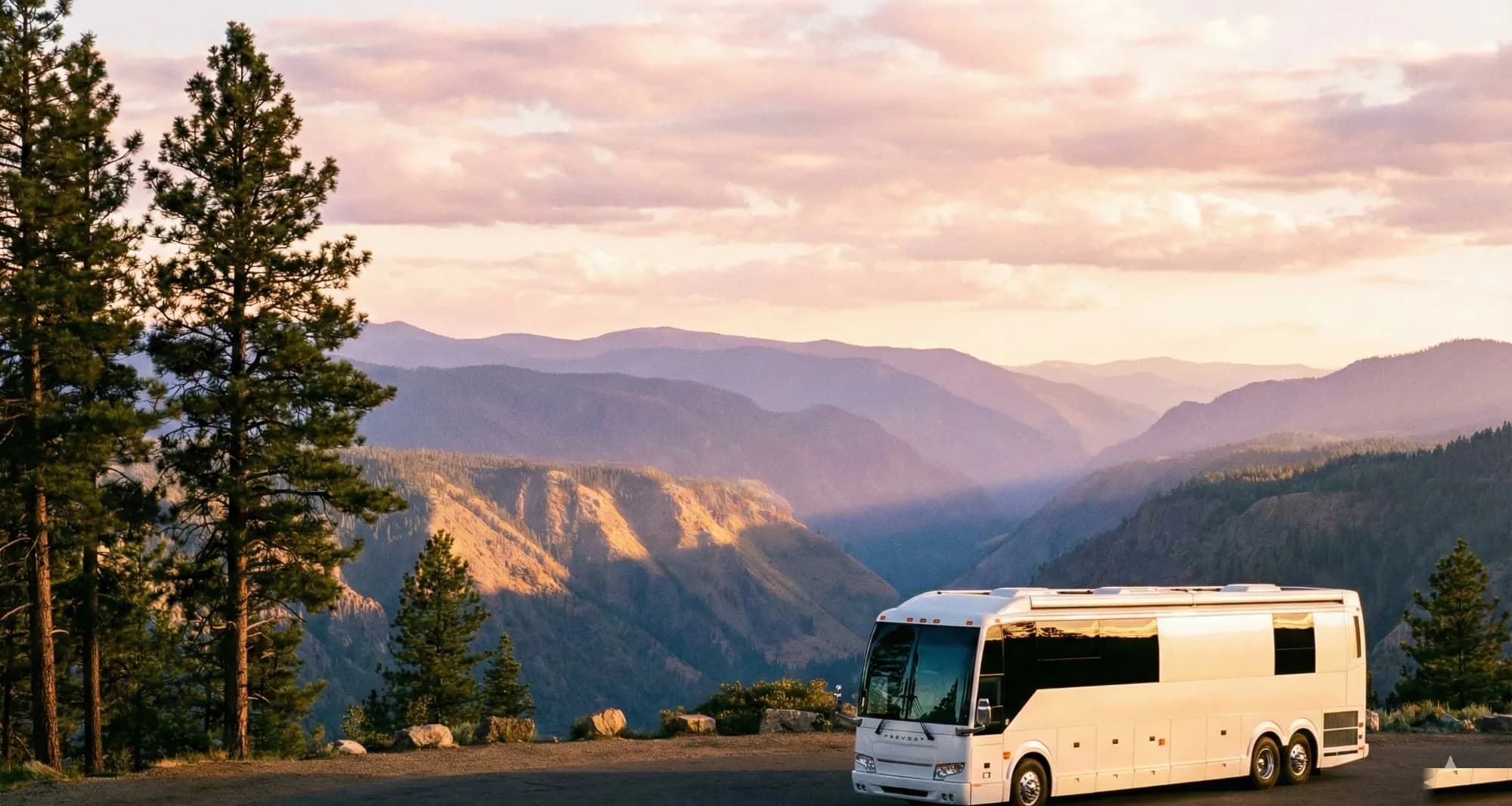
Boondocking means camping outside of designated campgrounds entirely — on public land (BLM, National Forest) or in legal overnight parking spots (Walmart, Cracker Barrel, casino lots). It's free or nearly free, but requires the most self-sufficiency.
BLM and National Forest dispersed camping: On most BLM land and many National Forests, you can camp anywhere that's not posted closed, not within 200 feet of water, and not on private land. There's typically a 14-day stay limit before you must move. Sites aren't marked or maintained — you choose your spot. Apps like iOverlander and Campendium have user-reported free camp spots.
What you need: Solar panels and/or a generator for power, a full tank, and sufficient holding tank capacity. The biggest limitation for most RVers is water (50–100 gallon fresh tanks) and battery bank size.
Best for: Remote wilderness camping, cost-focused full-time RVers, and experienced campers who know their RV's systems well.
Which Should You Choose?
For your first few trips: full hookup or water/electric. You want to learn RV systems without also managing resources. Once you've done a handful of trips with hookups and understand water usage, dump stations, and power management, dry camping becomes much less intimidating — and opens up the best national park and wilderness sites.
A practical progression: full hookups → water/electric → dry camping → boondocking. Each step requires slightly more knowledge but opens better campground options and lower costs.
Related: Boondocking beginner's guide · RV solar power guide · National Forest camping guide
Is that campground membership actually worth it?
Plug in your camping nights and typical nightly rate. Our free calculator does the break-even math for Good Sam, Passport America, Thousand Trails, and KOA Rewards.