This article contains affiliate links. If you make a purchase through these links, we may earn a small commission at no extra cost to you. Learn more.
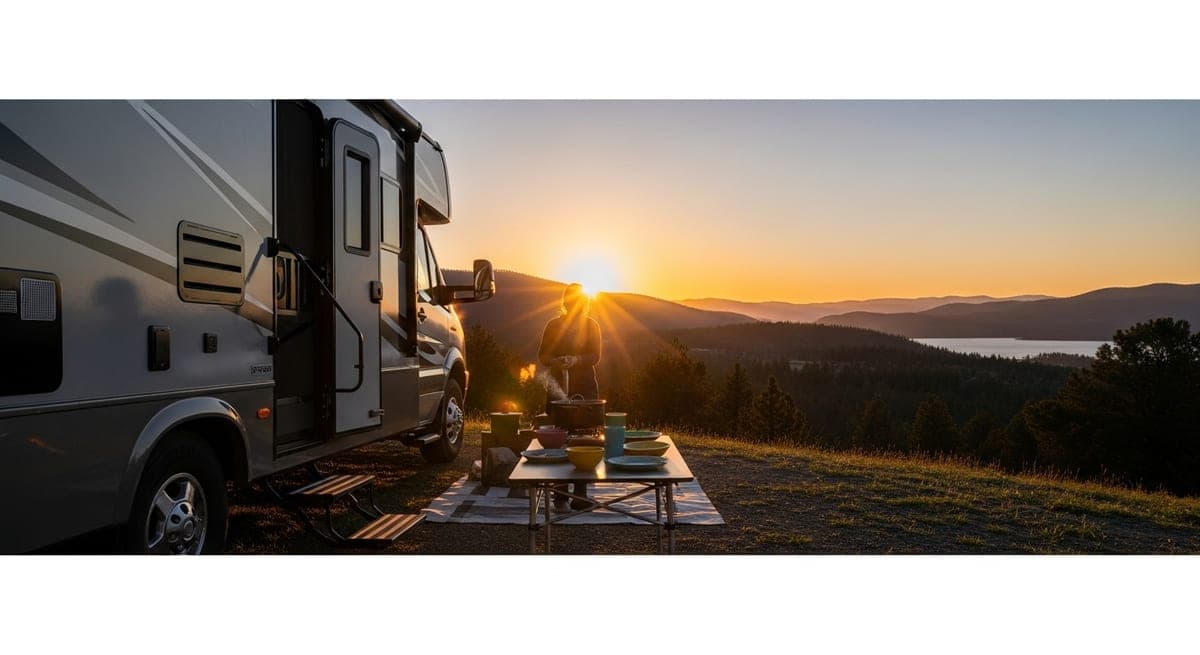
The first time I ran out of propane mid-pork-shoulder — parked at a dispersed site outside Moab with no hookups and a half-raw Boston butt sitting on my stovetop — I learned more about RV meal planning in twenty minutes than in the three months of prep before we left home. I ended up finishing it in the Instant Pot with an extension cord run to the camp host's site fifty yards away. The pork was fine. My pride was not.
That moment is why I take RV cooking seriously now. Small kitchens, limited propane, a fridge that holds a fraction of what you're used to at home — the constraints are real. But after cooking on the road full-time for several years, I've landed on a system that means we eat well almost everywhere we stop, without blowing the budget or spending three hours on dinner.
The Constraints Are Real — and Manageable
Limited counter and prep space. Most RV kitchens give you maybe two feet of usable counter. I keep a flexible cutting board that slides over one sink basin — instant extra prep surface. A small pot rack freed up more cabinet space than anything else we changed in the first year.
Small refrigerators and freezers. RV fridges vary quite a bit — absorption models tend toward the smaller end, residential-style compressor units show up in bigger rigs — but most hold considerably less than a home fridge. I plan three to four days of fresh food at a time rather than trying to stuff a week's worth in.
Propane management. Your stovetop, oven, water heater, and furnace all share the same supply. Long braises and anything that simmers for hours will eat into reserves faster than you'd expect — which is exactly how I ended up in the Moab situation above. The Instant Pot changed this almost entirely for us.
Water conservation. When boondocking, every gallon is a real calculation. Cooking methods that require big pots of boiling water become a genuine tradeoff. I cover this more below, but the short version is: steam more, boil less.
The Gear I Actually Use (And What I Stopped Hauling)
Instant Pot (6-quart): The single piece of gear that changed RV cooking more than anything else I've tried. It replaces a slow cooker, pressure cooker, rice cooker, and steamer — and runs on electricity instead of propane, which is a genuine win when you're on shore power. I resisted it for the first few months and then spent a long time annoyed at myself for the delay.
10-inch cast iron skillet: Practically indestructible, works on any heat source including a campfire, and gets better the more you use it. Mine has crossed three states in a single week and still makes the best breakfast hash I've had outside a diner.
One good chef's knife: An 8-inch chef's knife and a serrated bread knife handle 95% of what I cut. I brought a full knife block our first month on the road. It came home via UPS by month two.
Collapsible silicone everything: Colanders, mixing bowls, measuring cups — they flatten to nearly nothing. The heat-resistant silicone versions hold up to real cooking without warping.
A portable griddle for outside: Taking cooking outside keeps heat and grease out of the RV, saves indoor propane, and makes the whole experience better. A Blackstone or basic camping griddle earns its cargo weight within the first week.
What I stopped hauling: Stand mixer, full knife block, separate rice cooker, large Dutch oven. If something doesn't see weekly use, it goes home. RV kitchen real estate is too limited for passengers.
How I Actually Plan Meals on the Road
Three-day blocks, not weekly. Planning a full week is how you end up with wilted produce on day five and a mystery container on day seven. I plan three breakfasts, three lunches, three dinners — then reassess at the next grocery run. This keeps the fridge manageable and builds in flexibility for that roadside tamale stand you'll pass outside Truth or Consequences, New Mexico.
The base ingredient rule. A rotisserie chicken becomes dinner night one, chicken tacos night two, and chicken soup night three. A bag of rice runs with stir-fry, burrito bowls, then fried rice when I'm clearing the fridge. This approach cuts food waste and shopping list complexity at the same time.
The pantry I never let run out: Olive oil, salt, pepper, garlic powder, cumin, chili powder, soy sauce, hot sauce, pasta, rice, canned beans, canned tomatoes, and peanut butter. Everything else is variable. These are the non-negotiables that make dinner possible when the plan falls apart.
Prep before leaving home. Pre-chopped vegetables, marinated proteins, pre-mixed spice blends in labeled zip bags. A Saturday afternoon at home before departure saves 20 minutes of camp-kitchen wrestling every single day of the first week.
No-cook lunches by default. Wraps, sandwiches, cheese and crackers, hummus and veggies. This one change made the biggest dent in our propane use and keeps the rig noticeably cooler in summer.
Buying Food on the Road Without Getting Gouged
Download store apps before you need them. Walmart, Kroger, Aldi — digital coupons and store locators are legitimately useful. Grocery pickup is a quality-of-life upgrade when you're navigating a 35-footer through a strip mall parking lot.
Farmers markets are underrated on road trips. Often competitive on produce pricing, better quality than the highway-adjacent grocery, and you get a feel for wherever you've landed. We bought Hatch green chiles by the bag in southern New Mexico last September. The salsa we made that night is still the benchmark.
Let your route shape the menu. Gulf shrimp on the Texas coast, fresh lobster at a dock stand in Maine, Dungeness crab in Oregon — this is the version of RV eating I didn't expect to love as much as I do. Local specialties beat any meal plan I could have written from home.
Dollar stores for pantry basics. Dollar General in small towns often carries staples at prices that undercut the nearest grocery, which is useful when you're between larger towns and need to top off the pantry.
The Recipes That Actually Get Made in Our Rig
Campfire Chili: Brown ground beef, add diced onion, two cans of beans, diced tomatoes, tomato paste, chili powder, cumin, and cayenne. Simmer 30 minutes. Top with cheese, sour cream, and crushed tortilla chips. Makes enough for tonight and tomorrow's lunch, which is the entire point of cooking it.
One-Pot Pasta Primavera: Penne, water, olive oil, whatever vegetables you have, garlic, salt and pepper — all in one pot. Boil until pasta is done and water is absorbed. Stir in parmesan and lemon. No draining required, which saves water when you're on tank.
Instant Pot Pulled Pork: Rub a 3–4 lb pork shoulder with brown sugar, paprika, and garlic powder. Sear on sauté mode, add a splash of apple cider vinegar and BBQ sauce, pressure cook about 60 minutes at high pressure. Add 10–15 minutes for a larger shoulder or if you're above 5,000 feet. Dinner night one, tacos night two, nachos night three.
Skillet Breakfast Hash: Diced potatoes or frozen hash browns until crispy, then ham or sausage, onions, and peppers. Crack eggs into wells, cover until set. Hot sauce mandatory. This is the meal I could eat every single morning and very nearly do.
Foil Packet Dinners: Protein plus chopped vegetables plus butter plus seasonings on heavy-duty foil. Seal and cook over coals or on the grill, 20–30 minutes depending on what's inside. Everyone builds their own, cleanup is minimal, and it works over a campfire when you don't want to fire up the stove at all.
Thai Coconut Curry: Sauté chicken or tofu, add coconut milk, curry paste, fish sauce, and whatever vegetables you have. Simmer 15–20 minutes. Serve over rice. It tastes considerably more involved than it is — which makes it the go-to when you want to feel like you actually cooked something after a long drive.
Keeping Costs Down Without Eating Badly
Cook at least two meals a day in the rig. A week of breakfasts made in the RV might run $25–35. Restaurant breakfasts in most markets will run several times that, and it compounds quickly over a month on the road.
Make double batches. Tomorrow's lunch is handled without extra time or propane. The most efficient cooking session is one that produces two meals instead of one.
Whole chickens over parts. A $5–8 whole chicken roasted in the Instant Pot gives you multiple meals, and you can make stock from the carcass after. One of the better value plays in an RV kitchen, especially in smaller towns where butcher pricing varies.
Build meals around what's on sale. Every grocery store discounts loss-leader items — often meat, eggs, and seasonal produce. Worth a quick scan of the weekly circular before you commit to a plan.
Keeping Food Fresh in a Small Fridge
Produce storage containers help. The kind that regulate airflow genuinely extend how long greens and herbs stay usable — worth the cabinet space they take up.
Tomatoes, bananas, and avocados stay outside the fridge. They last longer at room temperature and free up space for things that actually need cold. This is one of those things I resisted and then couldn't believe I'd been doing wrong for years.
Square containers, not round. They pack more efficiently in a small fridge. I switched and immediately had noticeably more space without adding or removing anything.
Freeze water bottles as ice packs. They cool the cooler, and as they melt you have cold drinking water. Double duty is the RV kitchen principle in miniature form.
Cooking at Altitude: The Thing Most People Find Out the Hard Way
Water boils at a lower temperature at altitude — around 203°F at 5,000 feet instead of 212°F at sea level. Pasta, rice, and beans all take longer than the package says. I've stood over a pot outside Taos watching rice that absolutely refused to cook on schedule before I remembered where I was. Budget an extra minute or two per 1,000 feet above 3,000.
Baking above 5,000 feet gets genuinely unpredictable — reduce baking powder by about 25%, add a touch more liquid, and increase oven temperature by 15–25°F.
The Instant Pot is the cleanest workaround for high-altitude cooking. Pressure normalizes the environment and it performs almost identically at 8,000 feet as at sea level — one more reason it's the first thing I'd tell any RV cook to get.
Water in the Kitchen: The Boondocker's Constant Calculation
Steam instead of boil — uses a fraction of the water and usually produces better results. Steamed vegetables beat boiled ones on texture and nutrition anyway.
Reuse pasta water. It makes a solid base for soups and pan sauces. Free flavor, less water burned overall — a habit worth building even when you're on full hookups.
Two-basin dish method. One basin of soapy water, one for rinsing. Uses a fraction of what running the faucet burns through. Takes a week to get used to, then becomes automatic.
Wipe before you wash. A paper towel or scraper before the basin means cleaner water throughout and less waste overall.
Foil packets and one-pot meals aren't just about convenience — they're a water strategy. Less to clean means less water spent on cleanup, which matters when you're three days into a boondocking stretch.
The Part Nobody Really Tells You
RV cooking isn't about shrinking your home kitchen into a smaller box. Once I stopped trying to replicate what we did at home, the whole thing became easier and honestly more interesting. You shop more often, so what you eat is fresher. You waste less because you're planning in shorter windows. You eat local food because the farm stand is right there off the highway and you have a reason to stop.
Start with the pantry list above, plan in three-day blocks, get the Instant Pot if you don't have one, and let the rest sort itself out. The cast iron hash at a site in the Tetons, the green chile breakfast burritos we made parked outside Taos, the shrimp tacos at a beach park in the Keys — the best meals on the road tend to be the simplest. They just require showing up somewhere worth cooking.
Written by the RVMapper editorial team, cooking out of rigs across the American West and South since 2021.
From the RVmapper team
Fishing along your route?
Hooked Fisherman publishes fishing reports for all 50 states, species guides, and honest gear reviews. Know what's biting before you park the rig.
Keep Reading
Full-Time RV Living: What No One Tells You Before You Sell the House
14 min read
RV LifeBest States for RV Living and Camping: Taxes, Climate, and Where the Full-Timers Actually Go
12 min read
RV LifeRV Travel for Seniors: Accessibility Tips, Health Considerations, and the Best Rigs for Older Travelers
11 min read