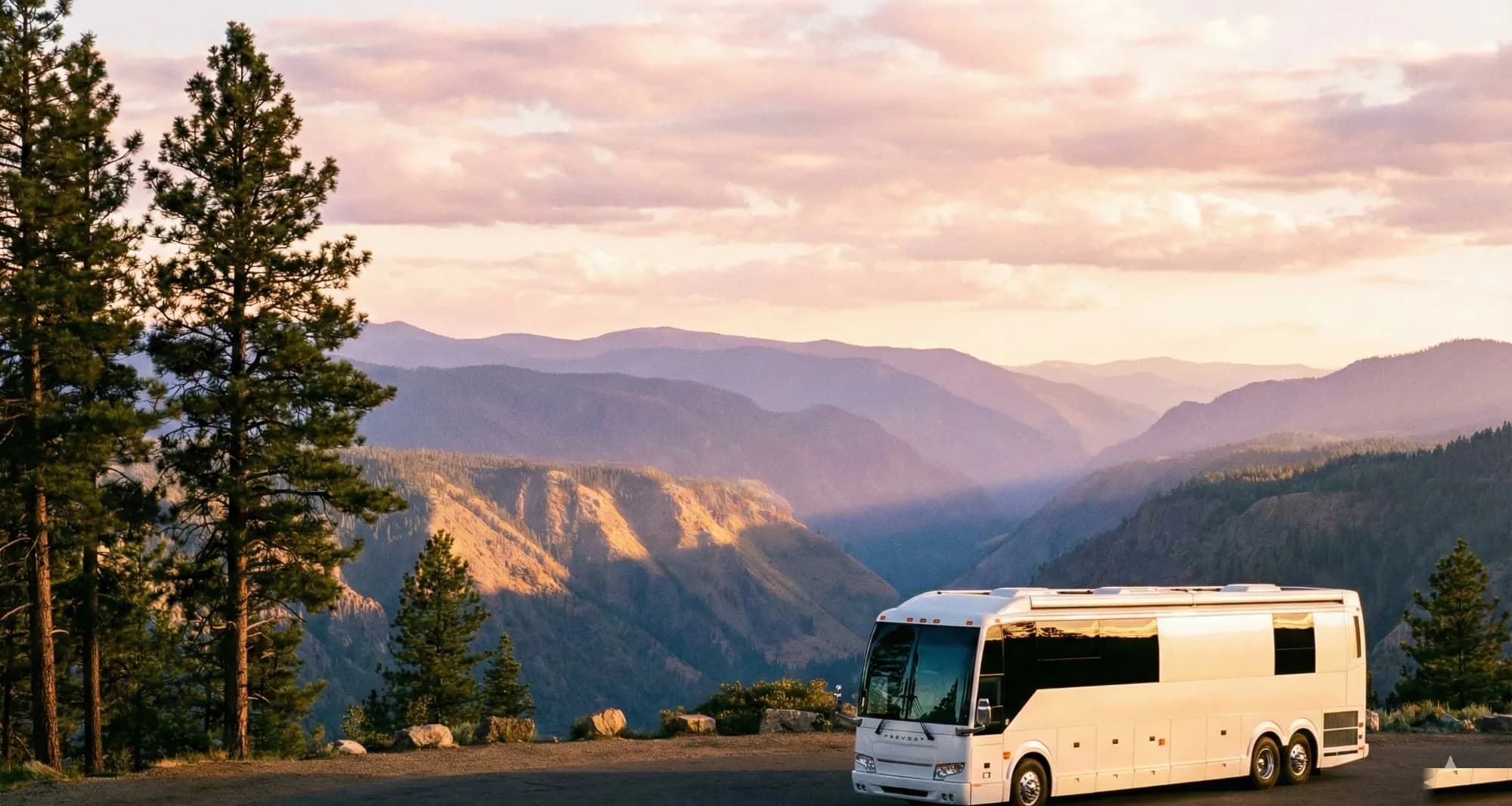

Full-time RV living works. Hundreds of thousands of people are doing it right now — working remotely from their rigs, traveling slowly through national parks, or parking long-term in sunbelt RV communities. The Instagram version is real. But so are the parts that don't make the highlight reel: the propane that runs out at 11 PM in a state park without a camp store, the unexpected $4,000 slide motor repair, the mail forwarding service that lost your vehicle registration renewal. Here's the honest beginner's guide.
The Real Cost of Full-Time RV Living
The cost range is enormous — from $1,500/month to $6,000+/month — because full-time RV living is not one lifestyle. It's a spectrum from budget boondockers to luxury resort campers.
Realistic budget ranges:
- Budget ($1,500–$2,500/month): Boondocking heavily (free BLM and national forest camping), cooking almost all meals, driving an older but reliable rig with lower purchase/payment costs, doing much of your own maintenance
- Middle ($2,500–$4,000/month): Mix of paid campgrounds ($20–$40/night avg), some boondocking, newer rig with manageable payments, eating out occasionally, limited unexpected costs
- Comfortable ($4,000–$6,000/month): Mostly private campgrounds with hookups, newer luxury rig, frequent restaurant meals, memberships, storage unit for seasonal items, travel health insurance
The biggest budget surprises for new full-timers:
- Fuel: At 10 MPG, 20,000 miles/year, and $3.50/gallon diesel, that's $7,000 in fuel alone
- Repairs: Budget 2–3% of rig value per year for repairs. On a $100,000 Class A, that's $2,000–$3,000/year — and it comes in lumps, not evenly
- Health insurance: The biggest financial shift for those leaving employer coverage. Short-term plans, health sharing ministries, ACA marketplace plans, or VA if you qualify
- Campground costs: $45/night is $1,350/month if you're in campgrounds every night. Most full-timers mix campgrounds with free camping to manage this
Choosing the Right Rig for Full-Time Living
Not every RV is suited for full-time occupancy. The considerations are different from a weekend rig.
- Tank sizes matter: Living full-time in a Class B with 15-gallon fresh, 10-gallon gray, and 10-gallon black is a different experience than a Class A with 100/60/60. Every dump station run is time and sometimes money.
- Slide-outs add livability but add maintenance cost: Each slide is a complex mechanism with seals, motors, and potential leak points. Some full-timers specifically avoid slides to reduce complexity.
- Bed configuration: A permanent bed (not a conversion or bunk that folds up) dramatically improves daily quality of life. Struggling to make a dinette into sleeping every night adds friction.
- Workspace: If you work remotely, evaluate the desk/table situation before buying. Many RVs have dining areas but no dedicated workspace. Some full-timers add a freestanding desk.
- Storage: Full-time living requires more storage than a weekend trip. Basement storage, under-bed storage, and closet space are genuinely limiting factors in smaller rigs.
Popular full-time rig types: diesel pushers (Class A) for living quality and fuel economy at highway speeds; fifth wheels for residential feel with large slides and easy towing; Class C for the balance of size, amenity, and driveability.
Mail, Domicile, and Taxes
Full-timers must maintain a legal domicile — a state of primary residence — even with no fixed address. This determines state income tax, vehicle registration, driver's license, and voting registration.
The most popular full-timer domicile states:
- South Dakota: No state income tax, relatively low registration fees, mail forwarding services like America's Mailbox and Dakota Post specifically built for full-timers. Vehicle inspections are minimal. The most popular domicile state for full-timers.
- Texas: No state income tax, large RV community, straightforward domicile establishment. Vehicle registration costs are moderate. Popular option for those spending significant time in Texas.
- Florida: No state income tax, large full-timer community. Vehicle registration can be expensive for newer/heavier rigs.
Mail forwarding services are essential. Services like Escapees Mail (the largest), America's Mailbox, and Traveling Mailbox scan your mail and email you the images, hold packages, and forward when you need physical mail. Essential infrastructure for any full-timer.
Internet and Staying Connected
Full-time remote work from an RV is genuinely viable in 2026. The infrastructure has caught up. Most full-timers build a layered connectivity stack:
- Starlink RV ($135/month) — the game changer for reliable broadband everywhere with a clear sky view
- Cell hotspots from 2–3 carriers — Verizon and T-Mobile together cover the vast majority of traveled routes
- Campground WiFi as backup (not a primary source — reliability is inconsistent)
A two-carrier cell strategy ($80–$120/month combined) plus Starlink ($135/month) gives reliable connectivity in nearly any location.
The Transition: How to Actually Do It
- Take a test run: Live in an RV for 3–4 weeks continuously before committing. Not a vacation — a work trip where you're cooking, working, managing systems. Most people discover what they're missing or what they need to fix.
- Downsize methodically: Sell or store furniture, reduce possessions to what fits, identify the 20% of things you actually use daily.
- Establish your domicile before your last lease ends: SD or TX domicile paperwork, mail forwarding service, updated driver's license, vehicle registration. This takes weeks to complete — don't wait.
- Build your emergency fund: Full-time RV living has lumpy expenses. Having $5,000–$10,000 in liquid emergency reserves changes a breakdown from a crisis to an inconvenience.
- Join the community: Escapees RV Club, Boondockers Welcome, full-timer Facebook groups. The full-timer community is genuinely helpful and sharing — use it.
Related: Full-time RV living costs breakdown · RV solar power guide · Boondocking beginner's guide
From the RVmapper team
Fishing along your route?
Hooked Fisherman publishes fishing reports for all 50 states, species guides, and honest gear reviews. Know what's biting before you park the rig.
Keep Reading
RV Meal Planning Made Easy: Recipes, Tips & Kitchen Hacks for the Road
12 min read
RV LifeBest States for RV Living and Camping: Taxes, Climate, and Where the Full-Timers Actually Go
12 min read
RV LifeRV Travel for Seniors: Accessibility Tips, Health Considerations, and the Best Rigs for Older Travelers
11 min read