This article contains affiliate links. If you make a purchase through these links, we may earn a small commission at no extra cost to you. Learn more.
Why National Monuments Are the Smart RVer's Play
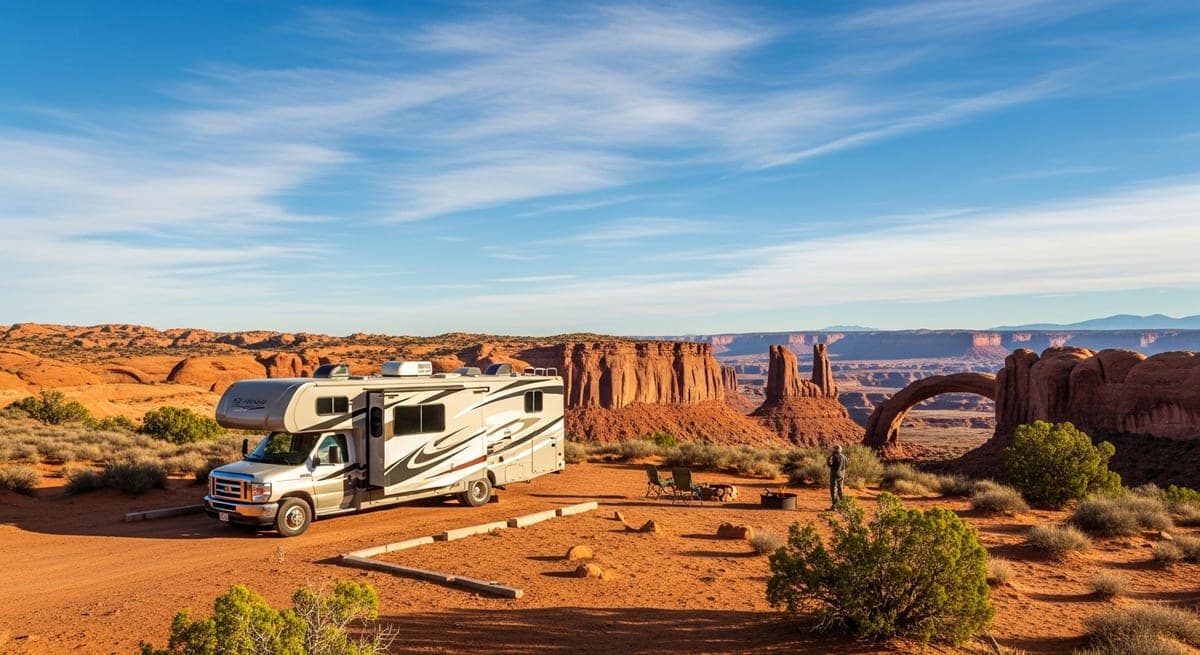
Grand Staircase-Escalante covers nearly two million acres of Utah canyon country — you can park your rig in a redrock drainage with no neighbors, no hookups, and no fee, while Zion's campground lottery fills up four months in advance. Dozens of national monuments across the United States sit in comparable condition: spectacular, nearly empty, and largely off the radar. The agency managing a monument determines your entire experience on the ground.
BLM-managed monuments are typically the most accessible for RVers: large, remote, with dispersed camping often allowed within the monument boundary, no reservation system, and either free or very low-cost fees. NPS-managed monuments often share the same character as national parks but carry far less infrastructure and visitor volume. Choosing an NPS monument over the nearest famous national park frequently means comparable scenery with a fraction of the crowds.
BLM Monuments: The Best Free Camping Opportunity in the West
Grand Staircase-Escalante (Utah) is perhaps the archetype — a sprawling stretch of canyon country with essentially no developed campgrounds, a handful of primitive sites, and vast dispersed camping across spectacular redrock terrain. Vermilion Cliffs National Monument (Utah/Arizona border) offers similar conditions near the Utah Strip, with proximity to Coyote Buttes if you score a permit.
Bears Ears National Monument spans two units — Cedar Mesa and Elk Ridge — with extensive dispersed camping on BLM and USFS land. These large western BLM monuments share a defining characteristic: de facto boondocking destinations with world-class scenery and almost no one around. Dispersed camping in most of these areas is free under standard public land rules, though stay limits and specific restrictions vary by monument — always verify with the local BLM field office before settling in. The America the Beautiful pass covers developed fee sites but not dispersed sites.
NPS-Managed Monument Standouts
Chiricahua National Monument (Arizona): This "Wonderland of Rocks" in southeastern Arizona is one of the most spectacular landscapes almost no one visits. The single developed campground (confirm current fees and site availability at recreation.gov before you go) rarely fills even in peak season. Bonita Canyon Drive winds through extraordinary rhyolite formations tucked into a sky island range that tops out near 9,800 feet — the kind of scenery that would be famous if it were 200 miles north in Utah. Hookups are limited, so arrive with a full fresh tank.
El Morro National Monument (New Mexico): A massive sandstone promontory covered in centuries of carved inscriptions — Spanish conquistadors, ancestral Pueblo people, and U.S. Army surveyors all left their names in the rock face. The small campground (check recreation.gov for current availability — sites are limited and the facility can close seasonally) is rarely crowded, and the quiet here at night is something else. El Morro sits along Highway 53 between Grants and Gallup, putting you within easy striking distance of Acoma Pueblo, Zuni, and the El Malpais lava fields — a tight cluster of culturally rich, uncrowded stops that rewards slowing down for two or three days.
Aztec Ruins National Monument (New Mexico): A Pueblo great house preserved in remarkable condition — more substantial than the name implies, and worth two to three hours on any Four Corners itinerary. No RV campground exists at the monument, so plan your overnight in advance: Navajo Lake State Park is about 12 miles east with developed hookup sites, and BLM dispersed camping is available in the San Juan River corridor nearby. Pair it with Salmon Ruins just down the road and you've got a legitimate half-day cultural stop anchored by a solid camp.
Gear That Earns Its Keep on Monument Roads
BLM monument roads in the Southwest regularly include significant stretches of rough gravel or high-clearance dirt that'll sort out unprepared rigs fast. Load range E tires on the tow vehicle make a real difference on rocky surfaces — and keep a full-size spare. A TPMS system pays for itself the first time you catch a slow leak 20 miles from pavement.
Water capacity is the other non-negotiable. Many remote monuments have none available on-site — arrive with full tanks and carry at least a day's buffer beyond your planned use. In summer desert heat, that shifts from comfort planning to safety planning. A quality portable cooler (Dometic CFX or Engel-class) running off your truck or shore power beats fighting a heat-soaked rig refrigerator at 105 degrees. Top off fuel before going remote — the nearest diesel can easily be 60 or more miles out, and cell service is often nonexistent.
Planning Essentials for Monument Trips
Management status determines what's allowed: BLM monuments almost always permit dispersed camping under standard public land rules; NPS monuments follow national park rules — designated campgrounds only, no dispersed camping. Check monument-specific regulations at recreation.gov and the managing agency's website before your trip.
Road conditions are the most common surprise. Scout routes using satellite view and check recent visitor reports on iOverlander, Campendium, or the monument's Facebook page before committing — conditions change fast after rain in canyon country, and what looks passable on a map can be impassable for a 30-foot rig in wet weather.
From the RVmapper team
Fishing along your route?
Hooked Fisherman publishes fishing reports for all 50 states, species guides, and honest gear reviews. Know what's biting before you park the rig.
Keep Reading
RV Camping in the Appalachian Mountains: Blue Ridge, Shenandoah, and Beyond
10 min read
Destination GuidesColorado RV Camping: Rocky Mountain National Park, Mesa Verde & the Million Dollar Highway
15 min read
Destination GuidesAcadia National Park RV Camping: Size Limits, Campgrounds & the Best Way to See Mount Desert Island
13 min read