What Snowbirding Is and Who Does It
RV snowbirding — spending winter months in warm southern climates while avoiding the cold of the northern US — is one of the most popular uses of RV ownership. Retirees and remote workers who have flexibility with their location represent the core snowbird demographic, but the practice spans age groups. The basic concept: leave northern states as temperatures drop in October or November, spend 3–5 months in Florida, Arizona, Texas, or the Gulf Coast, and return north in March or April.
The Three Snowbird Destinations
Florida: The most popular snowbird destination. South Florida (Naples, Fort Myers, Sarasota, Bradenton) has the warmest and most reliably sunny winter weather. Central Florida has Disney and theme parks. The Space Coast is less crowded than south Florida. The Florida Keys add a tropical destination at the end of the highway. The downside: Florida campgrounds are expensive ($50–$100+/night at desirable locations), book months in advance for January–February, and traffic in south Florida is significant.
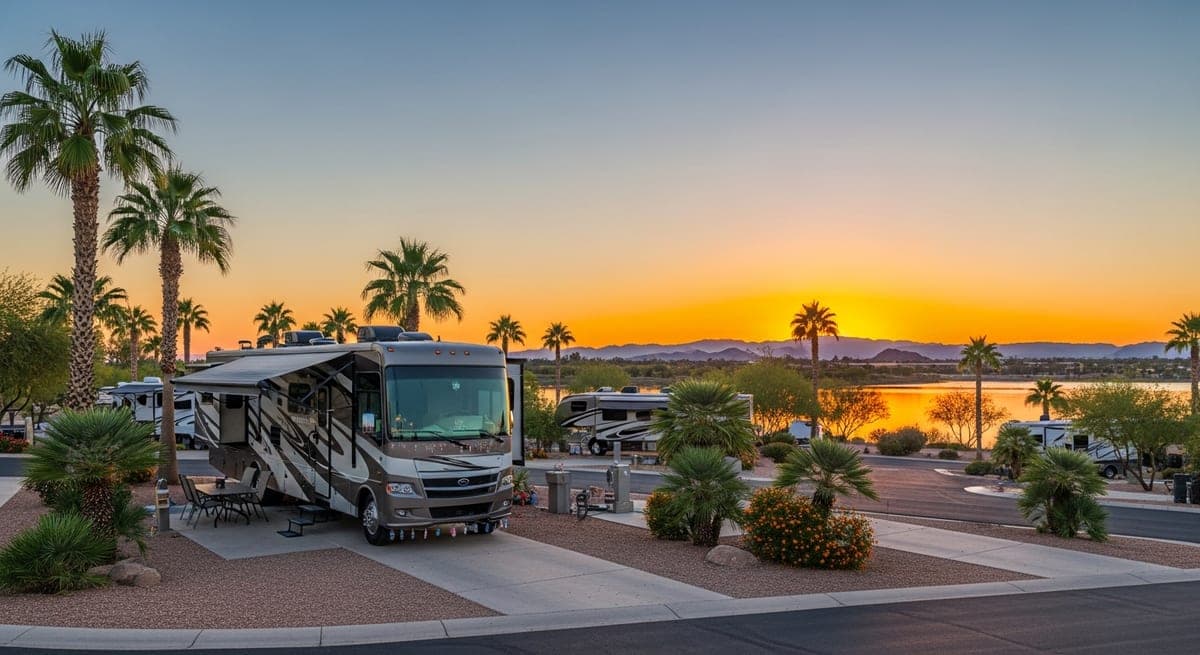
Arizona (Sonoran Desert): Mesa, Tucson, and Yuma are snowbird hubs. The desert climate is warm and dry (Phoenix in January averages 65°F highs) without Florida's humidity. Extensive BLM desert land around Quartzsite, AZ, draws tens of thousands of winter campers annually — it's the largest gathering of RVers in the world. Quartzsite itself is an experience worth seeing. The Tucson area has excellent day hiking in Saguaro National Park and Sabino Canyon.
Texas Gulf Coast and Hill Country: South Padre Island, Corpus Christi, and the Rio Grande Valley (McAllen, Brownsville) offer warm Gulf coast winters with significantly lower campground prices than Florida. The Rio Grande Valley has become one of the most popular snowbird destinations for value-conscious travelers. Texas also has no state income tax — relevant for those considering domicile.
Booking Strategy: Don't Wait
Florida snowbird campground reservations need to be made by September–October for January and February dates at popular parks. Some resort-style campgrounds book fully a year in advance for peak winter weeks. If you're planning your first snowbird season, start your campground research and reservations 6–9 months before your intended arrival date.
The membership parks (Thousand Trails, Sun Outdoors, MHC Campgrounds) require reservation but typically have better availability than individual public campgrounds for their member sites. An annual Thousand Trails membership provides access to their Florida network and is worth evaluating if you'll be in Florida for multiple weeks.
Budget for a Snowbird Season
A 3-month snowbird season budget for a couple in Florida or Arizona at mid-tier campgrounds: $2,400–$4,500 in campground fees, $800–$1,500 in fuel (driving south and back plus local travel), $300–$500 in memberships and passes, $600–$1,000 in activities and dining. Total: $4,100–$7,500 for the season, not counting the RV's fixed costs (insurance, loan payment) which continue regardless. Compared to heating a northern home through 3 winter months while also maintaining the RV, the economics can work favorably.
Is that campground membership actually worth it?
Plug in your camping nights and typical nightly rate. Our free calculator does the break-even math for Good Sam, Passport America, Thousand Trails, and KOA Rewards.
Keep Reading
RV Camping in the Appalachian Mountains: Blue Ridge, Shenandoah, and Beyond
10 min read
Destination GuidesColorado RV Camping: Rocky Mountain National Park, Mesa Verde & the Million Dollar Highway
15 min read
Destination GuidesAcadia National Park RV Camping: Size Limits, Campgrounds & the Best Way to See Mount Desert Island
13 min read