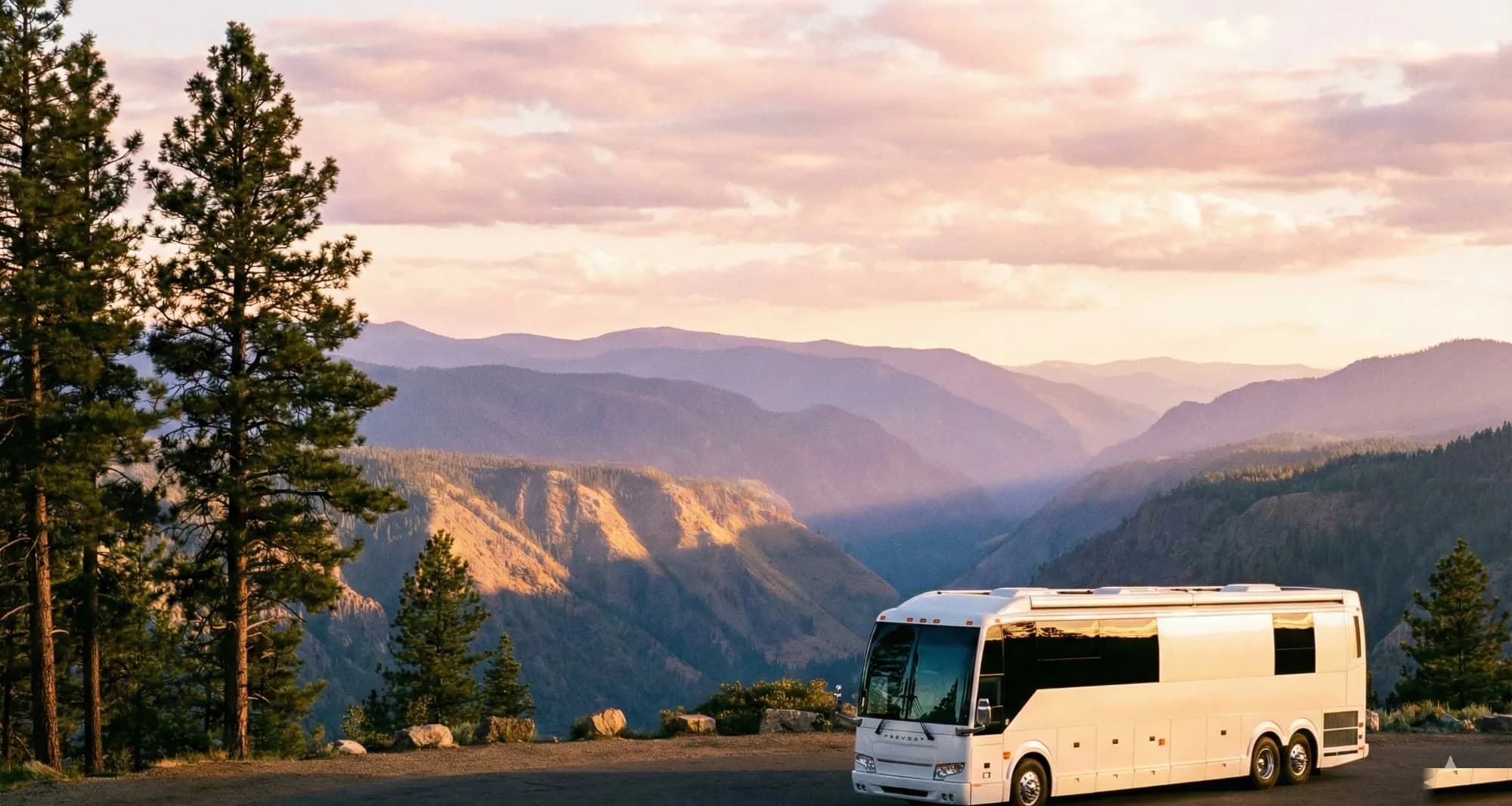

Shenandoah National Park stretches 105 miles along the Blue Ridge crest in northern Virginia. Skyline Drive — the only public road through the park — runs the full length with over 75 overlooks, all of them exceptional and none requiring more than a 5-minute walk from your car. It's one of the most accessible, logistically friendly national parks for RVers in the eastern US, and in fall it becomes one of the most spectacular road trips on the East Coast.
Why Shenandoah Works Well for RVers
- No vehicle size restrictions on Skyline Drive (unlike Zion, Glacier, or Acadia) — all RV sizes can drive the full length
- Four campgrounds with RV sites distributed along the 105-mile drive — you can break the route into segments
- Maximum speed limit on Skyline Drive: 35 mph — no rushing, no pressure from traffic behind you
- One hour from Washington, DC and two hours from Richmond — accessible without a cross-country trip
- Fall color peaks October through early November — one of the finest foliage drives in the eastern US
Skyline Drive: The Numbers
Skyline Drive enters at the north entrance (Front Royal, VA) and exits at the south (Rockfish Gap/Waynesboro, VA), where it connects to the Blue Ridge Parkway heading south into North Carolina. Mile markers start at 0 (north) and end at 105 (south).
- Distance: 105 miles one-way
- Maximum speed: 35 mph
- Practical driving time for an RV doing the full drive with stops: 4–5 hours one-way
- Fuel: no fuel available within the park; fill up before entering or at Luray/Elkton if exiting mid-drive
- 75+ overlooks — most are named and signed; a good trip plan hits 10–15 key ones
Campgrounds for RVs
Mathews Arm (MP 22.2, north section): 167 sites; no hookups; maximum 30 feet. Seasonal (May–October). The most northerly campground, good for shorter stays from the north entrance. Flush toilets, no showers.
Big Meadows Campground (MP 51.3, center): The largest campground in the park and the most feature-rich. 217 sites; no hookups; accommodates RVs up to 30 feet. Open year-round (limited services in winter). Adjacent to the Big Meadows Lodge and wayside, which has a camp store, restaurant, showers, and dump station. Best location for access to the park's best hikes (Dark Hollow Falls, Lewis Falls). Reserve at Recreation.gov well in advance for peak season.
Lewis Mountain Campground (MP 57.5): Small and quiet — 32 sites. No hookups, maximum 20 feet. Flush toilets, coin showers nearby. Tent-focused but accommodates smaller RVs. The most intimate camping option in the park.
Loft Mountain Campground (MP 79.5, south section): 165 sites; no hookups; maximum 35 feet. Seasonal (May–October). Excellent views from the ridgeline. Shower facilities, dump station, camp store. The southernmost campground — good for entry from the south entrance.
The Best Hikes from Skyline Drive
Shenandoah has over 500 miles of trails including significant sections of the Appalachian Trail. The best day hikes accessible from Skyline Drive:
- Dark Hollow Falls (MP 50.7): 1.4 miles round trip to the park's most popular waterfall. Not a big drop but beautiful in a forested hollow. Steep on the return. Start early to avoid crowds.
- Bearfence Mountain (MP 56.4): 1.2 miles round trip over a rock scramble to a 360-degree summit view with no trees blocking the panorama. One of the finest short hikes in the park.
- Stony Man Trail (MP 41.7): 1.6 miles round trip to Stony Man summit (4,011 ft) — the second highest point in the park. Relatively easy elevation gain for the reward.
- Old Rag Mountain: Not accessed from Skyline Drive directly (trailhead in the park but outside the drive corridor). 9 miles round trip with a famous rock scramble section. The most challenging and most rewarding day hike in the park. Timed entry required in peak season.
- Appalachian Trail overlooks: The AT runs the full length of the park along the ridge. Multiple short walks (0.5–1 mile) from Skyline Drive overlooks connect to the AT for views in both directions.
Fall Foliage Timing
Shenandoah's ridge sits at 2,000–4,000 feet elevation — significantly higher than the surrounding Shenandoah Valley. This creates a 10–14 day color window that begins on the ridge and moves down the slopes over several weeks.
- High ridges: peak mid-October
- Mid-elevation: late October
- Valley floors (visible from overlooks): early November
Columbus Day weekend is the single most crowded weekend of the year — campground reservations are essential months ahead if you want to be there for peak color. The weekend before Columbus Day or the two weeks after are often better for availability while still showing excellent color.
Wildlife
Shenandoah has recovered one of the highest black bear densities in the eastern US — over 500 bears in the park. Bear sightings along Skyline Drive are common, particularly at dawn and dusk. Bears are regularly spotted at Big Meadows meadow.
White-tailed deer are abundant. Wild turkey, ruffed grouse, and a recovering wild turkey population are frequently seen along the drive. Spring hawk migration along the ridge in March–April is a notable wildlife viewing event.
Food storage is required at all campgrounds — use bear boxes or hang food. Do not leave food, ice chests, or scented items in your RV's exterior storage bays overnight.
Related: Blue Ridge Parkway RV guide · Fall foliage RV road trip guide · Best national parks for RV camping
From the RVmapper team
Fishing along your route?
Hooked Fisherman publishes fishing reports for all 50 states, species guides, and honest gear reviews. Know what's biting before you park the rig.
Keep Reading
RV Camping in the Appalachian Mountains: Blue Ridge, Shenandoah, and Beyond
10 min read
Destination GuidesColorado RV Camping: Rocky Mountain National Park, Mesa Verde & the Million Dollar Highway
15 min read
Destination GuidesAcadia National Park RV Camping: Size Limits, Campgrounds & the Best Way to See Mount Desert Island
13 min read