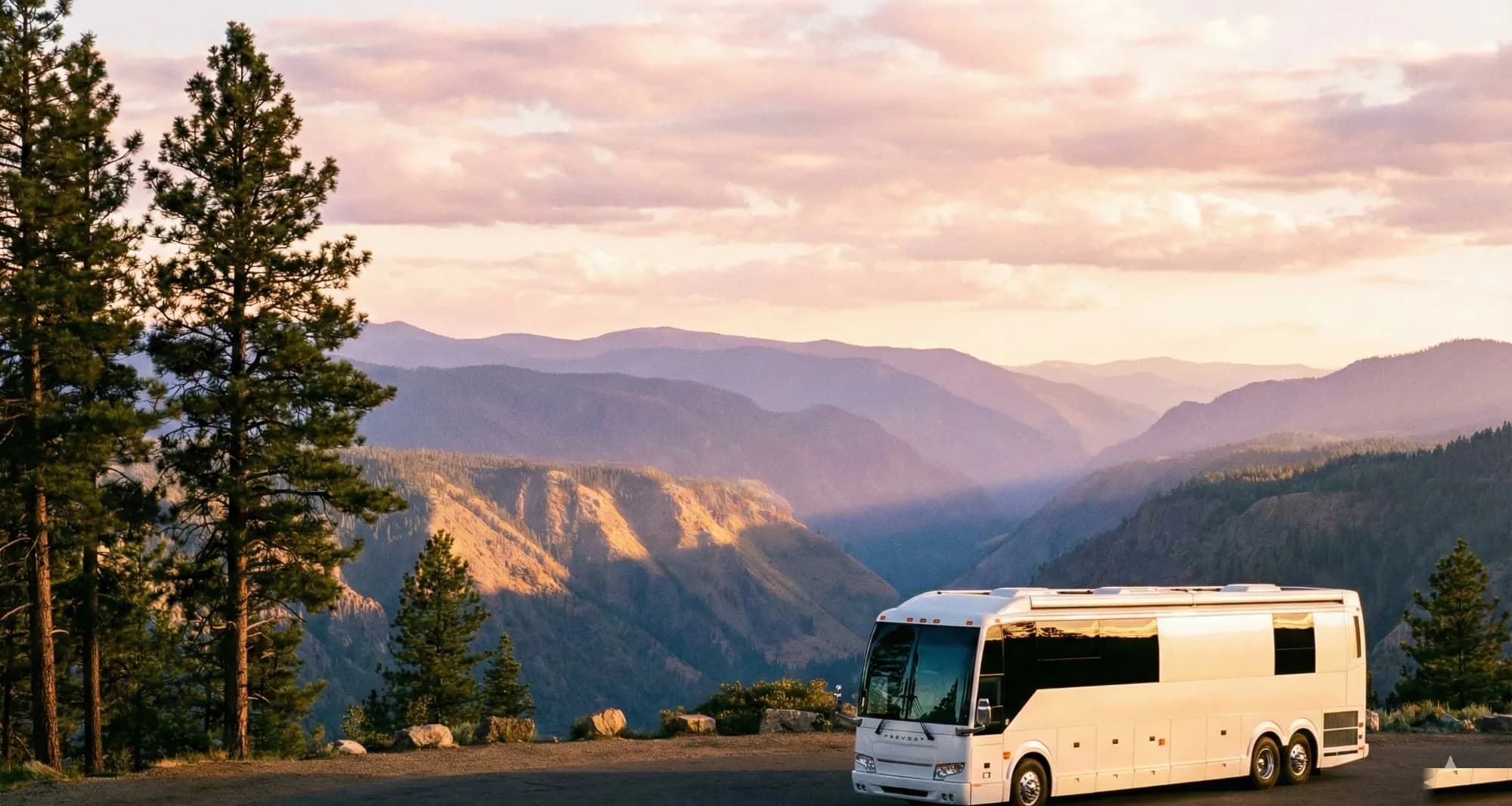
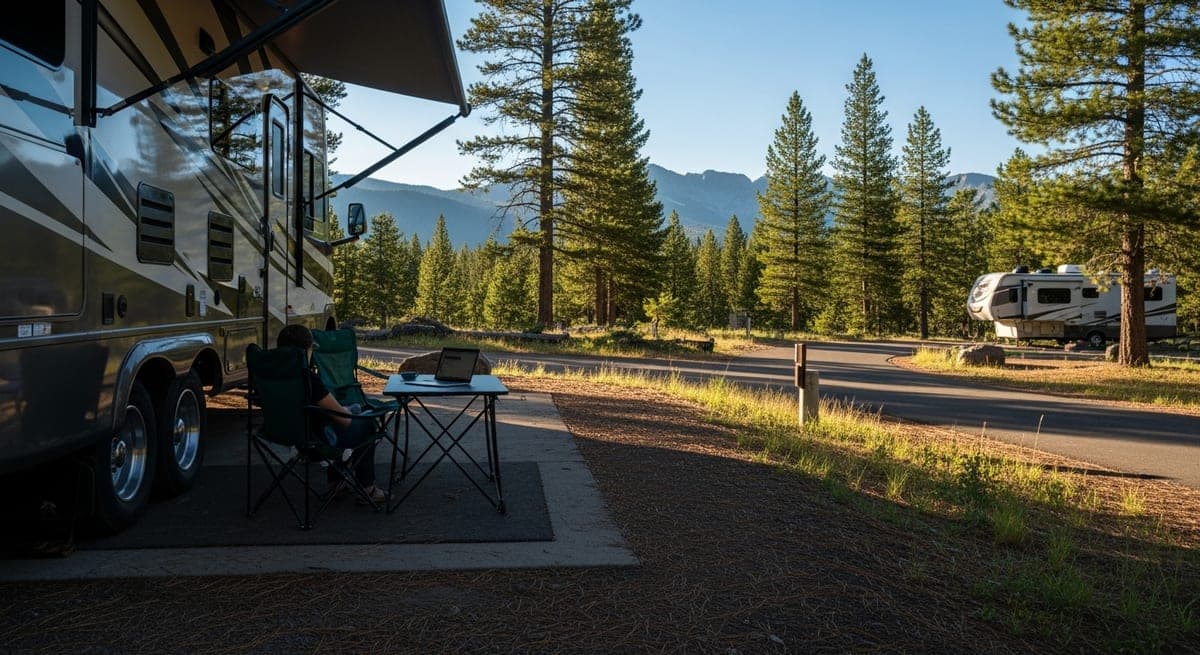
Campground host positions at high-demand destinations — including campgrounds in Colorado's national forests and sites adjacent to Montana's Glacier National Park — were filling as early as November for the following summer season, according to workampers posting in the Escapees forum. That lead time catches most first-timers off guard. Workamping has been part of the RV lifestyle for decades, and the infrastructure around it grew significantly after the pandemic, when labor shortages pushed campgrounds, national parks, and Amazon fulfillment centers to actively recruit RVers.
The Basic Model: Site in Exchange for Hours
The classic workamping arrangement is a free campsite — often with full hookups — in exchange for 20–40 hours of work per week. Camp hosts at state parks consistently report receiving a full-hookup site (valued at roughly $40–$60/night at comparable fee campgrounds) plus a small hourly wage, in exchange for site check-ins, light maintenance, and visitor assistance.
For full-timers whose largest variable expense is campground fees, the financial case tends to be the deciding factor. A five-month workamping stint at a site valued at $50/night eliminates roughly $7,500 in campground costs — a figure that shows up regularly in full-timer budget breakdowns on Workamper News and the Escapees forums.
Types of Workamping Positions
Campground host (state and national parks): The traditional model. Hosts typically register arriving campers, answer questions, handle light site maintenance, and enforce quiet hours. Most programs require committing to a season of 4–6 months. Hosts at campgrounds in Oregon's Willamette National Forest and Colorado's Routt National Forest frequently describe these as reliable, no-cost summer bases. Some private resort networks — including Thousand Trails, which has operated under Parkbridge/Northgate ownership in recent years — have historically placed workampers at their campgrounds, though program availability varies by property and changes with ownership; full-timers on the Workamper News boards advise contacting individual parks directly to confirm.
KOA and private campground work: More structured hourly positions with real wages. KOA actively recruits workampers for seasonal positions through koacareers.com. The typical arrangement combines a free or heavily discounted site with hourly pay. Forum members on Workamper News boards describe these setups as among the more professionally managed options available, with clearer expectations than volunteer-based programs.
Amazon CamperForce: Amazon's program specifically designed for RVers taking seasonal warehouse positions near fulfillment centers. The arrangement includes a free site at partner RV parks plus hourly wages — though Amazon adjusts seasonal pay rates frequently, so applicants should verify current compensation directly at amazoncamperforce.com before routing to a facility. The work is physically demanding. Peak recruitment targets the October–December pre-holiday season.
National Forest and BLM camp hosting: Volunteer positions — no cash wages, but free sites in remote locations that workampers consistently cite as the primary draw. The USDA Forest Service and BLM post available openings through Volunteer.gov; individual hosting agreements vary by district, but postings listed on Volunteer.gov as of 2025 commonly describe a service commitment in the range of 32 hours per two-week period. Retirees seeking extended stays in locations where fee camping would otherwise be prohibitive make up the bulk of applicants, according to Workamper News coverage of the program.
Agricultural and harvest work: Seasonal farm positions that have historically recruited RVers include sugar beet harvest operations in the Red River Valley region of North Dakota and Minnesota (typically running September through October) and potato and onion harvests in the Pacific Northwest. Full-timers discussing harvest work on the Workamper News forums describe these positions as physically intensive and note that openings have narrowed with mechanization. The consensus among experienced workampers is to verify positions directly with harvest labor contractors before routing to a region expecting work — regional availability shifts year to year.
Finding Positions
The main job boards are Workamper News (workamper.com), CoolWorks (coolworks.com, particularly strong for national park concessioner roles), and individual state park volunteer pages. The Escapees network posts positions within the Escapees park system. According to Workamper News editors, competitive positions typically attract applications 3–6 months before the start date — veterans on the forums consistently advise applying in fall for any summer position worth having.
What Full-Timers Say About the Trade-Off
Full-timers who report positive workamping experiences tend to be retirees or remote workers who wanted to slow down, stay in one place for an extended stretch, and build community. Those who describe frustration are usually travelers who underestimated how completely the commitment would restrict their routing.
The core trade-off as the Escapees community frames it: a five-month season eliminates thousands in campground fees but locks movement entirely. For full-timers running lean budgets, the Workamper News forums consistently treat workamping as the most accessible cost-reduction tool available. For well-funded full-timers or part-timers whose flexibility is the point of the lifestyle, the community consensus is that the financial savings rarely justify trading away a season of free routing.
Related: Full-time RV living guide · Full-time RV living costs · Escapees RV Club guide
Is that campground membership actually worth it?
Plug in your camping nights and typical nightly rate. Our free calculator does the break-even math for Good Sam, Passport America, Thousand Trails, and KOA Rewards.