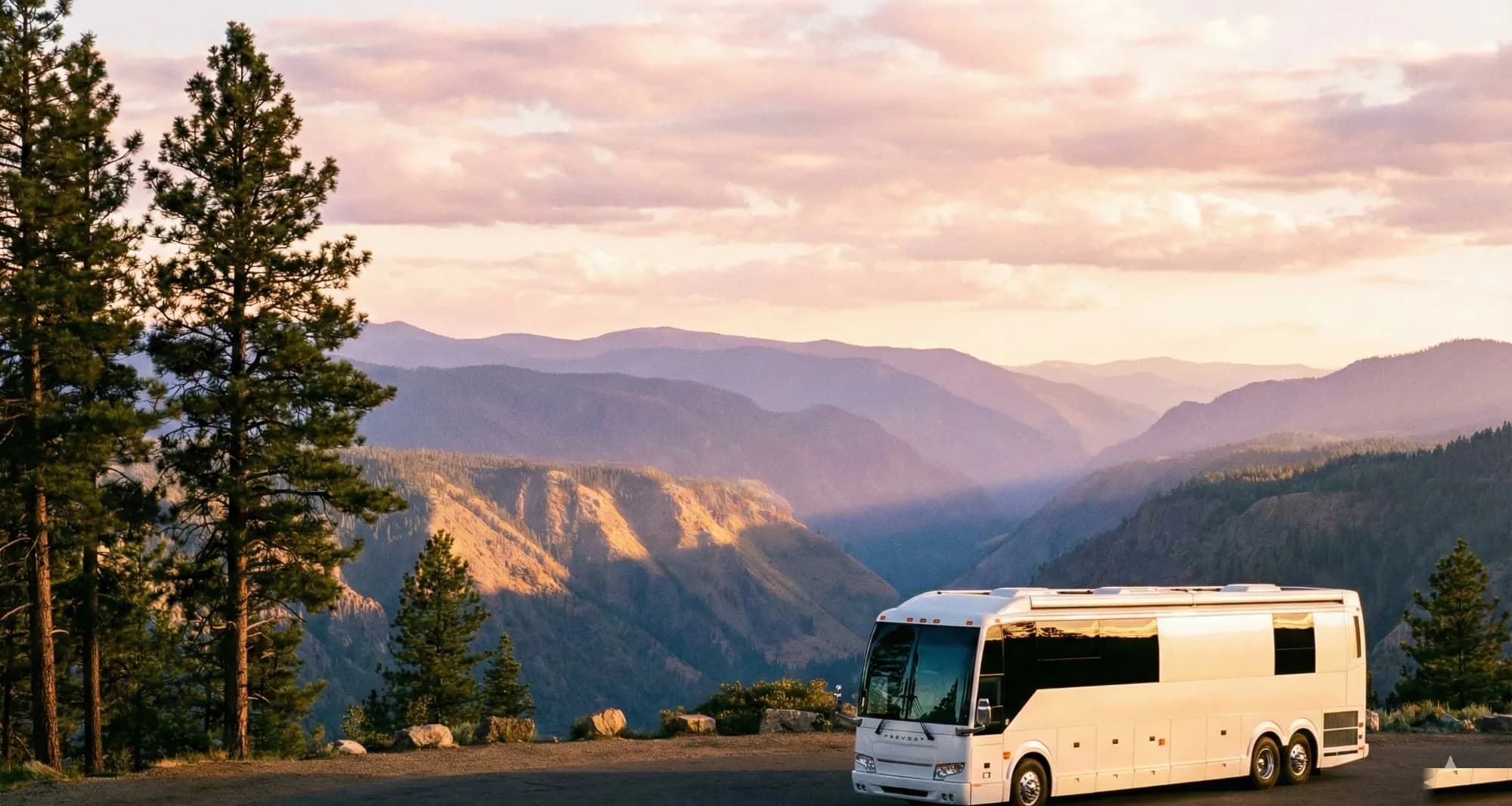
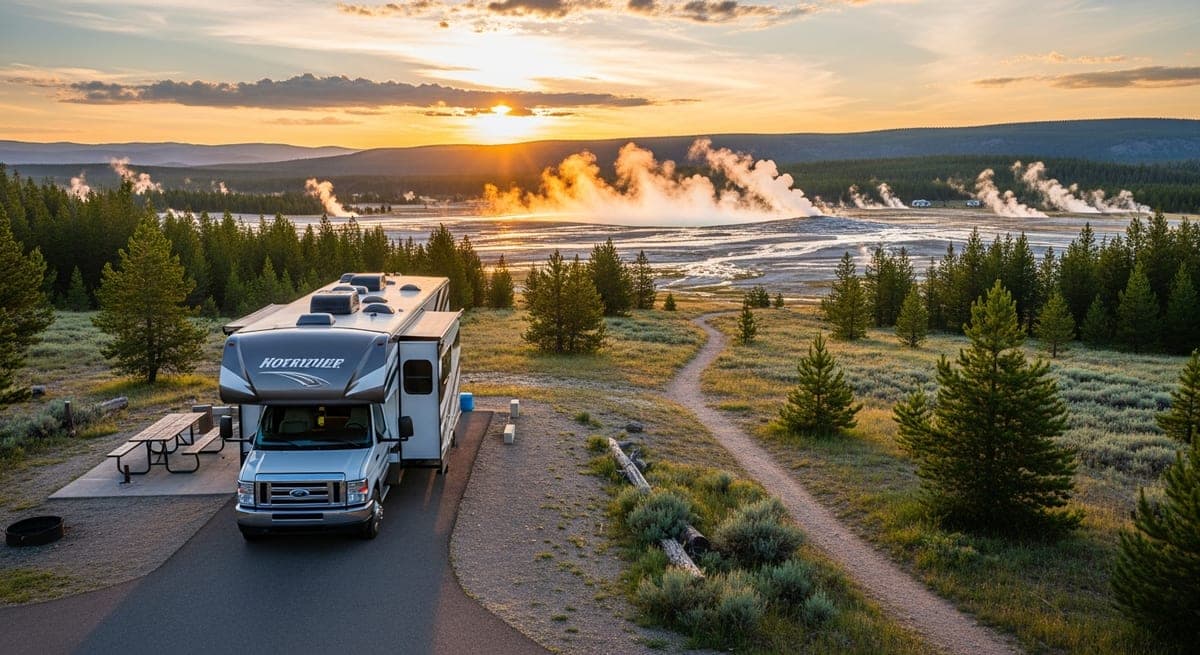
Yellowstone is the crown jewel of American national parks — 2.2 million acres of geothermal wonders, megafauna, and some of the most dramatic landscapes on the continent. It's also one of the most logistically challenging RV trips you can plan, with 12 separate campgrounds, strict size limits, a reservation system that fills in minutes, and a visitor infrastructure that hasn't kept pace with demand since COVID. Plan it wrong and you're driving two hours each way between your campground and Old Faithful. Plan it right and you're parked in a valley with bison grazing outside your window.
This guide covers everything: the campground system, size limits, reservation strategy, how to combine Yellowstone with Grand Teton (they're 57 miles apart), and the seasonal timing decision.
The Reservation Reality: Read This First
Yellowstone campground reservations are the most competitive in the national park system. The recreation.gov booking window opens for Yellowstone reservations on a rolling schedule: sites open for reservation exactly 6 months in advance. For peak summer dates (July 4th week, mid-August), sites for popular campgrounds fill within minutes of the 8am ET booking window opening.
The strategy that works: set a calendar alert for exactly 6 months before your target date, have recreation.gov open and logged in before 8am ET, and have your dates, campground choice, and rig size already entered. Be ready to click. Being 15 minutes late on opening morning for a July weekend reservation means the campground is full. Not exaggerating.
First-come-first-served sites exist at several campgrounds and are a real option for flexible travelers — more on that below.
Yellowstone Campground Overview
Yellowstone has 12 campgrounds with very different characters. The key distinctions for RVers:
Bridge Bay: The largest and most popular campground, 432 sites, near the lake on the eastern side of the park. Accepts rigs up to 40 feet. Mix of reservable and first-come-first-served sites. Dump station and flush toilets, but no hookups (Fishing Bridge RV Park is the park's only campground with hookups), so come self-contained. Central location puts you 25 miles from Old Faithful and 15 miles from Lamar Valley (wildlife corridor) — neither is close, but the location is central to most park features.
Grant Village: Large campground (430 sites) on the southwest corner of Yellowstone Lake. Accepts rigs up to 40 feet. Shower facilities available. No hookups here (dry camping, with a dump station in the area), so plan to run self-contained. Walking distance to Grant Village Visitor Center. The nearest campground to Grand Teton (45 miles to Colter Bay). Good choice for combining both parks.
Madison: 278 sites, no hookups, flush toilets, reservable. 14-mile limit applies to the campground road — tight for big rigs but workable. Located at the confluence of the Firehole and Madison Rivers, which is excellent fly fishing water. The drive to Old Faithful is 16 miles west; Norris Geyser Basin is 14 miles north. Central western location.
Canyon Village: Large campground (272 sites), central location near Grand Canyon of the Yellowstone. Accepts rigs to 35 feet on most loops. Flush toilets, dump station. Walking distance to the rim overlooks and the canyon visitor center. This is the most central campground for accessing all parts of the park.
Fishing Bridge RV Park: The only campground in Yellowstone with full hookups (water, electric, sewer). 310 sites, hard-sided vehicles only (bears) — no tents or soft-sided campers allowed. Sites accommodate rigs up to 40 feet. This is the campground for anyone who needs hookups or is traveling in a large motorhome. It fills extremely fast — book on opening day or be on the waitlist.
First-come-first-served campgrounds: Indian Creek (75 sites, north of Mammoth, 35 ft limit), Pebble Creek (27 sites, northeast corner, tight), Lewis Lake (85 sites, southern park, no hookups). These open for the season progressively in spring (most by Memorial Day weekend) and operate first-come, first-served. Arrive by 8-10am to secure a site at Indian Creek or Lewis Lake on busy days. These are legitimately good options for flexible travelers willing to arrive early.
Size Restrictions You Must Know
Yellowstone has some of the strictest RV size limits in the national park system, and they're enforced. Key limits:
- Most campground sites: 40 feet maximum (some loops have 35-foot limits — check the specific loop when booking)
- Firehole Lake Drive: closed to all vehicles over 35 feet (and closed to all vehicles over 8 feet wide) — leave the rig and drive the tow vehicle
- North Rim Drive (Grand Canyon of Yellowstone): restricted to vehicles under 25 feet — take the tow vehicle
- East Entrance Road and Northeast Entrance Road: no posted restrictions but the winding mountain sections are challenging for 40+ foot rigs — approach carefully
The general rule: bring a tow vehicle or be comfortable taking the RV off the most interesting scenic drives. The park's best drives (Firehole Lake Drive, North Rim, Lamar Valley) are accessible in any vehicle — you just may need to unhook.
The Wildlife Timing Decision
Lamar Valley is the Serengeti of North America. The northeast section of the park, Lamar Valley hosts the highest concentration of wildlife in Yellowstone — bison herds, grizzly bears, wolves (the Lamar Canyon Pack is frequently visible from the road), pronghorn, and elk. Wildlife viewing is best at dawn and dusk. To access Lamar Valley from most campgrounds, you're looking at a 45-60 minute drive one-way — factor that into your daily planning.
Bison rut: Late July through mid-August. Bison are visible throughout Yellowstone year-round, but the rut brings dramatic bull behavior and massive herd congregations, particularly in Lamar Valley and Hayden Valley. Wildlife photographers plan their trips around this window.
Spring (May–June): Best wildlife viewing of the year — bears with cubs recently out of dens, wolf pups visible at rendezvous sites, elk calves. Crowds are significantly lighter than July/August. Some facilities aren't fully open yet (check nps.gov for current status). Snow at elevation can close high-altitude roads (Tower Fall area, Beartooth Highway) through late May. This is the expert's timing pick.
Summer (July–August): Peak season — everything is open, wildflowers are at their peak, temperatures are comfortable. Also the most crowded period. The Old Faithful parking area can fill before 9am in August. Traffic jams for bison in the road are common. Plan to be at major geyser areas early (before 9am) and at wildlife areas at dawn and dusk.
Fall (September–October): Second-best window. Elk rut begins in September with bugling in Mammoth Hot Springs and Hayden Valley. Crowds thin substantially after Labor Day. Cottonwoods turn gold in Lamar Valley. Some campgrounds close after Labor Day — verify before booking.
Grand Teton: The Logical Add-On
Grand Teton National Park is 57 miles south of the south entrance of Yellowstone via US-89/191. The two parks are so close that combining them into a single trip adds only 2-3 extra days and dramatically expands the experience — the Tetons are a completely different landscape from Yellowstone's geothermal plateau.
Colter Bay RV Park is the best campground for large RVs in Grand Teton: 112 full-hookup sites (water, sewer, and 20/30/50-amp electric), part of the larger Colter Bay Village on Jackson Lake. Note the separate Colter Bay Campground next door is dry camping. Accepts rigs up to 45 feet. Reservations through recreation.gov, same competitive booking window as Yellowstone. Showers, laundry, and camp store on site.
Signal Mountain Campground (roughly 80 sites, a couple dozen with electric hookups but no water or sewer, maximum 30 feet on most sites) sits directly on Jackson Lake with excellent Teton views from the shoreline sites. The Signal Mountain Road drive (5 miles to the summit) gives one of the best panoramic views of the Tetons and the Snake River Valley.
The Teton highlights: Jenny Lake (hike to Hidden Falls and Inspiration Point — among the best day hikes in the park system), the Teton Park Road (closes to plows in winter, spectacular in fall), and the Snake River Overlook at dawn (this is the exact viewpoint Ansel Adams used for his famous Teton photograph).
The Best 7-Day Itinerary
Days 1–2: Base camp at Colter Bay (Grand Teton). Day 1: Jenny Lake, Hidden Falls, Inspiration Point. Day 2: Snake River Overlook at dawn, Teton Park Road, Jackson town for dinner.
Days 3–5: Move to Yellowstone (Grant Village or Bridge Bay). Day 3: Old Faithful and Upper Geyser Basin (arrive early). Day 4: Grand Canyon of the Yellowstone, Hayden Valley, dinner at Lake Hotel. Day 5: Mammoth Hot Springs terraces, Lamar Valley at dawn for wildlife.
Days 6–7: Move to Canyon Village or Madison. Day 6: Norris Geyser Basin (largest geothermal field in the park), Firehole Lake Drive in tow vehicle. Day 7: Departure via North or East Entrance.
Entry Fees and Passes
Yellowstone/Grand Teton entry: $35/vehicle, valid for 7 days and covers both parks. America the Beautiful Annual Pass ($80) covers both parks plus all other national parks and federal recreation areas for 12 months — if you're doing more than 2-3 national park visits in a year, the annual pass pays for itself immediately.
From the RVmapper team
Fishing along your route?
Hooked Fisherman publishes fishing reports for all 50 states, species guides, and honest gear reviews. Know what's biting before you park the rig.
Keep Reading
RV Camping in the Appalachian Mountains: Blue Ridge, Shenandoah, and Beyond
10 min read
Destination GuidesColorado RV Camping: Rocky Mountain National Park, Mesa Verde & the Million Dollar Highway
15 min read
Destination GuidesAcadia National Park RV Camping: Size Limits, Campgrounds & the Best Way to See Mount Desert Island
13 min read