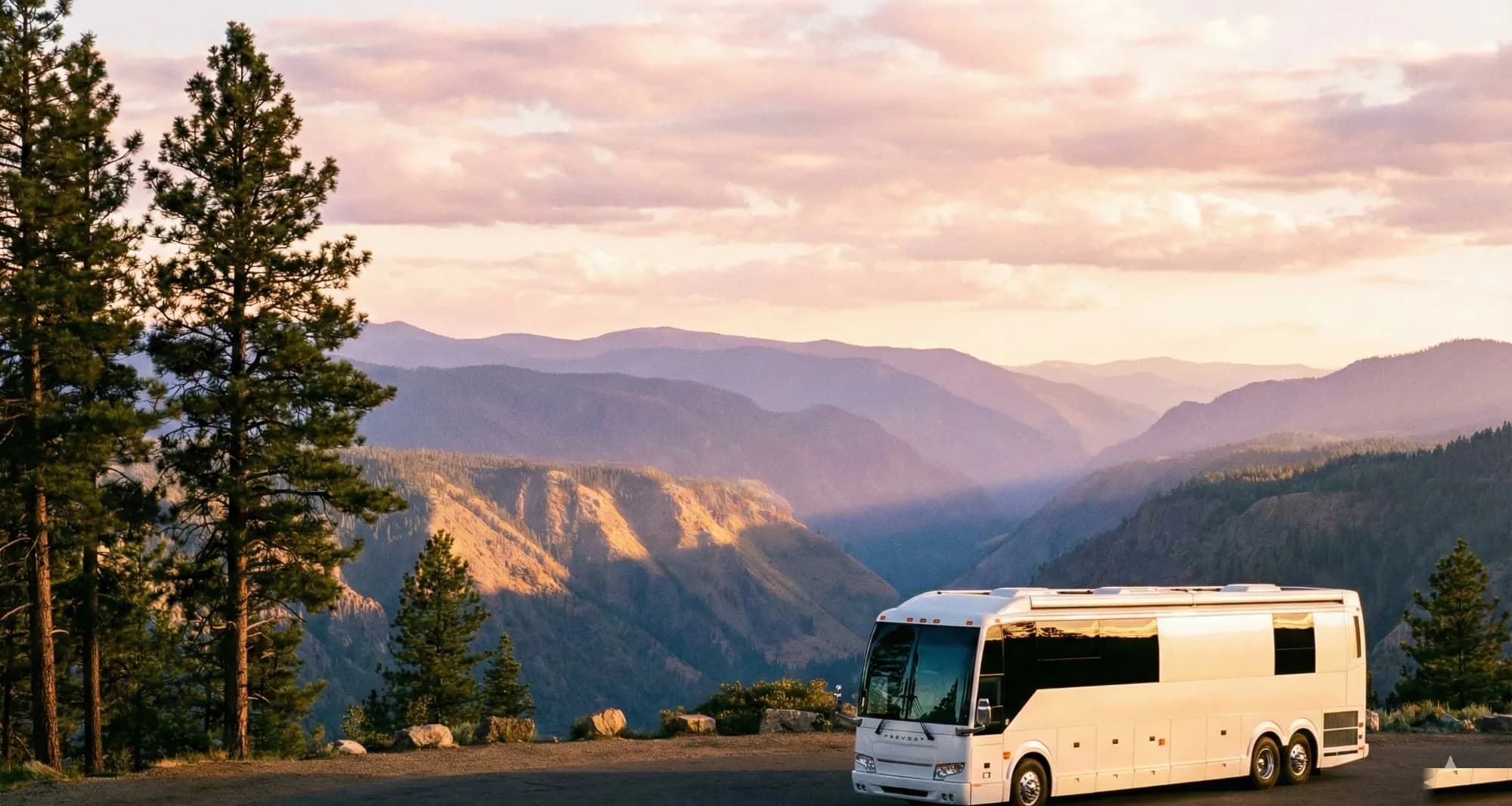
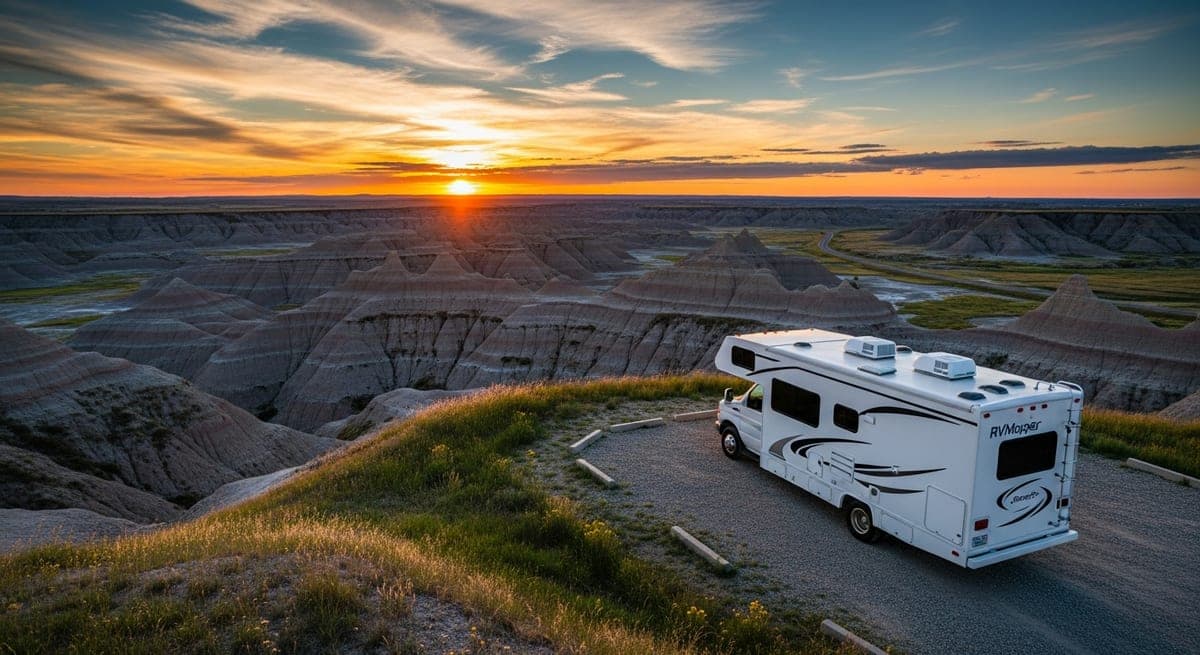
The Badlands of South Dakota are one of the most visually striking landscapes in the US — layered spires of pink, orange, and cream-colored rock rising from the Great Plains prairie, with bison herds grazing in the valley below. For RVers, it's an accessible park with excellent campgrounds, minimal size restrictions, and some of the best roadside wildlife viewing in the national park system.
Campgrounds
Cedar Pass Campground (NPS, main campground): Located in the heart of the park near the Ben Reifel Visitor Center. 96 sites. No strict length limit — most sites accommodate rigs up to 50 feet, with larger pull-throughs available. Has a dump station and water fill station (no hookups). Reservations on Recreation.gov open 6 months out; book well ahead for July and August. Rates around $25/night.
Sage Creek Primitive Campground (NPS, western unit): Free. 22 primitive sites on the prairie with no services. No hookups, no water, no dump station. Popular with tent campers and van dwellers; RVs are welcome but you need to be fully self-contained. The western unit of the Badlands is quieter and sees far fewer visitors — it's where the best bison viewing happens.
Badlands / White River KOA (private, Interior, SD): 1 mile from the park entrance. Full hookups available, can accommodate any size rig. Good option if you want utilities or if Cedar Pass is full.
The Badlands Loop Road
The primary scenic drive is the 39-mile Badlands Loop Road (Route 240), which winds through the most dramatic formations in the park. It's accessible to all RV sizes with no restrictions. The road passes through classic Badlands formations — the Door and Window trailheads, Pinnacles Overlook, and the Buffalo Gap National Grassland. Pull-offs and overlooks are frequent and wide enough for most rigs.
Doing the loop in early morning (6–8 AM) gives you the best light on the formations and the highest chance of seeing bison on the road. The afternoon light is harsh; golden hour is excellent for photography.
Wildlife Viewing
The Badlands and adjacent Buffalo Gap National Grassland support one of the largest free-roaming bison herds in the US — around 1,200 animals. They're often visible from the road or campground, especially in the western unit near Sage Creek. Other resident species: pronghorn (the second-fastest land animal on earth), black-footed ferrets (one of the rarest mammals in North America, NPS reintroduced them here), bighorn sheep, prairie dogs, and mule deer.
Prairie dog towns: The Roberts Prairie Dog Town along Sage Creek Road is one of the most accessible and densely populated prairie dog towns in the country. Easy to walk around and photograph.
What to Do in the Park
- Notch Trail (1.5 miles RT): The best moderate hike in the park. Involves a wooden ladder and ends at a canyon overlook.
- Door Trail (0.75 miles RT): Easy boardwalk walk through a gap in the Wall formations into the Badlands interior. Very accessible.
- Fossil exhibits: The Badlands have one of the richest Oligocene fossil records in the world. The fossil exhibit trail near the visitor center has NPS interpretive displays of original fossils in the ground.
- Stargazing: The Badlands are designated as one of only a handful of National Park Night Sky parks. With minimal light pollution, the Milky Way is clearly visible on clear nights.
Combining Badlands with Mount Rushmore and the Black Hills
Most RV trips to the Badlands combine it with Mount Rushmore (about 1 hour west in the Black Hills) and Wind Cave National Park. The combination makes a strong 4–7 day South Dakota loop. Note: the road to Mount Rushmore (Iron Mountain Road / Route 16A) has multiple tunnels with a 12-foot 4-inch height restriction — most Class A motorhomes and fifth wheels cannot use this road. The approach via US-16 direct has no tunnel restrictions.
Related: Yellowstone & Grand Teton RV guide · Best summer RV destinations · America the Beautiful Pass
From the RVmapper team
Fishing along your route?
Hooked Fisherman publishes fishing reports for all 50 states, species guides, and honest gear reviews. Know what's biting before you park the rig.
Keep Reading
RV Camping in the Appalachian Mountains: Blue Ridge, Shenandoah, and Beyond
10 min read
Destination GuidesColorado RV Camping: Rocky Mountain National Park, Mesa Verde & the Million Dollar Highway
15 min read
Destination GuidesAcadia National Park RV Camping: Size Limits, Campgrounds & the Best Way to See Mount Desert Island
13 min read