Why Slide-Outs Fail
The number-one cause of slide-out failure isn't the motor, the gears, or even the seals — it's skipped maintenance compounding over two or three camping seasons until something gives at the worst possible moment. I've seen a rig in Moab with a slide frozen halfway out because the owner hadn't lubed the tracks in two years. Another family at a Florida state park found mold behind their bedroom slide wall because a cracked seal went unnoticed all summer. The mechanical complexity of a slide-out means small neglect becomes big repair bills fast. The good news: most of it is genuinely preventable with a few hours a year and the right products.
The Seals: Your First Line of Defense
Every slide is surrounded by rubber or foam seals that compress when the slide retracts, keeping weather and road grime outside. In dry, dusty environments — think the Arizona desert, the Nevada basin, or anywhere on the Extraterrestrial Highway — dust infiltration accelerates seal abrasion dramatically. Along the Gulf Coast, salt air and humidity attack the rubber itself. Knowing your environment helps you dial in how often to inspect.
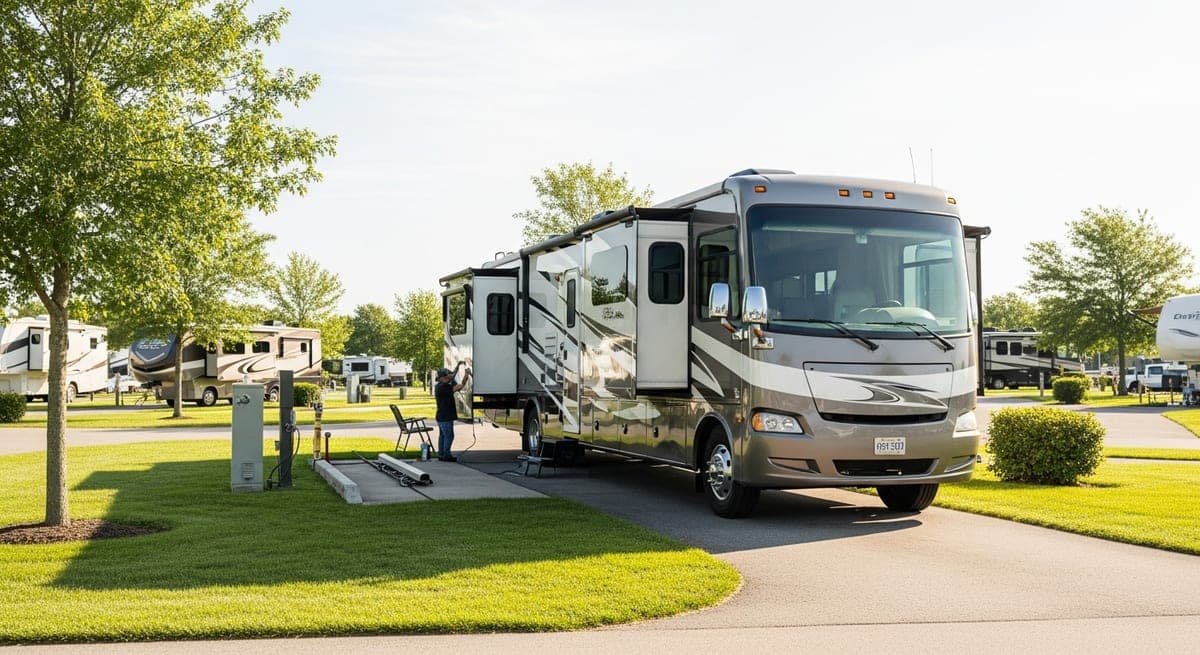
What you're looking for: With the slide extended, walk the outside perimeter and look for cracks, tears, compression set (seals that are flat and no longer spring back), or sections pulling away from the mounting channel. Run your hand slowly along the whole seal — gaps you can feel are gaps water will find.
There are three main seal types: wiper seals (rubber blades that wipe the slide surface as it travels), bulb seals (D-shaped or round seals that compress against the edges), and cap seals at the top of the opening. Most rigs use a combination.
Cleaning: A mild soap solution and a soft cloth, working out all the road grime and oxidation. Don't skip this — dirty seals wear faster and make worse contact. Plan on doing this at least a couple of times a season, or more if you're running gravel forest roads regularly.
Conditioning: This is where a lot of RVers cut corners. Seals need a rubber conditioner to stay supple against UV and ozone exposure. 303 Aerospace Protectant is the longtime go-to and genuinely works well. Camco Slide Out Rubber Seal Conditioner is a cheaper option you'll find at most camping stores and gets the job done for everyday use. For serious desert travelers, Dicor rubber conditioner has a following among full-timers who deal with intense UV. Stay away from anything petroleum-based — I made that mistake once with a "household rubber lubricant" and watched a wiper seal puff up and split within a month. Stick to products formulated specifically for RV rubber.
When to replace: Seals are consumable parts — plan on it. A seal that's cracked, severely flattened, or no longer making full contact needs to come out before the next rain event. Many wiper seals are DIY-replaceable: you're looking at $20–$60 in parts depending on length, and maybe two hours of work. Bulb seals on the slide edges are also often DIY-able. Cap seals at the top can get fiddly and some RVers prefer to have a dealer handle those — budget $150–$300 for a shop visit if you go that route.
Mechanism Lubrication
The slide mechanism — electric rack-and-pinion, cable-operated, or hydraulic — has moving parts that dry out and wear without attention. The type you have determines what you do:
- Rack and pinion slides: The gear rack along the slide tube and the pinion gear on the drive motor need a dry PTFE (Teflon) lubricant — not grease. Grease grabs road dust and turns into an abrasive paste on the gear teeth. Camco Slide-Out Lube or any dry Teflon spray works. Apply along the full rack, run the slide in and out once, then wipe excess.
- Cable-operated slides: Inspect cables for fraying at the connection points and where they pass through guides. Lubricate with a cable lubricant at those contact points. Frayed cables in this system are not a "fix later" item — a snapped cable mid-travel can jam the slide and require a mobile tech visit that runs $300–$600 depending on your location.
- Hydraulic slides: Check the hydraulic fluid level each season and confirm it matches the spec in your owner's manual — fluid type matters and substituting incorrectly damages seals inside the pump. A strained, whining hydraulic pump is your early warning. Catching a low-fluid situation before the pump cavitates saves you a $1,200–$2,500 pump replacement. Fluid check takes five minutes.
- Slide tray rails: The rails or channels the slide body rides on should be clean and have a light coat of slide-out lube or dry lubricant applied. If you're camping in dusty conditions — the Sonoran Desert, Eastern Oregon high desert, anywhere with significant wind — inspect and re-lube the rails more frequently.
Operating Tips
Always level before you operate the slides. A significantly off-level rig puts uneven load on the mechanism — motors strain, gears skip, and seals don't seat cleanly across the full opening. Level within a couple of degrees before extending or retracting. This is the single habit change that extends mechanism life most dramatically.
If a slide stops mid-travel, stop immediately. Don't push it. Forcing a stuck slide strips gear teeth, snaps cables, or burns out motors — all expensive. Check the tracks for debris, check your breaker panel, and for hydraulic systems, check fluid level before you try again. A stuck slide is a diagnostic problem, not a "push harder" problem.
Retract before every drive. This feels obvious until you hear the stories — and there are plenty of them at campfire circles across the country. A partially extended slide hitting a toll booth or a low tree branch causes catastrophic damage. Put slide confirmation on your pre-drive checklist, same line as "verify tow vehicle hitch."
In high winds and heavy rain: Retract the slides if conditions get serious, even at campsite. Extended slides increase your wind profile and give water more surface area to probe for seal gaps. This is especially worth the hassle if you're in a coastal spot or anywhere stormy weather can park overhead for hours.
Catching Water Intrusion Early
Water getting past slide seals causes wall rot, floor delamination, and mold — damage that can run $5,000–$15,000 to repair properly, and that's before you factor in any structural remediation. After significant rain, run through a quick check:
- Any dampness at the floor on the interior side of the slide opening
- Soft spots in the floor near the slide perimeter — press with your foot and feel for give that suggests saturated subfloor
- Staining or discoloration on the adjacent walls
- A musty smell in the slide area, especially after the rig has been closed up
Finding a cracked seal before it's caused damage is a $40 fix. Finding it after a season of slow leaks is a gut-punch renovation. The inspection takes ten minutes.
Related: RV maintenance checklist · RV winterization guide · RV water system guide
Is that campground membership actually worth it?
Plug in your camping nights and typical nightly rate. Our free calculator does the break-even math for Good Sam, Passport America, Thousand Trails, and KOA Rewards.