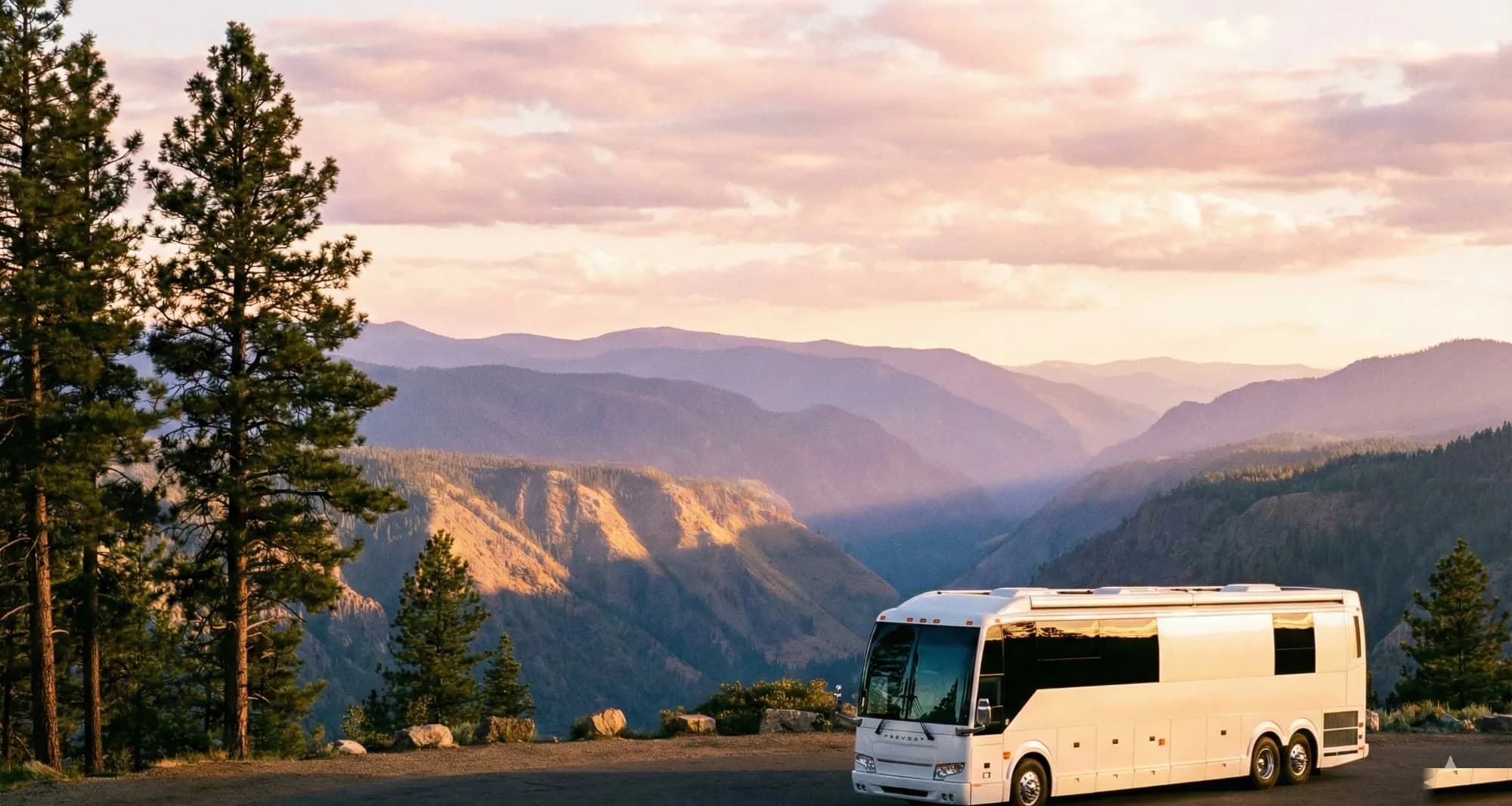
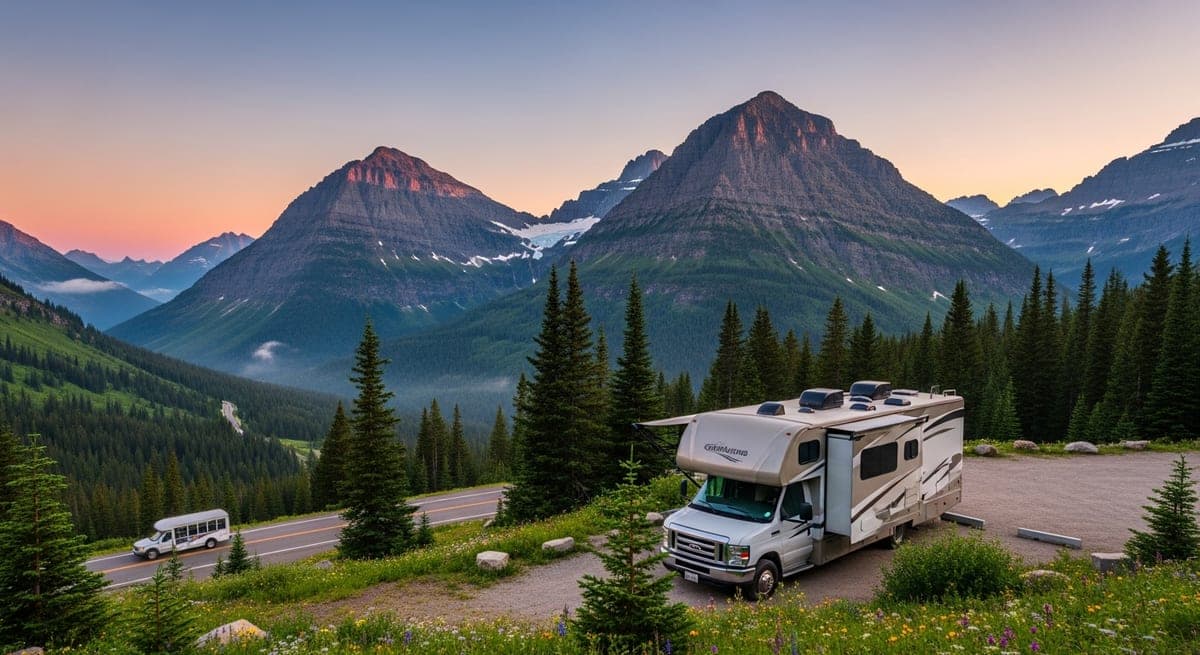
Glacier National Park is in a category of its own. A million acres of raw Rocky Mountain wilderness in northwestern Montana — jagged peaks, turquoise lakes, glaciated valleys, and Going-to-the-Sun Road, one of the most spectacular drives in North America. It's also one of the most logistically demanding parks in the system for RVers: strict vehicle size limits on the main road, campgrounds that require reservations months in advance, remote location, and a shuttle system that's central to experiencing the park properly.
The Most Important Thing to Know: Going-to-the-Sun Road
Going-to-the-Sun Road (GTSR) is the 50-mile scenic road that crosses the Continental Divide at Logan Pass (6,646 ft) and is the primary way to experience Glacier's interior. The restrictions are strict and non-negotiable:
- Vehicle length limit: 21 feet maximum (including tow vehicle and trailer combined) between Avalanche Creek and Sun Point
- Vehicle width limit: 8 feet maximum between Avalanche Creek and the Loop
- This is enforced: Rangers measure at the gate. Oversized vehicles are turned back.
If you have a rig longer than 21 feet (most fifth wheels, large Class A and Class C motorhomes), you cannot drive the full Going-to-the-Sun Road. You have options:
- Park your large RV at a campground near the west entrance and take the free NPS shuttle or the paid Sun Bus (connects to St. Mary on the east side) for the full GTSR experience
- Tow a car, unhitch, and drive the smaller vehicle through GTSR
- Use the Two Medicine and Many Glacier areas, which are accessible to all vehicles and offer spectacular scenery without the GTSR restrictions
Campgrounds for RVs
Apgar Campground (West Entrance): The primary large-rig campground in Glacier. Located at the west entrance near Apgar Village.
- 194 sites; no hookups; some sites accommodate up to 40 feet
- Dump station, potable water, flush toilets
- Direct access to free NPS shuttle along GTSR
- Open late May through mid-October
- Reserve at Recreation.gov — opens 6 months in advance and fills within minutes for July/August
Fish Creek Campground: 2 miles south of Apgar on Lake McDonald.
- 178 sites; no hookups; RV sites up to 35 feet
- Shuttle access; dump station nearby
- Beautiful Lake McDonald setting; slightly less crowded than Apgar
- Open mid-June through mid-September
St. Mary Campground (East Entrance): The main campground on the east side, near the GTSR east terminus.
- 148 sites; no hookups; accommodates RVs up to 35 feet in some loops
- Access to St. Mary Lake, Two Dog Flats, and the eastern GTSR section (east of Logan Pass is accessible to all vehicle sizes)
- Shuttle connections to Logan Pass and west side
Many Glacier Campground: The remote north-central area of the park — worth the extra drive.
- 110 sites; no hookups; RVs up to 35 feet
- Spectacular mountain scenery around Swiftcurrent Lake
- Home to some of Glacier's best day hikes (Grinnell Glacier, Iceberg Lake)
- 35-mile drive from Babb, MT — no through access to other park areas
- Open late May through late September
KOA outside the park (West Glacier): Full hookups, pull-throughs for large rigs, directly adjacent to the west entrance. Best option for those needing hookups. Book early — fills weeks in advance in summer.
The Reservation System
Glacier's campground reservations are among the most competitive in the national park system. For summer dates (July 4 through Labor Day), sites at Apgar and Fish Creek sell out within minutes of opening 6 months in advance. Here's how to approach it:
- Know your target dates exactly. Reservations open exactly 6 months in advance on Recreation.gov.
- Set a calendar reminder for the exact release date for your visit.
- Have your Recreation.gov account set up and payment method saved in advance.
- Refresh the page at the exact release time (reservations release at midnight EST).
- Book your first choice immediately; don't comparison shop while someone else takes your site.
For walk-up opportunities: a percentage of sites at most campgrounds is held for walk-up reservation (available the day before, at 8 AM). Arrive at the park entrance first thing to get in line for walk-up releases — popular with long-trip travelers whose plans couldn't be made 6 months out.
The Shuttle System
Glacier's free NPS shuttle runs along Going-to-the-Sun Road from early July through early September. It's the key to seeing the park properly regardless of your RV size:
- Free shuttles connect Apgar, Lake McDonald Lodge, Avalanche, The Loop, Logan Pass, and St. Mary Visitor Center
- Shuttles run approximately every 15-30 minutes from early morning to evening
- The hiker shuttle / Sun Bus runs the full GTSR ($15/person each direction) and is available for one-way hike plans
- Parking at Logan Pass fills by 7 AM on summer mornings — the shuttle is the practical way to reach Logan Pass reliably
Best Experiences: What to Do With 3 Nights
- Day 1 — Going-to-the-Sun Road: Take the shuttle from Apgar to Logan Pass (the Continental Divide viewpoint). Walk the Hidden Lake Overlook Trail (3 miles round trip) from the Logan Pass Visitor Center. Return via shuttle with afternoon stops at Avalanche and Lake McDonald.
- Day 2 — Many Glacier (day trip): Drive to Many Glacier early (35 miles from West Glacier via US-2 east and Babb). Hike to Grinnell Glacier (11 miles round trip, 1,600 ft gain) — the most dramatic glacier view in the park. Return late afternoon.
- Day 3 — Two Medicine area: Southeast corner of the park, rarely crowded. Hike to Running Eagle Falls (0.6 miles, flat) and Two Medicine Lake shore. Return via US-2 and the town of Browning on the Blackfeet Reservation.
Key Planning Notes
- Timed entry passes: Glacier has implemented timed entry permits for the GTSR corridor. Check the NPS website for the current season's system — it changes annually.
- Bears: Glacier has one of the highest grizzly bear densities in the lower 48. Carry bear spray (available at local outfitters), make noise on trails, and never leave food or scented items in your RV's exterior storage bays without a bear canister or hard-sided locked storage.
- Weather: July and August are the stable months. June has lingering snow at high elevation and GTSR may not be fully open until late June or early July. September brings changing color and thinner crowds but also early snowfall at elevation.
- Nearest cities: Kalispell, MT (30 miles west) has Walmart, full-service RV dealers, and campground supply stores. Stock up before entering the park.
Related: Best national parks for RV camping · Boondocking beginner's guide · RV meal planning on the road
Ready to Plan Your Trip?
Put this knowledge to work. Let our AI build a personalized RV itinerary for your next adventure, or browse community trips for inspiration.
Keep Reading
RV Camping in the Appalachian Mountains: Blue Ridge, Shenandoah, and Beyond
10 min read
Destination GuidesColorado RV Camping: Rocky Mountain National Park, Mesa Verde & the Million Dollar Highway
15 min read
Destination GuidesAcadia National Park RV Camping: Size Limits, Campgrounds & the Best Way to See Mount Desert Island
13 min read