The Most Common RV Awning Mistake
Most RV awning fabric is rated for winds no higher than 15–20 mph — about the speed of a light-to-moderate breeze — yet many campers leave theirs extended overnight without a second thought. RV awnings are designed for calm conditions: they're shade structures, not windbreaks. Even moderate, sustained wind can fold, tear, or wrench an awning arm loose from its mounting. Repairs can run into the hundreds to thousands of dollars depending on the damage, and coverage varies widely by insurance policy — check your specific plan before assuming you're protected. The rule is simple: when you leave the campsite or when wind picks up, retract the awning.
Types of RV Awnings
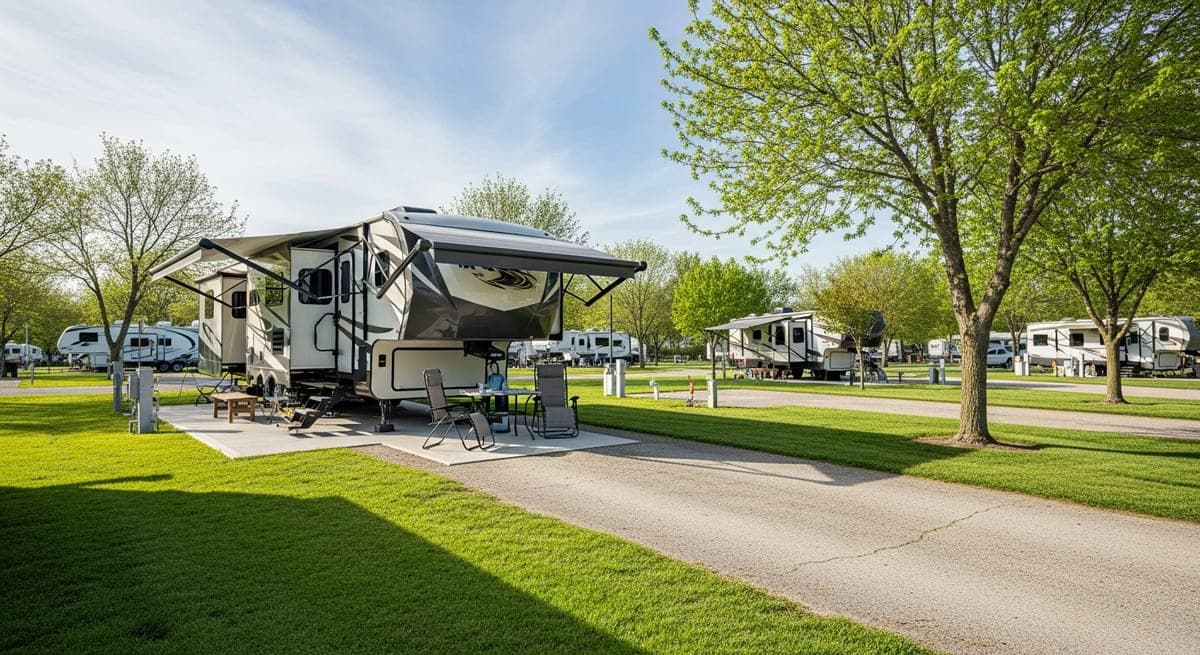
Manual patio awnings use a hand-crank mechanism and are more common on older RVs and entry-level rigs. They're durable, repairable, and have no electrical failure modes — the tradeoff is that deploying and retracting takes more time and effort than powered alternatives.
Power (electric) awnings are standard on most newer RVs and operate with a single button press. The added convenience comes with electrical complexity, but many models include automatic wind sensors that retract the awning when gusts are detected — a feature well worth considering if you camp regularly in storm-prone areas.
Slide-out awnings are smaller toppers that sit over the slide-out when it's extended, preventing rain and debris from collecting on the slide roof. They typically stay deployed whenever the slide is out and require little day-to-day attention.
Window and door awnings are fixed overhangs above entries and windows, offering rain protection and shade without any setup. Low maintenance and always in position.
Deploying and Retracting Properly
For manual awnings: extend slowly and smoothly. Don't force the mechanism. For power awnings: let the motor do the work — forcing manual assist while the motor is running stresses the arm joints.
Pitch the awning slightly toward the back corner. A flat awning collects a dangerous pool of rainwater that can stress the arms and soak anyone walking out the door. Most awnings have a built-in adjustment to angle one side lower for runoff — use it.
Use stabilizer straps or de-flappers in any breeze. Awning straps (also called de-flappers) attach to the free edge of the fabric and stake to the ground. They reduce flutter and movement in light wind that gradually stresses the arm hinges.
Fabric Cleaning and Maintenance
Awning fabric — whether acrylic or vinyl — should be cleaned at least once per season and before extended storage:
- Extend the awning fully and let it air out completely before cleaning
- Rinse with plain water first to remove loose debris
- Use RV awning cleaner or mild dish soap with a soft brush. Scrub mildew or dirt gently — aggressive scrubbing removes UV-protective coatings
- Rinse thoroughly — soap residue breaks down fabric over time
- Let dry completely before retracting. Rolling up a damp awning is one of the most common ways mold and mildew get started inside the rolled fabric
Dealing with Mold and Mildew
Mold inside rolled awning fabric is a common problem when an awning is retracted damp. A diluted white vinegar solution (1:1 with water) removes light mold without damaging most fabrics. For more stubborn cases, commercial RV awning cleaners with mildewcide are more effective. Badly molded vinyl fabric that smells and stains may ultimately need replacement.
Prevention is simple: always dry before rolling. On a sunny day, extend and let the sun bake out any remaining moisture before packing up.
Arm and Hardware Maintenance
- Lubricate pivot points annually with a dry or silicone-based lubricant. Avoid petroleum-based lubes that attract dirt.
- Check tension knobs on manual awnings — they should hold the arms extended without drifting. Tighten or replace if the awning creeps inward when extended.
- Inspect arm roller tubes for corrosion, particularly at the mounting brackets. Surface rust can be cleaned and treated; structural corrosion at mount points needs professional assessment.
- Check mounting screws into the RV wall annually. These can work loose over time from road vibration, putting stress on the wall structure and increasing the risk of tearing.
Wind — The Destroyer of Awnings
No matter how well you maintain it, an awning left out in a storm is at risk. The general guidance:
- Retract when leaving the campsite, even for a few hours
- Retract when sustained wind picks up — many manufacturers recommend retracting in winds above 15 mph
- Retract at night unless you're sleeping lightly and the forecast is dead calm
- Retract if rain is coming — water pools faster than most people expect
An automatic retraction sensor is the best safeguard if you camp in areas prone to afternoon thunderstorms or unpredictable wind. It won't replace good habits, but it catches the gusts you sleep through.
Related: RV maintenance checklist · RV campsite setup guide · RV severe weather safety
Is that campground membership actually worth it?
Plug in your camping nights and typical nightly rate. Our free calculator does the break-even math for Good Sam, Passport America, Thousand Trails, and KOA Rewards.